If keeping fat intake down is your priority, first compare plain dried fruit with mixes containing nuts, using the same 100 g basis: Carrefour and Monoprix Courses product listings show 0 to 0.4 g for the apricots and prunes mentioned, compared with 64 g for Maître Prunille walnut kernels. If you need to avoid a specific allergen, that figure isn’t enough: check the ingredients and any ‘may contain’ statements on the pack you choose, particularly for sulphites.
Who is this guide for?
People keeping an eye on fat intake
If fat content is your main consideration, distinguish plain dried fruit from nuts and mixed products. Carrefour and Monoprix Courses listings give fat content of 0 to 0.4 g per 100 g for the apricots and prunes mentioned; the listing for Maître Prunille walnut kernels gives 64 g per 100 g.
People who need to avoid a specific allergen
Whether you’re looking for sulphite-free options or need to check for another allergen, start with the one that concerns you. Check the ingredients and any ‘may contain’ statements for the exact product: the term ‘dried fruit’ tells you nothing about its recipe or whether it’s suitable for your needs.
People who prefer a short ingredients list
An easy-to-read ingredients list helps you spot any additions before you buy. Carrefour Bio’s apricots listing gives dried organic apricots and water, while Auchan’s apricots listing mentions sulphur dioxide. However, a short ingredients list is no substitute for checking allergens and ‘may contain’ statements.
Which criteria should you prioritise?
When choosing dried fruit or mixes sold in France, start with the factor that really determines your choice, then check the other information on the pack.
| Criterion |
What to check |
Who is it for? |
| Fat content |
The amount per 100 g and whether the ingredients include nuts or oil. |
If my main aim is to keep fat intake down, I need to distinguish plain dried fruit from a nut mix. Around 36% of consumers in this group would put this criterion first. |
| Specific allergen |
The ingredients, declared allergens and any ‘may contain’ statements on the pack you choose. |
If I need to avoid a particular allergen, low fat content doesn’t meet my main need. Avoiding that allergen would be the priority for around 36% of consumers in this group. |
| Ingredients |
The ingredients list, particularly preservatives and other additions. |
When quickly comparing two apricot or prune products, I want to be able to identify anything added to the fruit. Around 21% of consumers in this group would prioritise a clear ingredients list. |
| Sugars and portion size |
Sugars and energy per 100 g, followed by the amount you plan to eat. |
Even if I choose dried fruit for its fat content, I may still want to compare the sugars and my portion size. Around 7% of consumers in this group would make this their priority. |
Common pitfalls to avoid
-
Putting all ‘dried fruit’ and nuts in the same category
The term can refer to dried fruit, nuts or mixed products. Their fat content isn’t interchangeable: Carrefour lists 0 g per 100 g for the Bio apricots mentioned, while the Monoprix Courses listing for Maître Prunille walnut kernels gives 64 g per 100 g.
Compare the ‘fat’ figure on the same 100 g basis and read the ingredients list for the exact product.
-
Assuming ‘nut-free’ means ‘allergen-free’
The Auchan and Seeberger apricots mentioned list sulphites; the Monoprix prunes listing warns that they may contain traces of sulphites. So, the absence of nuts from the ingredients doesn’t cover every dietary exclusion.
Identify the allergen you need to avoid, then check the ingredients and any ‘may contain’ statements on the packaging of the product you choose.
-
Assuming sugar content from fat content
These two nutrition figures describe different things. Even if you choose dried fruit for its fat content, you’ll still need to check its nutrition information if sugars or the amount you eat matter to you.
Compare sugars and energy per 100 g, then relate those figures to the portion you plan to eat.
Brands to compare
These examples highlight differences between specific products; a brand name is no substitute for checking each pack.
Carrefour Bio
The Carrefour listing for soft organic dried apricots describes a 250 g pack.
- The listing gives organic dried apricots, water and 0 g of fat per 100 g.
- This ingredients list isn’t a general guarantee that the product is free from allergens or traces.
Auchan
Auchan’s 250 g pack of pitted dried apricots is an example of a recipe to check ingredient by ingredient.
- The Auchan listing identifies the apricots and the antioxidant used.
- The antioxidant is sulphur dioxide, listed as a sulphite, so this product isn’t suitable if you’re looking for sulphite-free apricots.
Monoprix
Monoprix Courses listings include plain prunes and a mix combining nuts and apricots.
- The Agen prunes mentioned contain 0.4 g of fat per 100 g.
- Their listing warns of traces of sulphites; the Monoprix Gourmet mix mentioned contains several types of nuts.
Maître Prunille
The products mentioned make it easy to distinguish IGP Agen prunes from walnut kernels by the same brand.
- The Monoprix Courses listing for the prunes gives 0.2 g of fat per 100 g.
- It mentions a facility that handles sulphite-containing fruit; the walnut kernels listing, meanwhile, gives 64 g of fat per 100 g.
Seeberger
Seeberger’s 125 g pack of dried apricots is another product to assess on its own merits.
- The Monoprix Courses listing gives 0.5 g of fat per 100 g.
- It also lists sulphur dioxide, so fat content alone isn’t enough to decide whether it’s suitable if you’re avoiding sulphites.
Dried fruit available on Joybuy
These prunes and dried apricots let you compare two plain dried fruit options. To choose based on your fat-content goals or a specific allergen, check the information on the pack for each product.
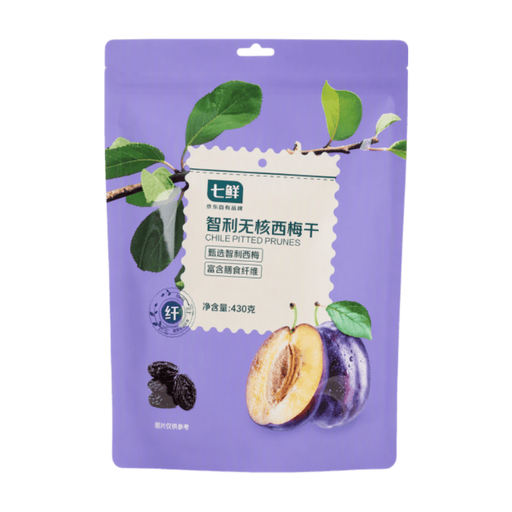 Image unavailable
7FRESH Pitted Prunes 430 g
An option to consider if you’re looking for pitted prunes. Before choosing it to keep fat intake down or avoid an allergen, read the nutrition information and check the ingredients and any ‘may contain’ statements on the pack you receive.
View on Joybuy
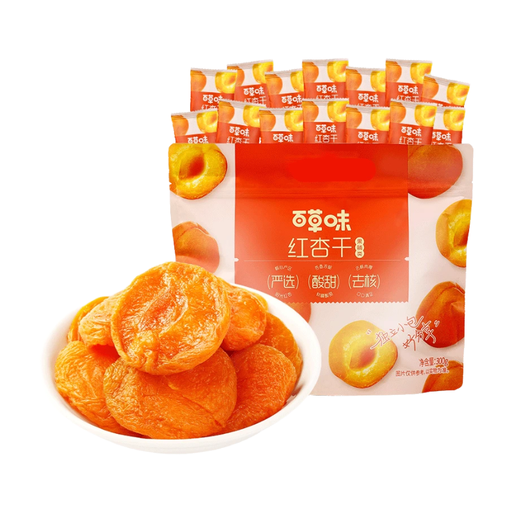 Image unavailable
Be&Cheery Dried Red Apricots 300 g
Another option if you’d like to compare dried apricots with prunes. Don’t assume they have the same fat content or allergen profile: check the nutrition information, ingredients and any ‘may contain’ statements on the pack you receive.
View on Joybuy
Frequently asked questions
Are nuts and dried fruit equally suitable if I’m limiting my fat intake?
No. Compare specific products rather than relying on the term ‘dried fruit’. Carrefour and Monoprix Courses listings give 0 to 0.4 g of fat per 100 g for the apricots and prunes mentioned, compared with 64 g per 100 g for Maître Prunille walnut kernels.
Is a pack with no nuts in the ingredients allergen-free?
No. Check for the specific allergen that concerns you, and read any ‘may contain’ statements too: the Auchan and Seeberger apricots listings mention sulphites, while the Monoprix prunes listing warns of traces of sulphites.
Which information should I compare on prepacked dried fruit?
Start with the ingredients list and nutrition information for the exact product, particularly fat and sugars per 100 g. The DGCCRF lists ingredients and nutrition information among the labelling details required for prepacked foods; also check any allergen and ‘may contain’ statements relevant to your choice.
How should I store dried fruit after opening?
Follow the instructions on the pack, as they can vary between products. The instructions cited for Auchan apricots say to reseal the bag and keep it in a cool place after opening; those for Maître Prunille prunes recommend storing them in the fridge.


