Vegans keeping an eye on fat
You want to compare dried fruit, nuts and mixes without assuming that a plant-based product is low in fat. The nutrition declaration for the product you choose is the best place to start.


If you’re looking to reduce your fat intake, start by comparing plain dried fruit with other products in the same category, using the figures per 100 g. The label ‘dried fruit’ alone isn’t enough to assess a mix or nuts. For vegan shopping, also check the ingredients and allergens for each product, then consider sugar and salt in light of your other priorities.
You want to compare dried fruit, nuts and mixes without assuming that a plant-based product is low in fat. The nutrition declaration for the product you choose is the best place to start.
You check the ingredients in mixed or coated products before adding them to your shopping. The ingredients list and any allergens highlighted on the packaging matter just as much as the product name.
You’re particularly looking for unsalted walnuts, almonds, hazelnuts or pistachios. This is a separate consideration from reducing fat, so check both independently if you’re looking to meet both needs.
For vegan shopping, first identify the type of product, then compare labels for products in the same category. The DGCCRF points out that prepacked food labels include, among other things, an ingredients list and a nutrition declaration.
| What matters to you | What to check | Who is it for? |
|---|---|---|
| Fat | Compare the figures per 100 g for products in the same category. Look out for nuts, coconut or oils in mixes. | When choosing between two comparable dried fruit products, I want to know their fat content rather than make assumptions based on the aisle they’re in. Around 42% of consumers would put this first. |
| Vegan ingredients and allergens | Read all the ingredients in a mixed product and check which allergens are highlighted on the packaging. | If I’m buying a mix or a coated product, I need to know what’s in it before deciding whether it’s right for my shopping. Ingredients would be the top priority for around 33% of consumers. |
| Sugar, salt and other additions | Check the ingredients for sugar, syrups, chocolate, salt and additives in particular. Also look at the ‘of which sugars’ and ‘salt’ lines. | I might like a varied recipe, but I’d rather know if it contains anything I want to avoid. Around 25% of consumers would put this first. |
Carrefour and Auchan stock dried fruit, nuts and mixes. The aisle label doesn’t tell you what a particular product contains or how much fat it has.
Identify the type of product, then compare the figures per 100 g for similar products.
These claims relate to two different things. Manger Bouger recommends unsalted nuts, but that doesn’t mean they can be described as lower-fat options.
Check the salt and ‘fat’ lines in the nutrition declaration separately.
A dried fruit selection listed by Auchan also contains sugar, sulphites and a preservative. You can’t tell what’s in it from the category name alone.
Read the ingredients list on the specific packet, especially for mixes, candied fruit and flavoured products.
A plant-based product can still contain allergenic ingredients. Anses says these must be highlighted in the ingredients list on prepacked foods.
If you have an allergy, check the information on every pack, regardless of whether you’re looking for vegan products.
Carrefour’s ‘Dried fruit and mixes’ range covers several categories, including dried fruit and nuts.
Auchan’s range includes dried fruit, candied fruit, nuts and mixes.
ALDI lists a 200 g pack of Trader Joe's blanched, unsalted almonds.
These dried jujube products are examples of plain dried fruit. If you’re choosing them for vegan shopping, check the ingredients on the exact pack and compare its nutrition information with other products of the same type.
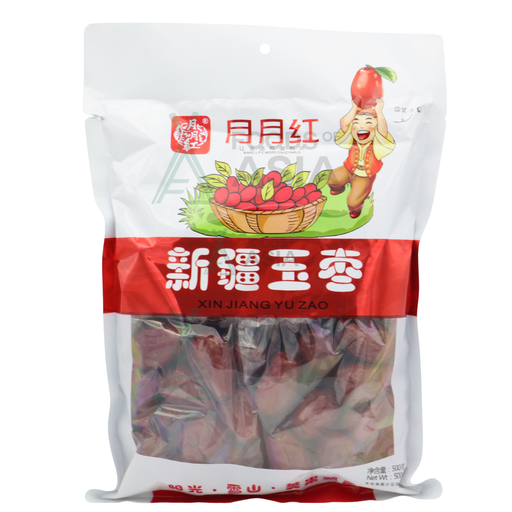 Image unavailable
This product is suitable for comparing with other plain dried fruit. The pack contains 500 g. Check the packaging for fat and sugar per 100 g, as well as the ingredients.
 Image unavailable
This pitted variety can be compared with other dried jujube products. The pack contains 280 g. Check the fat and sugar per 100 g, and don’t assume what it contains based on the words ‘original flavour’ alone.
 Image unavailable
This 500 g pack gives you another pitted red date product to consider. Compare its fat and sugar per 100 g. If you have an allergy, check the packaging information before you buy.
No. The term can refer to dried fruit, nuts or a mix. To check fat content, compare the ‘fat’ line per 100 g for products of the same type rather than relying on their names alone.
Not necessarily, but choosing unsalted nuts and looking for lower fat content are two separate decisions. Manger Bouger recommends a small handful of unsalted nuts a day. To compare their fat content, check the labels on the products you’re considering.
Read the full ingredients list for the product you choose, particularly if it’s candied, coated or flavoured. Check the allergens listed separately. As Anses points out, allergenic ingredients must be highlighted in the ingredients list on prepacked foods.
No. On its own, it doesn’t tell you how much sugar is shown in the nutrition information. If this matters to you, read the ingredients and compare the ‘of which sugars’ figures per 100 g for similar products.