For comparing calories
You’re looking for dried fruit as a snack and would rather check the nutrition information per 100 g than guess its energy value from the product name.


If calories per equal weight are your main priority, compare dried fruit and nuts per 100 g: Auchan and Carrefour product pages list 193 to 243 kcal per 100 g for three soft apricot products, compared with 625 kcal per 100 g for Carrefour Bio almonds. These figures apply to specific products, not every product in those categories. When choosing a snack, also check the sugars, ingredients and how much you plan to eat.
You’re looking for dried fruit as a snack and would rather check the nutrition information per 100 g than guess its energy value from the product name.
You’re choosing between different pack sizes and want to consider both the pack weight and how much your household will actually eat.
You need to check the sugars, ingredients, allergens or storage instructions before choosing a specific product.
When comparing snacks, start with the figures per 100 g, then consider the portion you plan to eat and the label on the product you choose.
| Criteria | What to check | Who is it for? |
|---|---|---|
| Energy value | Compare the kcal per 100 g, then consider how much you’ll eat. | I want to choose a snack by comparing equal quantities, without confusing dried fruit with nuts. Around 42% of consumers prioritise this calorie comparison. |
| Pack size | Check the net weight and storage instructions after opening. | If the pack is for several snacks, I look for a size that suits how much my household will eat. Pack size comes first for around 33% of consumers. |
| Ingredients | Check the ‘of which sugars’ line, ingredients and allergens listed for the specific product. | If I need to take an ingredient or allergen into account, the ingredients determine my choice before any other criteria. This is the priority for around 25% of consumers. |
The term can refer to dried fruit or nuts. Auchan and Carrefour product pages list 193 to 243 kcal per 100 g for three soft apricot products, while Carrefour Bio almonds contain 625 kcal per 100 g.
First compare the figures on the same 100 g basis, then consider the portion you plan to eat.
Manger Bouger points out that dried fruit naturally contains a lot of sugars. The Auchan soft apricots product page lists 41 g of sugars per 100 g.
Check the ‘of which sugars’ line and ingredients list for each product. A claim that no sugars have been added does not, by itself, tell you the total amount of sugars.
One Auchan soft apricot product lists sulphites. In France, the DGCCRF states that allergenic ingredients must be highlighted on the label.
Check the ingredients and any ‘may contain traces’ information on the pack you plan to buy.
The retailer offers products including soft apricots and almonds in its Carrefour Bio range.
Its dried fruit category makes it easy to browse different types of product, including raisins.
The retailer offers several soft apricot products with different nutritional values.
According to Lidl, the Alesto range includes dried fruit, nuts and savoury snacks.
The retailer offers products including raisins and, under the TRADER JOE'S® brand, blanched almonds with no added salt.
Its online range includes dried fruit, such as Monoprix organic raisins.
These pitted prunes and red dates are worth considering if you’re looking for dried fruit in a bag for a snack. To choose between them, check the nutritional values and ingredients for each product, as well as which pack size suits your needs.
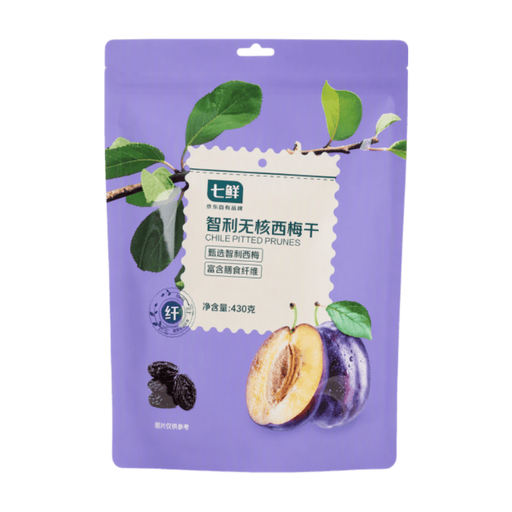 Image unavailable
A bag of pitted prunes to consider if this size suits you for several snacks. The listed weight is 430 g. To compare it with other dried fruit, check the figures per 100 g and the portion you’ll serve.
 Image unavailable
These pitted red dates are an option if you’re looking for dried fruit in a 500 g bag. If the energy value of your snack is your priority, compare the figures per 100 g with those of other products you’re considering, and take the portion into account.
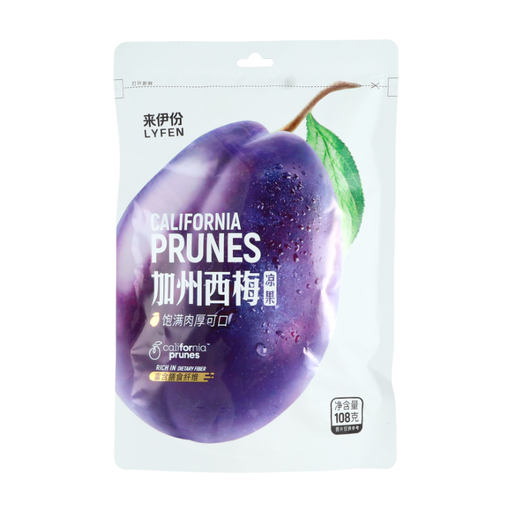 Image unavailable
The 108 g bag may suit you if you’re looking for a smaller size. Before relying on its nutrition information, check the product label: the information shown about sugars doesn’t match its ingredients list.
Start by comparing the kcal per 100 g for specific products: Auchan and Carrefour product pages list 193 to 243 kcal per 100 g for three soft apricot products, compared with 625 kcal per 100 g for Carrefour Bio almonds. This doesn’t rank all apricots, prunes or nuts; the portion you eat matters too.
No. Manger Bouger says that dried fruit naturally contains a lot of sugars and advises eating it occasionally. To check the exact amount, read the ‘of which sugars’ line on the product you choose.
Choose a net weight that suits how much you plan to eat, and check the storage instructions for after opening. A large bag is only practical if you can use it in line with the instructions on the packaging.
Check the ingredients, highlighted allergens and nutritional values per 100 g, then read the storage instructions. The DGCCRF states that allergenic ingredients must be highlighted on food labels in France.