For a low-energy fruit snack for a toddler, don’t assume dried fruit fits the bill. Compare the nutritional values per 100 g and choose a texture your child can manage first. According to Manger Bouger, whole nuts should not be given to children under 6; fruit purée is another option, but it is not nutritionally equivalent to a nut mix.
Who is this choice for?
Parents of toddlers learning to manage lumps
Texture matters more than what’s written on the packet. Assurance Maladie describes a progression from puréed foods to small pieces; Manger Bouger advises against whole nuts before the age of 6 because of the risk of choking.
Parents comparing the energy content of snacks
Dried fruit, nut mixes and fruit purées shouldn’t be chosen by name alone. Nutritional information per 100 g lets you compare the energy and sugars in specific products, then take the portion served into account.
Parents checking ingredients and allergens
A mix may contain several types of fruit, nuts, peanuts and added ingredients. Checking the ingredients list and highlighted allergens helps you assess the product you’re considering before choosing a suitable form for your child.
What should you look at first?
For a toddler, first rule out forms that aren’t suitable for their chewing ability. Then compare the ingredients and nutritional values of the snack you’re considering.
Fruit purée or fruit preparation
Worth considering: if you’re looking for a soft texture and a fruit snack whose energy content you can compare per 100 g.
Bear in mind: ‘no added sugar’ doesn’t mean sugar-free, and a fruit preparation isn’t a like-for-like substitute for a nut mix.
Dried fruit
Worth considering: if the texture is already suitable for your child’s chewing ability.
Bear in mind: a mix may contain sugar, coatings or oils; its name alone doesn’t tell you its energy content.
Ground nuts
Worth considering: when mixed into a preparation that’s suitable for your child, rather than offered whole.
Bear in mind: this form addresses texture, but doesn’t on its own make it a low-energy snack; check the allergens too.
| Criteria | What to check | Who is this for? |
|---|
| Texture |
The form of the nuts and the size of the pieces; according to Manger Bouger, no whole nuts before the age of 6. |
If my child is still learning to chew, I first look for a form they can manage and avoid offering whole nuts. Around 36% of consumers put texture first. |
| Energy and sugars |
The energy and sugars per 100 g, followed by the portion you’re considering. |
For a low-energy fruit snack, I want to compare products on the same basis instead of relying on the words ‘dried fruit’. This is the top priority for around 29% of consumers. |
| Ingredients |
The ingredients list, particularly any added sugar, coatings and oils. |
When choosing between dried fruit and a mix, I want to know what else is included alongside the fruit. Around 21% of consumers prioritise checking the ingredients first. |
| Allergens |
Highlighted allergens, particularly peanuts and nuts, as well as the form offered to your child. |
If I have any concerns about introducing these foods to my child, I need to identify the allergens clearly before buying. Around 14% of consumers make this their top priority. |
What should you watch out for?
-
Assuming ‘dried fruit’ means low in energy
The TOKAPI dried and candied fruit mix featured by E.Leclerc contains 486 kcal and 41 g of sugars per 100 g. It includes sweetened dried fruit and sugar-coated almonds, among other ingredients, so the category name alone isn’t enough to assess the recipe.
Compare the energy and sugars per 100 g, then read the ingredients list. When deciding how much to serve, also check the actual portion rather than treating a whole packet as 100 g.
-
Choosing whole nuts for a young child
Manger Bouger advises against giving whole nuts to children under 6 because of the risk of choking.
For a child of this age, avoid whole nuts. If nuts are part of their diet, consider using them ground and mixed into a suitable preparation.
-
Judging a product by the front of the packet
‘No added sugar’ doesn’t remove the sugars naturally present in fruit. A score or highlighted claim also doesn’t, by itself, tell you about the product’s texture, ingredients and allergens.
Read the ingredients list and allergen information, then check the nutritional values per 100 g. If a Nutri-Score is shown, use it as additional information, not as the answer to every question.
Brands and ranges to consider
These products illustrate different ingredients and formats. Check the details of the specific product rather than assuming what it contains based on the brand.
E.Leclerc / TOKAPI
E.Leclerc offers, among other products, a TOKAPI mix of dried and candied fruit.
- Its product listing details the ingredients and nutritional values per 100 g.
- The product described contains sweetened dried fruit, sugar-coated almonds and oils, among other ingredients; don’t automatically assume it’s a light snack or suitable for a toddler.
Lidl / Alesto
Lidl’s Alesto range includes nuts, dried fruit and savoury snacks.
- Lidl offers, among other products, plain cashew nuts and mango strips described as having no added sugar.
- Recipes and textures vary across the range, so check the exact product before considering it for a child.
Carrefour Classic'
Carrefour offers a fruit cocktail in syrup with no added sugar, in cups containing 70 g drained weight.
- Carrefour’s product listing gives this product an energy value of 60 kcal per 100 g, making it easy to compare on a like-for-like basis.
- This is fruit in syrup, not dried fruit; ‘no added sugar’ doesn’t mean it contains no naturally occurring sugars.
Auchan / Materne
Auchan offers Materne fruit purées with no added sugar, with nutritional information varying by flavour.
- The products described by Auchan contain between 54 and 59 kcal per 100 g, depending on the flavour.
- They contain naturally occurring sugars and aren’t nutritionally equivalent to nuts.
Fruit purées available on Joybuy
These products are soft-textured fruit preparations to consider for a young child. Before choosing, check the age guidance, ingredients and nutritional values on the packaging. This selection doesn’t include dried fruit or nuts.
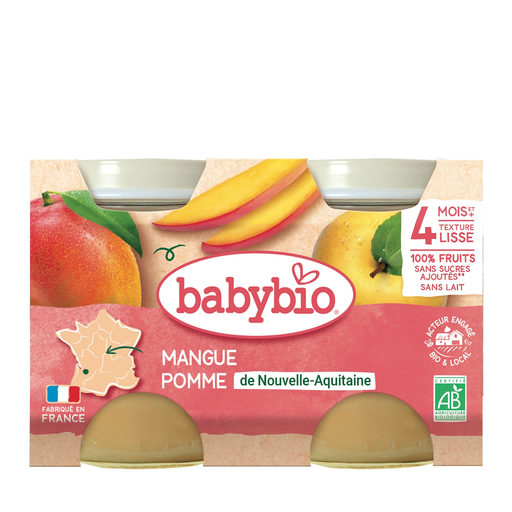 Image unavailable
Babybio apple and mango, 2 × 130 g
A fruit purée to consider when a soft texture is suitable for your child. The product name says ‘no added sugar’ and ‘from 4 months’; check the guidance on the pot before serving.
View on Joybuy
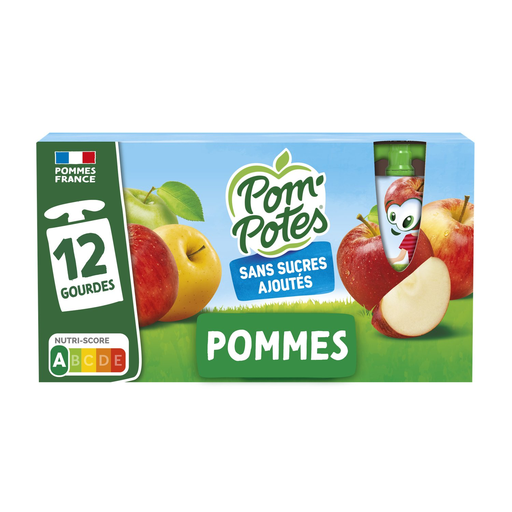 Image unavailable
Materne Pom’Potes apple, 12 × 90 g
A pouch format for an apple-based snack. The product name describes the recipe as having no added sugar; check the age guidance on the packaging and make sure the texture is suitable for your child.
View on Joybuy
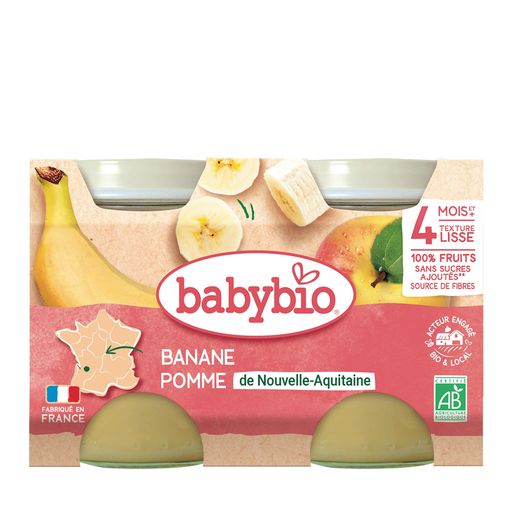 Image unavailable
Babybio apple and banana, 2 × 130 g
Another fruit combination in purée form for parents who prefer this option to dried fruit. The product name says ‘no added sugar’ and ‘from 4 months’; this doesn’t mean it contains no sugars naturally present in fruit.
View on Joybuy
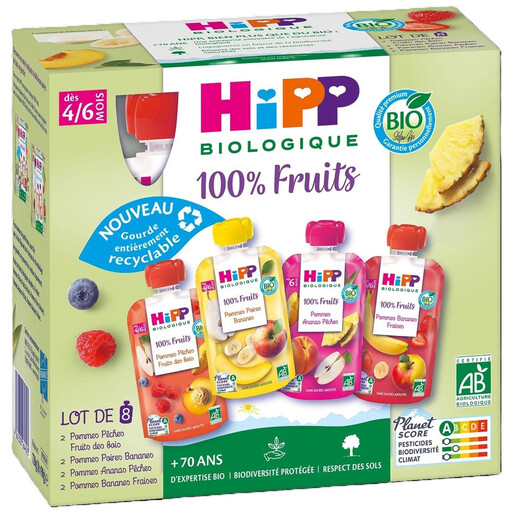 Image unavailable
HiPP fruit purées, 4 varieties, 8 × 90 g
An assortment of pouches if you’d like to compare several fruit recipes. The age guidance for this assortment varies across the available product information. Check the packaging for each variety, along with its ingredients and nutritional values.
View on Joybuy
Frequently asked questions
Can you give a toddler whole almonds, walnuts or hazelnuts?
No. Manger Bouger advises against giving whole nuts to children under 6 because of the risk of choking. Mixing ground nuts into a preparation means you don’t have to offer them whole.
Does ‘no added sugar’ mean sugar-free or low in energy?
No: sugars naturally present in fruit still count. To choose between two products, compare their energy and sugar values per 100 g, then consider the portion you plan to serve.
What should you check on the packaging of a pre-packed snack?
Start with the ingredients list, highlighted allergens and nutritional information. The DGCCRF states that nutritional declarations are given per 100 g or 100 ml, providing a useful basis for comparing different formats.
Does introducing peanuts mean you can give your child whole nuts?
No. Assurance Maladie recommends introducing major food allergens, including peanuts, once weaning has begun. This guidance on introducing allergens doesn’t change Manger Bouger’s recommendation about whole nuts before the age of 6; if your child has specific needs, ask their healthcare professional for advice.


