People comparing calories
You’re looking for a late-night snack and want to compare products in equal quantities. The figures on Carrefour’s product listings show why it’s important to distinguish single-ingredient dried fruit from a mix.


If you’re choosing an evening snack and want to keep calories in check, compare the energy value per 100 g, then consider how much you plan to serve. Among three Carrefour product listings, Carrefour Bio soft dried apricots contain 232 kcal per 100 g, compared with 433 kcal for a Daco Bello mix and 476 kcal for a Carrefour Le Marché mix. These figures don’t represent all dried fruit or an individual portion: the recipe and ingredients also matter when making your choice.
You’re looking for a late-night snack and want to compare products in equal quantities. The figures on Carrefour’s product listings show why it’s important to distinguish single-ingredient dried fruit from a mix.
You’d rather have a few plain nuts than a coated or savoury snack product. Manger Bouger, the Santé publique France website, suggests a small handful of unsalted, unsweetened nuts with no chocolate. That doesn’t automatically make them a low-calorie option.
You want to spot added ingredients or need to take allergens into account. In that case, the ingredients list for the specific product is more useful than a general description such as “dried fruit mix”.
When choosing an evening snack, start with your priority: comparing calories, checking the recipe or easily serving a small portion.
| What matters | What to check | Who is it for? |
|---|---|---|
| Calories for the same quantity | Compare the kcal per 100 g, then consider how much you plan to eat. Carrefour’s listings show 232 kcal per 100 g for Carrefour Bio apricots, 433 for the Daco Bello mix and 476 for the Carrefour Le Marché mix. | In the evening, I want to be able to compare two packets without confusing the pack size with the amount I’ll eat. Around 46% of consumers would put calories for the same quantity at the heart of their choice. |
| Ingredients and allergens | Read the ingredients list and allergen information on the specific packet. Also check the sugar and salt content in the nutritional information. | If I need to avoid an ingredient, a product described simply as a mix isn’t enough for me to decide. Around 36% of consumers would prioritise the ingredients and any that aren’t suitable for their needs. |
| A convenient small portion | Check the packet size and serve the amount you want in a bowl rather than treating the packet as a portion. | For an evening snack of a few dried fruits, I prefer a texture I enjoy and an amount that’s easy to serve. Convenience and portion size would be the main consideration for around 18% of consumers. |
Single-ingredient dried fruit and mixes can have different nutritional values. The three Carrefour listings mentioned here range from 232 to 476 kcal per 100 g; this doesn’t rank every product on the market.
Check the per-100 g values for the exact product before deciding how much to serve.
Carrefour’s listing for the Daco Bello mix mentions, among other ingredients, apples containing sugar and sulphur dioxide. You can’t tell what’s in other products just from the name of the aisle.
Check the ingredients list and allergen information on the packet you’re buying.
A claim such as “organic” or “no added salt” doesn’t, by itself, tell you the energy value or sugar content of a product.
Treat these claims as separate criteria, and check the nutritional information if calories or sugar are important to your choice.
Carrefour’s product listings let you compare one single-ingredient dried fruit with two mixes.
E.Leclerc’s range includes almonds, prunes, apricots and mixes from several brands.
Auchan’s range brings together mixes, nuts and products intended for aperitifs.
Lidl’s Alesto range includes dried fruit and plain nuts.
Aldi’s listing for Trader Joe’s roasted almonds describes them as having no added salt.
The Naturalia range available through Monoprix includes almonds, mixes, dates, figs and organic raisins.
This Joybuy selection includes pitted jujubes and plum products. When choosing an evening snack, consider the type of fruit, the packet size and the recipe shown on the packaging.
 Image unavailable
If you’re looking for pitted jujubes to serve in a small portion, this 500 g packet is labelled Grade 2. Check the ingredients and nutritional values for this product before comparing it with dried prunes or apricots.
 Image unavailable
This pitted jujube option may suit anyone who prefers a 280 g packet. The name specifies Grade 2, Fresh-Locked and Original Flavour. If calories or sugar are important to your choice, compare the nutritional information on the packet.
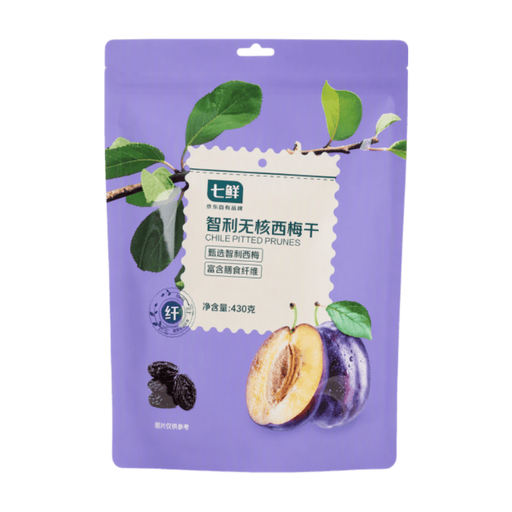 Image unavailable
If you fancy a prune-based snack, this product comes in a 430 g packet. The packet weight isn’t the same as a snack portion: serve the amount you want and check the nutritional information to compare equivalent portions.
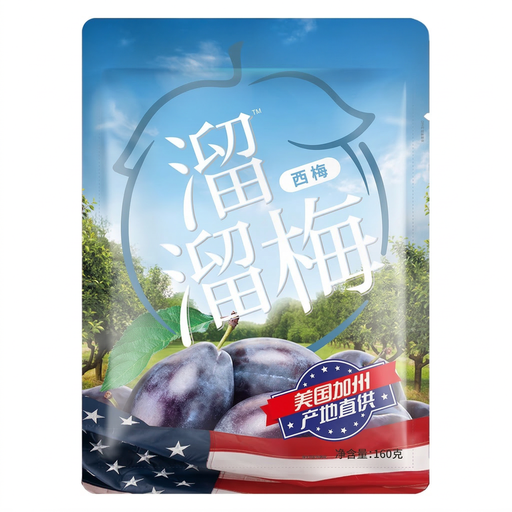 Image unavailable
If you’re considering prepared plums for your snack, this product comes in a 160 g pack. Before comparing it with plain dried fruit, check the ingredients list on the packet, particularly if sugar or sweeteners would affect your choice.
First compare the kcal per 100 g for specific products, then consider how much you’ll serve. Among three Carrefour listings, Carrefour Bio soft dried apricots contain 232 kcal per 100 g, compared with 433 for the Daco Bello Formule Détente mix and 476 for the Carrefour Le Marché mix. This doesn’t mean all apricots are lower in calories than all mixes.
No: “plain” doesn’t tell you a product’s energy value. Manger Bouger, the Santé publique France website, recommends a small handful of unsalted, unsweetened nuts with no chocolate. If calories are your main consideration, also check the value per 100 g and decide how much to serve.
Read the ingredients list and allergen information on the packaging for the product you’ve chosen, then check the sugar and salt content in the nutritional information. For prepacked food sold in France, the Directorate General for Competition Policy, Consumer Affairs and Fraud Control notes that labelling includes, among other things, an ingredients list and a nutritional declaration.