If you’re looking to keep the energy content of an addition to dinner in check, start by comparing the values per 100 g: Carrefour Bio dried apricots contain 232 kcal per 100 g, compared with 476 kcal per 100 g for a Carrefour Le Marché dried fruit and nut mix. These figures relate to two specific products, not to either category as a whole. Next, choose a portion that suits your meal, and check the sugars, ingredients, allergens and price per kilo before you buy.
Who are these options for?
Students keeping an eye on the energy content of an addition to dinner
If you’re looking for dried fruit to add to dinner, compare the kcal per 100 g across products, then decide how much to serve. Manger Bouger, the website run by Santé publique France, points out that dried fruit is naturally high in sugars.
Students keeping an eye on their food shop budget
If you want the packet to last for several meals, check its net weight and price per kilo, as well as how much you’ll be able to use. Pack sizes vary between retailers; a larger pack is only worthwhile if you can store it properly and finish it.
Shoppers looking out for salt and allergens
If you want unsalted nuts or need to avoid certain ingredients, check the recipe and information on the packet you choose. The DGCCRF states that allergens in pre-packed foods must be emphasised in the ingredients list.
What should you look at first?
To compare plain dried fruit, nuts and mixes, start with the energy and ingredients per 100 g. Pack size and how much you plan to serve also matter, both for dinner and for your food shop.
Plain dried fruit
Worth considering: if you want a fruity addition whose energy value you can compare with that of a mix.
Bear in mind: you should still check the sugar content and portion size; Manger Bouger recommends eating dried fruit occasionally.
Unsalted nuts
Worth considering: if you’d like a small portion of walnuts, almonds or hazelnuts alongside your meal.
Bear in mind: Manger Bouger’s recommendation is for unsalted, unsweetened nuts with no chocolate; it doesn’t mean that every product is low in calories.
Mixes
Worth considering: if you want several ingredients in one packet and plan to add a set amount to your meal.
Bear in mind: ingredients and energy values vary from one mix to another; also check the allergens listed on the packaging.
| Criteria |
What to check |
Who is it for? |
| Energy and sugars |
Compare the kcal and sugars per 100 g, then consider how much you plan to serve. |
When I’m looking for a small addition to dinner, I want to be able to tell the difference between plain dried fruit and a mix, without assuming that all “dried fruit” is the same. Around 42% of shoppers prioritise the energy and sugars in this addition. |
| Pack size and budget |
Check the net weight and price per kilo; choose a pack size you can store and use. |
If my food shop needs to cover several meals, a packet I can finish matters just as much as its displayed price. For around 33% of shoppers, pack size and budget come first. |
| Ingredients and allergens |
Read the ingredients list and check the allergens and salt content, especially for mixed or seasoned products. |
When I’m looking for unsalted nuts or need to avoid an ingredient, the product name alone isn’t enough to help me choose. Ingredients and allergens are the priority for around 25% of shoppers. |
What should you watch out for?
-
Assuming “dried fruit” means “low in calories”
This category includes both plain dried fruit and mixes containing nuts. The Carrefour Bio and Carrefour Le Marché product pages list 232 and 476 kcal per 100 g respectively for the products in question.
Compare the nutrition information for products intended for the same use, and treat them as an addition to dinner rather than as the whole meal.
-
Comparing only the packet size or label
Two pack sizes can contain very different amounts. A large packet may also be unsuitable if you only use it occasionally.
Before choosing a pack size, check the net weight, the price per kilo at your retailer and the storage instructions.
-
Assuming nuts are unsalted
A cashew recipe or seasoned mix may not be suitable if you’re looking for plain nuts. For example, the Joybuy product page for BENENUTS roasted cashews lists 0.92 g of salt per 100 g.
For an unsalted option, check the product name, ingredients and salt value for the specific product.
-
Overlooking allergens and storage after opening
Allergen information varies by recipe. Storage instructions vary too: the Auchan raisins product page says to reseal the packet tightly after opening.
Read the information on the packaging you choose, and pick a pack size that suits how often you’ll eat it and how it needs to be stored.
Which retailers should you check?
Carrefour
A retailer where you can compare plain dried fruit with mixed products.
- The Carrefour Bio soft dried apricots product page lists organic apricots and water, and 232 kcal per 100 g.
- The Carrefour Le Marché mix lists 476 kcal per 100 g: the value for one product doesn’t represent the whole range.
E.Leclerc
A place to explore loose dried fruit and the Marque Repère and Bio Village ranges.
- E.Leclerc’s range includes these different product types.
- When comparing two products, check their individual ingredients, nutrition information and pack sizes.
Auchan
A retailer to check when comparing a specific product of raisins.
- The Auchan raisins product page lists 305 kcal and 67 g of sugars per 100 g.
- This product may contain traces of peanuts and nuts; check the packet if this information matters to you.
Lidl
The Alesto range includes plain nuts, dried fruit and savoury snacks.
- These categories make it easier to look for a recipe that suits how you want to use it.
- Check the specific variety: a seasoned snack won’t have the same ingredients as plain nuts.
Aldi
A retailer where you can check the pack size of TRADER JOE'S® raisins.
- The Aldi product page shows a 250 g packet, which is useful when comparing pack sizes.
- To assess the energy and sugars, read the nutrition information on the packet you choose.
Monoprix
A retailer offering plain dried fruit and mixes from different brands.
- The Monoprix Courses range includes Monoprix Bio raisins and a Seeberger Nuts N’Berries mix.
- The Seeberger mix product page lists 478 kcal per 100 g; compare each recipe rather than applying this value to other products in the range.
Dried fruit to consider on Joybuy
These raisins and dates are worth considering as a fruity addition to dinner. Compare their pack sizes with the amount you plan to use. If your choice depends on a specific nutrition value or price per kilo, check the product page and packaging before you buy.
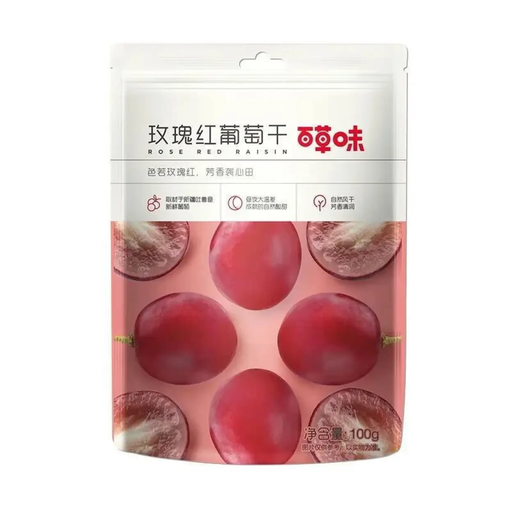 Image unavailable
Be&Cheery red raisins, 100 g
A small packet to consider if you’d like to add raisins to a meal. The 100 g pack makes it easier to plan how much you’ll use; check the nutrition information and storage instructions for this product before buying.
View on Joybuy
 Image unavailable
Haoxiangni Grade 2 pitted red dates, 500 g
Worth considering if you’d like to add pitted dates to several meals. The 500 g packet means you’ll need to plan how to store it after opening; also compare the sugars per 100 g if that’s important to you.
View on Joybuy
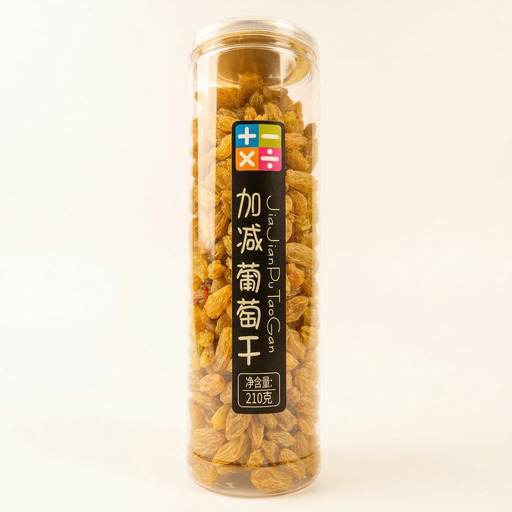 Image unavailable
Jia Jian Cheng Chu raisins, 210 g
Another raisin option to compare if you’re looking for a mid-sized pack to use on several occasions. The packet contains 210 g; check how much you’ll serve and the nutrition information for this product.
View on Joybuy
 Image unavailable
Haoxiangni Grade 2 Fresh-Locked Original Flavour pitted red dates, 280 g
Compare this with the other Haoxiangni pack size if you’d like pitted dates without buying a 500 g packet. This variety contains 280 g; check its ingredients, sugars per 100 g and instructions for storage after opening.
View on Joybuy
Frequently asked questions
Are dried fruits always low in calories?
No. The Carrefour Bio and Carrefour Le Marché product pages list 232 kcal per 100 g for soft dried apricots, compared with 476 kcal per 100 g for a dried fruit and nut mix. Compare the specific products and portion sizes; Manger Bouger also points out that dried fruit is naturally high in sugars.
How should I compare two packets of dried fruit?
Start by comparing their values per 100 g, then check their ingredients, allergens and net weight. The DGCCRF states that nutrition information for pre-packed foods is given per 100 g or 100 ml; for this purchase, pay particular attention to energy, sugars, fat and salt.
What should I check if I need to avoid an allergen?
Read the information on the specific packet, including any warnings about possible traces. The DGCCRF states that allergens in pre-packed foods must be emphasised; information for one mix can’t be applied to other recipes.
How do I choose a pack size I can store?
Choose an amount that suits how you’ll use it, and follow the product’s own instructions for storage after opening. The Auchan raisins product page says to reseal the packet tightly, while the Seeberger Nuts N’Berries mix product page says to store it away from heat and moisture.


