People keeping an eye on fat
You’re looking for dried fruit to have with your coffee and compare the ‘fat’ figures per 100 g. You’ll still need to check the sugars and ingredients on the pack you choose.


If you’re looking to keep fat to a minimum when choosing something to enjoy with your coffee, compare dried fruit first rather than choosing almonds based on the category name alone. Auchan pitted dried apricots contain less than 0.5 g of fat per 100 g, compared with 51 g per 100 g for the Daco Bello roasted almonds listed by Monoprix. This doesn’t mean you can skip checking sugars, ingredients and allergens. Unsalted almonds meet a different need: enjoying almonds while avoiding added salt.
You’re looking for dried fruit to have with your coffee and compare the ‘fat’ figures per 100 g. You’ll still need to check the sugars and ingredients on the pack you choose.
You prefer almonds, but their fat content isn’t your main concern. Checking the ingredients, salt content and allergen information can help you tell different products apart.
You’re thinking of taking turns between dates, raisins, prunes, apricots and almonds with your coffee. Check the nutritional information and pack size for each product: ‘dried fruit’ can mean quite different things.
Start by deciding what matters most to you: less fat, almonds with no added salt, or keeping an eye on sugars and ingredients. Then compare products on the same basis: per 100 g.
| What matters to you | What to check | Who this is for |
|---|---|---|
| Cutting down on fat | The ‘fat’ value per 100 g; the difference between dried fruit and nuts. | If I’m looking for dried fruit to have with my coffee and want to prioritise fat content, I compare the labels before choosing. Around 43% of consumers would put this first. |
| Choosing almonds with no added salt | Any information about salt, the ingredients list and the ‘salt’ value per 100 g. | I want to enjoy almonds with my coffee without confusing no added salt with lower fat. This would be the top priority for around 29% of consumers. |
| Checking sugars and ingredients | The ‘of which sugars’ figure, ingredients and allergens on the exact pack. | Before choosing dried fruit, I want to know its sugar content and what it’s made of. Around 28% of consumers would prioritise checking this first. |
The products reviewed have very different figures: Auchan lists less than 0.5 g of fat per 100 g for its pitted dried apricots, while Monoprix lists 51 g per 100 g for Daco Bello roasted almonds.
If fat content is guiding your choice, compare this figure on the specific products you’re considering rather than relying on the name of the aisle.
Auchan’s product information for its dried apricots lists 37 g of sugars per 100 g. The SUN mixed dried fruit listed by Auchan contains 46.5 g of sugars per 100 g, despite having 0.3 g of fat per 100 g.
Compare ‘fat’ and ‘of which sugars’ side by side, then check the ingredients and the portion you plan to serve.
Auchan’s dried apricots contain sulphites. Auchan also warns that fragments of stones may exceptionally remain in this pitted product, and that it is not suitable for young children because of the risk of choking.
Before buying or serving your chosen product, check its allergens, any possible traces and all warnings, especially if it’s for a young child.
Its online range includes dates, raisins and almonds.
Its product pages for dried apricots and mixed dried fruit let you compare different products.
Its range includes a Tokapi mix and Couleurs Vives almonds with no added salt.
Lidl France describes Alesto as a range that includes nuts and dried fruit.
ALDI France lists 200 g packs of blanched almonds with no added salt.
Its range includes dried fruit and almonds from various brands, including Daco Bello.
These packs of red jujubes, also known as red dates, and dried apricots are options to enjoy with your coffee. To choose between them based on what matters to you, check the nutrition information and ingredients on the exact pack.
 Image unavailable
Worth considering if you’d prefer pitted dried fruit rather than almonds with your coffee. The pack is labelled Grade 2 Fresh-Locked and contains 280 g. Check the fat and sugar content per 100 g before choosing.
 Image unavailable
This pack of pitted dried fruit is a handy option for comparing pack sizes for your morning coffee. It contains 500 g. Check the sugars, fat and storage instructions for the product you choose.
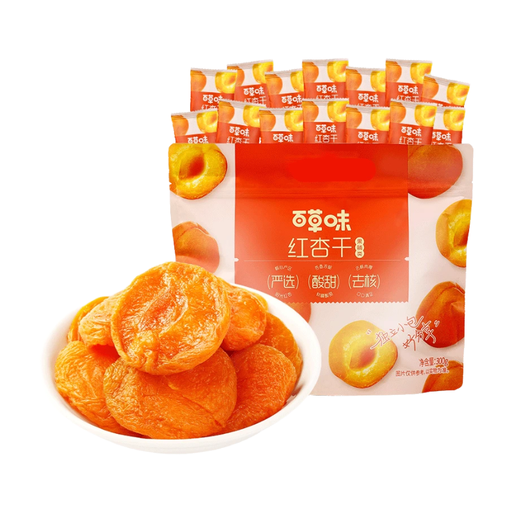 Image unavailable
These dried apricots give you another type of fruit to compare with jujubes and almonds for enjoying with coffee. The pack contains 300 g. Check its nutrition information, ingredients and allergen details on the packaging.
Not necessarily. Auchan lists less than 0.5 g of fat but 37 g of sugars per 100 g for its pitted dried apricots. Compare the ‘fat’ and ‘of which sugars’ figures separately on the packs you’re considering.
‘No added salt’ refers to salt, not fat. The product page for Daco Bello roasted almonds listed by Monoprix shows 0.03 g of salt and 51 g of fat per 100 g. Choose this product for its own qualities, but don’t confuse it with low-fat dried fruit.
Read the ingredients list, check which allergens are highlighted and look for any ‘may contain’ warnings on the exact product. The French Directorate-General for Competition Policy, Consumer Affairs and Fraud Control states that allergenic ingredients must be listed and highlighted. Auchan’s product page for its pitted dried apricots specifically mentions sulphites.
Not if you’re comparing nutritional composition. The SUN mix listed by Auchan contains apricots, prunes, dates and figs, and its product page lists 0.3 g of fat and 46.5 g of sugars per 100 g. Check its own ingredients and nutrition information rather than assuming they’re the same as a pack of apricots alone.