To keep calories down at a Christmas gathering, don’t choose dried fruit just because it sounds like a light snack. Compare the energy per 100 g and the amount you plan to serve. If you want to stick with dried fruit, distinguish it from nuts and check the ingredients and allergens. If you’re happy with a smooth texture, unsweetened fruit purée is another option to consider.
Who is this choice for?
Hosts who prioritise energy content
You’re looking for a fruity option for Christmas and would be happy to swap dried fruit for fruit purée if you like the texture. Monoprix Courses lists 51 to 52 kcal per 100 g for two unsweetened options. Make sure you compare like with like, using the same serving size.
Dried fruit fans who check the ingredients
You want to serve dried fruit but avoid recipes with added sugar or a sugary coating. ‘No added sugar’ doesn’t mean ‘sugar-free’: Manger Bouger points out that dried fruit is naturally high in sugar.
Hosts putting together a sharing platter
You need to identify the ingredients clearly before serving a mix to your guests. Depending on the recipe, Carrefour and Auchan product details list ingredients such as peanuts, nuts and sulphites. Keep the packaging for the product you serve close at hand.
What should you look for first?
First decide whether you want to stick with dried fruit or are happy to try a different texture. Then compare the nutritional values per 100 g and the portion you plan to serve. Don’t confuse energy, added sugars and salt.
| Criteria |
What to check |
Who is it for? |
| Energy in your snack |
Compare the kcal per 100 g, then check how much you’ll actually serve. Monoprix Courses lists 51 to 52 kcal per 100 g for two fruit purées. Carrefour and Daco Bello product details cited by Carrefour list 549 and 629 kcal per 100 g respectively for a mix and roasted almonds. |
If a lower-energy fruity option matters more to you than crunch, switching to a different category could work well. Around 33% of consumers put energy content first. |
| Added sugars and ingredients |
Check the ingredients and the ‘of which sugars’ line. The Frutsy Plaisir mix featured by Auchan contains cane sugar; Manger Bouger points out that dried fruit is naturally high in sugar. |
You want to serve dried fruit but would rather avoid sweetened or coated recipes. Checking the ingredients comes first for around 27% of consumers. |
| Crunch without added salt |
Check the product name and ingredients, but don’t assume that no added salt means fewer calories. For nuts, Manger Bouger recommends a small handful of unsalted, unsweetened options without chocolate. |
For a crunchy appetiser, you prefer unsalted nuts while keeping an eye on portion size. Around 20% of consumers prioritise this type of snack. |
| Allergens and sulphites |
Read the packaging for the product you’re serving, including any ‘may contain’ warnings. The DGCCRF says allergens must be highlighted in the ingredients list on prepacked foods. |
When putting together a sharing platter, your main concern is being able to identify the ingredients for each guest. Around 20% of consumers put this check ahead of other criteria. |
Which misconceptions should you avoid?
-
Assuming ‘no added salt’ means ‘low in calories’
Salt and energy answer two different questions. Carrefour lists 549 kcal per 100 g for its Sensation mix with no added salt, and 629 kcal per 100 g for Daco Bello roasted almonds with no added salt.
If calories are guiding your choice, compare the values per 100 g and keep an eye on the portion you serve, even with an unsalted recipe.
-
Reading ‘no added sugar’ as ‘sugar-free’
This claim describes the recipe; it doesn’t mean there are no naturally occurring sugars in dried fruit. Manger Bouger highlights this distinction for dates, raisins and dried apricots.
Check both the ingredients list and the ‘of which sugars’ line in the nutritional information.
-
Serving a mix without checking the label
Ingredients vary. Depending on the product, Carrefour, Auchan and Seeberger product details list peanuts, nuts or sulphites.
Check the pack you actually bought and keep it by the platter so guests can check the ingredients.
-
Presenting fruit purée as dried fruit
Fruit purée doesn’t have the crunch of nuts or the texture of dried fruit, even if its energy content per 100 g is different.
Offer it as a separate fruity option, in a format that suits the way you plan to serve it.
Retailers and brands to explore
Carrefour
Its product details make it easy to compare the ingredients and energy content of specific mixes and almonds.
- Carrefour Sensation mix with no added salt lists 549 kcal per 100 g and contains ingredients including peanuts, raisins, almonds and cashew nuts.
- No added salt doesn’t mean it’s low in calories. It also contains a range of ingredients, so check the allergens carefully.
E.Leclerc
The Tokapi mix product details let you check the recipe, sugars and energy content together.
- E.Leclerc lists 486 kcal and 41 g of sugars per 100 g for the Tokapi mix with no added salt.
- The recipe includes sweetened fruit and sugar-coated almonds, so ‘no added salt’ doesn’t tell you anything about added sugars.
Auchan
The Frutsy product details distinguish two mixes of nuts and dried fruit with different ingredients.
- Auchan lists 381 kcal per 100 g for Mix & Go Énergie and 395 kcal per 100 g for Mix & Go Plaisir.
- The Énergie product details mention sulphites, while the Plaisir product details list cane sugar. Check which product you’re choosing.
Lidl
The Alesto range includes nuts, dried fruit and appetiser snacks. First choose the category that best suits your platter.
- To compare a specific product, check the ingredients, allergens and nutritional values per 100 g on the packaging.
Aldi
Its Trader Joe’s roasted almonds are described as having no added salt, which is useful if you’re looking for an unsalted, crunchy appetiser.
- This claim alone doesn’t tell you how much energy the product contains, so check the nutritional information on the pack you choose.
Monoprix
Its fruit purées and fruit products are worth considering if you’re happy with a fruity option that isn’t dried fruit.
- Monoprix Courses lists 51 kcal per 100 g for Monoprix apple and pear purée and 52 kcal per 100 g for St Mamet red fruit purée. Both have no added sugar.
- Their smooth texture won’t replace dried fruit on a crunchy platter.
A fruity option on Joybuy
If you’re happy for fruit purée to replace some of the dried fruit on your Christmas table, this smooth option serves a different purpose from a crunchy platter. It’s intended for babies aged 4 months and over.
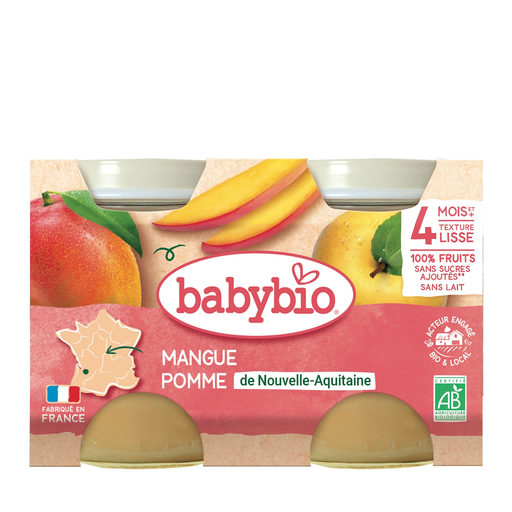 Image unavailable
BABYBIO apple and mango purée, 2 × 130 g
Consider this only if you’re looking for a smooth, fruity alternative to crunchy dried fruit. The product is described as having no added sugar and is intended for babies aged 4 months and over. This doesn’t mean the fruit contains no sugars.
View on Joybuy
Frequently asked questions
Is dried fruit with no added sugar necessarily low in calories?
No. ‘No added sugar’ describes the recipe, not its energy content. Manger Bouger points out that dried fruit is naturally high in sugar. Compare the kcal and the ‘of which sugars’ value per 100 g.
How can you compare fruit purée with a dried fruit mix?
First compare their kcal on the same basis, such as per 100 g, then consider how much you’ll serve. Monoprix Courses lists 51 to 52 kcal per 100 g for two fruit purées with no added sugar, while the Frutsy mixes featured by Auchan list 381 and 395 kcal per 100 g. Their textures and uses are still different.
What should you check before serving a dried fruit mix to guests?
Read the ingredients list and any ‘may contain’ warnings on the pack you’re serving. The DGCCRF says allergens in prepacked foods must be highlighted in the ingredients list. Depending on the recipe, check for peanuts, nuts and sulphites in particular.


