Organisers comparing calorie content
If you’re looking to limit the calories in each portion, start with the kcal per 100 g, then decide how much to serve. The packet weight and a claim such as “natural” are no substitute for this comparison.


To choose a snack that is relatively lower in calories, compare the kcal per 100 g for similar products, then consider the amount you’ll serve each guest. Simply prepared dried fruit and plain nuts suit different tastes: neither “no added salt” nor “no added sugars” automatically means “low in calories”. For a buffet, check the ingredients and allergens too before dividing the products between serving bowls.
If you’re looking to limit the calories in each portion, start with the kcal per 100 g, then decide how much to serve. The packet weight and a claim such as “natural” are no substitute for this comparison.
If you’d like to offer a fruity snack to share, look for a short ingredients list and check for sugar, syrup, coatings or oil. Check the total sugars separately in the nutritional information.
If children or people with allergies are coming to the fête, keep dried fruit separate from nuts. Keep allergen information close to the food being served and make sure it’s presented appropriately for young children.
For dried fruit and nuts for a village fête, first decide between dried fruit, nuts and a mix. Then compare the labels of products that meet your needs.
Worth considering: if you want a fruity option with an ingredients list that suits what you plan to serve.
Keep in mind: no added sugar doesn’t mean there are no naturally occurring sugars; compare the kcal per 100 g too.
Worth considering: if you’d prefer to offer an unsweetened option in small portions.
Keep in mind: they’re not necessarily lower in calories, and serving them calls for extra care around allergens and young children.
Worth considering: if variety and easy serving are important for your buffet.
Keep in mind: a “no added salt” claim tells you nothing about sugars or calories; check the ingredients in each mix.
| What matters | What to check | Who it matters to |
|---|---|---|
| Calories per portion | Compare the kcal per 100 g for similar products, then plan how much to serve. | To keep snacks light at the buffet, some people want to manage the calories in each portion first; around 36 % make this their top priority. |
| Ingredients | Read the ingredients and the “of which sugars” line per 100 g, particularly for mixes. | When a recipe contains sweetened or coated fruit, I want to be able to spot these additions before I buy it; around 29 % of shoppers prioritise a simple ingredients list. |
| Allergens and serving | Identify the allergens in each product and avoid offering whole nuts to young children. | When a buffet caters for guests with different needs, being able to identify ingredients matters more than convenience; nearly 21 % of shoppers make this precaution a priority. |
| Sharing size | Choose an amount suited to your guests and check availability at your chosen shop. | To prepare several bowls without making serving complicated, some shoppers look first for a pack that’s easy to divide up; around 14 % prioritise this. |
According to their respective product listings, the Tokapi mix sold by E.Leclerc contains 486 kcal per 100 g, while the Juste Bio mix listed by Auchan contains 470 kcal per 100 g. So the absence of added salt doesn’t help you distinguish between these products in terms of calories.
Compare the kcal per 100 g and the portions you plan to serve; don’t rely only on the claim on the front of the packet.
The E.Leclerc listing for the Tokapi mix includes sweetened fruit, sugar-coated almonds and banana chips containing sugar and oil.
Before choosing a mix for a light snack, read its ingredients and compare its nutritional information with other products.
Once the packets have been removed, guests may find it difficult to tell which ingredients and allergens are in each bowl. The DGCCRF has identified shortcomings in allergen information for non-prepacked foods.
Keep the packaging within reach, label each bowl and provide separate serving utensils.
Their shape poses a choking risk for young children.
Avoid offering whole nuts to young children; choose an appropriate way to serve them or offer an alternative.
These examples can help you compare different recipes and pack sizes; a retailer or product range alone doesn’t tell you the calorie content of every product it sells.
Carrefour Sensation offers a 120 g bag of mixed dried fruit and nuts with no added salt.
E.Leclerc’s listing describes a 150 g bag of Tokapi dried fruit and nut mix with no added salt.
Auchan offers a Juste Bio mix of raisins, cashews, almonds and hazelnuts with no added salt.
Lidl’s Alesto range includes dried fruit, nuts and savoury snacks.
The Monoprix range includes bags of raisins, dates and soft apricots.
These three pitted dried fruit products are worth considering for a buffet. Their pack sizes don’t replace the need to compare the nutritional information per 100 g or decide how much to serve.
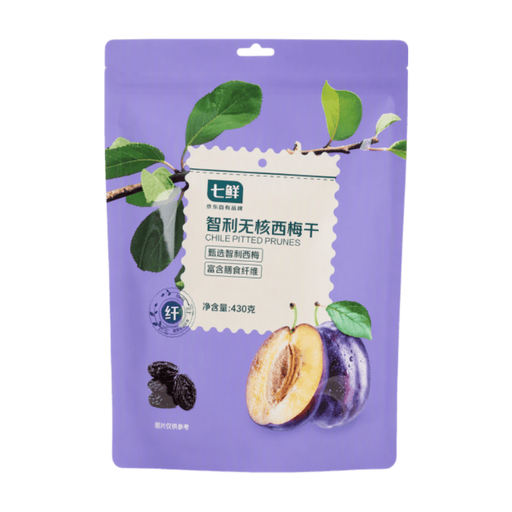 Image unavailable
Worth considering if you’d like to divide pitted prunes between several buffet portions. The bag contains 430 g; to assess the calories in each portion, compare the nutritional information per 100 g and measure how much you serve.
 Image unavailable
A size worth considering if you’re planning to share pitted red dates between several guests. The bag contains 500 g; compare the sugars and calories per 100 g with the other dried fruit you’re considering, then decide how much to serve.
 Image unavailable
This 280 g bag is another size of pitted red dates to consider for a buffet. It’s a different product from the 500 g Haoxiangni bag: compare their individual labels rather than assuming they have the same nutritional values, and plan how much to serve.
No. This claim doesn’t tell you the product’s calorie content, and it doesn’t rule out naturally occurring sugars. To choose between dried fruit products, compare the kcal and sugars per 100 g, then consider the portion you’ll serve.
Start with the calories per 100 g if your priority is a lower-calorie snack; then check the sugars, fat, salt and ingredients. The DGCCRF explains that showing nutritional information per 100 g or 100 ml makes it easier to compare the foods concerned.
They can be an unsweetened option if you choose a plain product and serve small portions, but “plain” doesn’t mean “low in calories”. Manger Bouger suggests a small handful of unsalted, unsweetened nuts without chocolate; check the allergens too before offering them to your guests.
Don’t leave whole nuts where they can reach them: they pose a choking risk. Choose an appropriate way to serve them or offer an alternative, and clearly label products containing nuts.
Keep it nearby so you can identify the ingredients and allergens in each product. Label each bowl with its contents and use separate utensils, especially when some mixes contain peanuts or tree nuts.