
Livraison le jour même ou le lendemain

Qualité garantie

Débloquez vos offres de bienvenue: Livraison GRATUITE | Jusqu'à -80 % | 30 jours d'essai gratuits à JoyPlus
Téléchargez l'application
Dried Chinese red dates, also known as dried jujubes, come in a wide variety of forms here in the UK: soft whole fruits, pitted versions, crispy slices, honey-coated dates and sesame bites. There’s plenty to choose from… but also plenty of ways to pick the wrong product.
An attractive packet doesn’t tell you much about the actual quality or the intended use. Before you order, focus on three things: the ingredients, whether the fruit contains a stone, and the texture you’re after.
Some products contain only jujubes. Others add sugar, maltose syrup, honey, palm oil or sesame seeds. These recipes can be perfect for a treat, but they don’t serve the same purpose as a dried fruit made from 100% red dates.
Take the time to read the ingredients list, in the order shown on the packet. A mention like “with honey” or “with sesame” usually means a processed product, whose carbohydrate, fat or sugar content can differ significantly from that of a plain fruit.
Whole jujubes may contain a stone. The Hao Xiang Ni product in individual sachets, for example, is made from 100% red dates, but the listing clearly states they are with stones. This format is fine for a leisurely snack with tea or for certain recipes, but it requires extra care around children.
If you want to add fruit quickly to porridge, soup or a dessert, pitted red dates are far more convenient. However, do check the wording: a product described as “mechanically pitted” may occasionally contain a small fragment of stone, as noted on the Red Farmer Union Honey Dates listing.
Crispy red dates are often produced by drying or heat treatment. Some also contain oil. The nutritional information for Bestore Crispy Jujube and Be&Cheery Sweet and Crispy Winter Dates shows 30 g and 31.9 g of fat per 100 g respectively.
Texture is therefore a matter of taste, not a reliable nutritional indicator. To compare two products, look at the energy content, sugars, fats and the recommended serving size.
For a simple recipe, go for a short ingredients list, for example “jujube 100%”. The Hao Xiang Ni Ready-to-Eat Red Dates and Haoxiangni Grade 2 Fresh-Locked Pitted Red Dates Original Flavour both have a composition limited to jujube.
That doesn’t mean they are sugar-free: like all dried fruits, jujubes naturally concentrate their sweet flavour. As a guide, the Hao Xiang Ni ready-to-eat red dates contain 28.7 g of sugar per 100 g, compared with 66.5 g per 100 g for the pitted version. Manufacturing processes and declared values can vary, so always rely on the label of the product you receive.
If you cook regularly with jujubes, a resealable 400 g to 500 g bag will generally be easier to store than a series of small packets. Individual portions do have their advantages, though: they limit repeated opening and make portion control simpler.
Xinjiang jujubes are known for their often tender flesh and natural sweetness, but origin alone doesn’t determine texture. Look at the descriptors used on the product page: “soft”, “firm”, “crispy” or “candied”.
The YYH Dried Xinjiang Jujube Dates product states a 100% jujube composition, a Xinjiang origin and a 500 g pack size. It can be used in tea, soups, porridge or desserts. To preserve its texture, store the bag in a cool, dry place away from moisture, and reseal it carefully after each use.
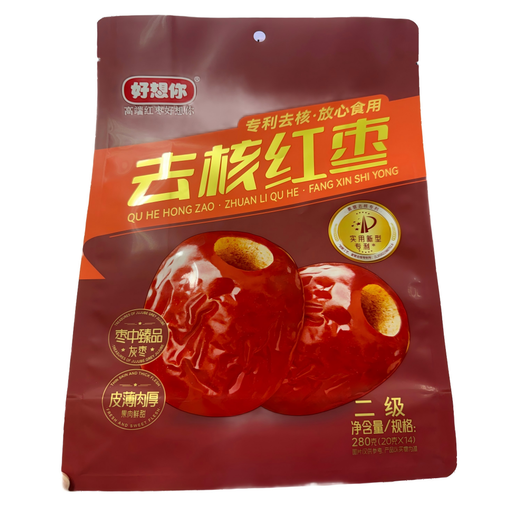
Why this suits this profile: At 280 g, this bag lets you discover pitted red dates without committing to a large pack straight away. They are described as ready to eat and made from 100% jujube.
The “pitted” label removes the main risk of inconvenience, whether you’re eating them straight away or adding them to a dessert.
100% jujube, 280 g pack, no declared allergens and immediate use in tea or desserts.
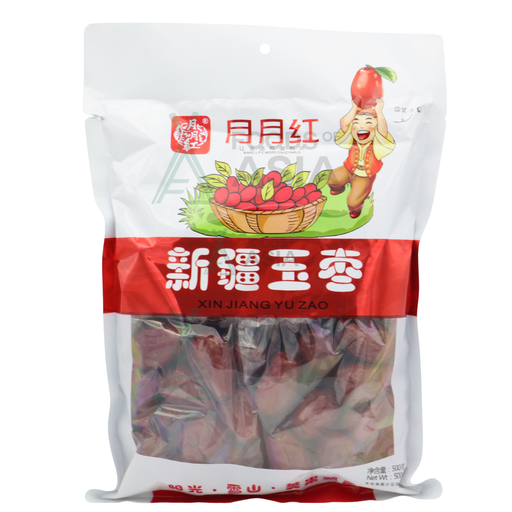
Why this suits this profile: Its stated Xinjiang origin and 500 g format will appeal to those looking for versatile Chinese dried fruit to use in several recipes.
The listing states 100% jujube composition with no added sugar or declared preservatives: this is clearly a dried fruit, not a confectionery item.
A 500 g bag, fruit suitable for tea, soups, porridge and desserts, with 307 kcal and 56 g of sugar per 100 g according to the listing.
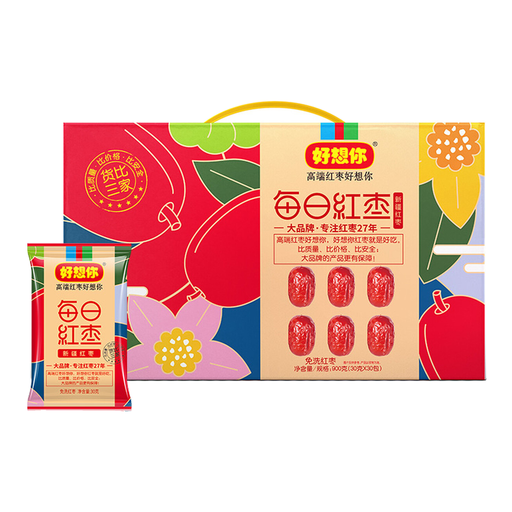
Why this suits this profile: The 30 sachets of 30 g each are ideal for regular consumption at the office, on the go or at home, with portions that are easy to manage.
The portioned packaging limits repeated opening of a large bag. The listing also clearly states the presence of stones.
900 g total, 30 individual sachets, 100% dates and multiple uses: snack, tea or dessert.
We’ve put together a comprehensive, real-time selection of products that meet these demanding criteria and European safety standards.
Yes, when they are labelled as ready to eat. However, do check for the possible presence of a stone and the best-before date on the packaging. Soft versions can be eaten as they are, while crispy red dates are better suited to a quick snack or as a topping.
Whole fruits can be added to an infusion, porridge or soup, after checking and removing the stone if necessary. Crispy slices are easy to scatter over a dessert or yoghurt. For a more indulgent preparation, honey or sesame dates offer a different texture, but their ingredients should be compared with those of plain jujubes.
Store red dates in a cool, dry place away from light, resealing the bag carefully or transferring them to an airtight container. After opening, moisture can affect their texture and shorten their shelf life. For the exact duration, refer to the instructions on the product packaging.