If you want to limit the energy in your snack
You’d like to take some dried fruit with you after a workout, without assuming that all products are the same. Compare the energy per 100 g for the specific product, then factor in how much you’ll eat.


If you’re looking for a lower-energy snack after exercise, compare the figures per 100 g for specific products: HOLYFRUITS soft apricots contain 200 kcal per 100 g according to their Auchan product page, compared with 232 to 259 kcal per 100 g for three other apricot products listed by Carrefour, Auchan and E.Leclerc. Portion size matters too. If you want your snack to provide protein, don’t rely on dried fruit alone.
You’d like to take some dried fruit with you after a workout, without assuming that all products are the same. Compare the energy per 100 g for the specific product, then factor in how much you’ll eat.
If you have another workout coming up soon and want both carbohydrates and protein, dried fruit can be part of your snack without being the only thing in it.
You may need to check for ingredients such as sulphites, or for nuts in a mixed pack. Check the information for the specific product you choose, especially when buying online.
Start by comparing products intended for the same use and in equal quantities, then check whether their ingredients suit your post-workout snack.
| Criteria | What to check | Who it matters to |
|---|---|---|
| Energy per portion | The kcal per 100 g for the specific product and the amount you’ll eat. | I want a dried-fruit snack while keeping its energy content in check. Around 37% of consumers prioritise this criterion. |
| What’s in the snack | The carbohydrates in the dried fruit and the protein provided by the other foods in the snack. | With another workout coming up soon, I want to put together a snack that doesn’t rely on fruit alone. This is the top priority for around 27% of consumers. |
| Nuts or dried fruit | The ingredients in the mix, its energy per 100 g and the amount of salt listed. | I sometimes prefer a mix containing nuts, even if it isn’t necessarily the lowest-energy option. This is the main criterion for around 18% of consumers. |
| Ingredients and allergens | The ingredients list, highlighted allergens and any warnings about traces. | Certain ingredients or allergens determine which products I can choose. For around 18% of consumers, checking these takes priority over other criteria. |
Product pages from Auchan, Carrefour and E.Leclerc list between 200 and 259 kcal per 100 g for the four apricot products reviewed. Monoprix Gourmet’s nut and apricot mix, by contrast, contains 597 kcal per 100 g, so it isn’t a like-for-like product.
Compare the figures per 100 g for products intended for the same use, and take portion size into account too.
Dried fruit chosen for its carbohydrates won’t automatically replace the other foods in a snack. Research published in Current Sports Medicine Reports describes the distinct roles of carbohydrates and protein after exercise.
If you want to include both, consider the contents of your whole snack rather than just the packet of fruit.
Auchan’s soft apricots product page lists sulphur dioxide, among other ingredients. A nut mix may contain different ingredients and allergens from a packet of apricots.
Read the ingredients list and allergen information for each product before choosing it.
Manger Bouger mentions a small handful of unsalted nuts in its general dietary guidance, not as a rule for choosing a lower-calorie post-workout snack.
If energy content is your top priority, check the nutrition information for the mix you’re considering rather than judging it by the presence of nuts.
Carrefour Bio soft dried apricots are a specific product you can use to compare labels, but they don’t represent the whole Carrefour range.
ECO+ dried apricots in a 500 g pack offer another point of comparison among the apricot products listed by the retailers reviewed.
Auchan’s product pages let you compare two soft apricot products with different ingredients and nutritional values.
Lidl describes Alesto as a range that includes dried fruit, nuts and snacks.
If you’re browsing dried fruit at Aldi, base your choice on the packaging for the specific product rather than the retailer’s general range.
The Monoprix range includes raisins, dates, prunes and apricots, as well as mixes that should be assessed separately.
These pitted dates and prunes make a handy dried-fruit snack to take with you. If energy content is your top priority, compare the label on each product and the portion you’re planning to eat.
 Image unavailable
This 500 g pack gives you plenty of flexibility to portion out dates for a post-workout snack. If you’re mainly looking for a lower-energy option, compare the figures per 100 g rather than judging by the size of the pack alone.
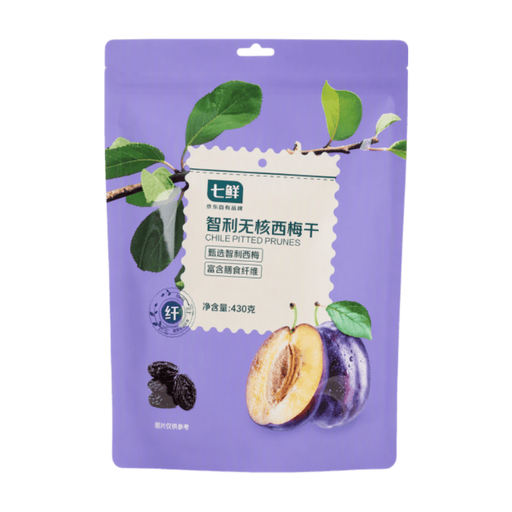 Image unavailable
These 430 g pitted prunes are another dried-fruit option for a snack. Check their energy per 100 g and the portion you choose; the fruit alone doesn’t tell you what’s in your whole meal or snack.
No. Its energy content depends on the specific product and how much you eat. Product pages from Auchan, Carrefour and E.Leclerc list between 200 and 259 kcal per 100 g for the four apricot products compared. Check the value for the product you’re considering rather than generalising about all dried fruit.
Don’t choose dried fruit alone to meet this requirement. If protein is something you want from your post-workout snack, check what the other foods you plan to eat with it can provide.
No. A date, a prune and a mix containing nuts are different products. To compare their energy content, check the kcal per 100 g and ingredients for each one. For example, Monoprix lists 597 kcal per 100 g for its Gourmet nut and apricot mix.
Start by checking the ingredients list, nutrition information and allergens for the product you’ve chosen. The DGCCRF states that allergens must be clearly highlighted on labels; also check the information on the pack you receive.