
Livraison le jour même ou le lendemain

Qualité garantie

Débloquez vos offres de bienvenue: Livraison GRATUITE | Jusqu'à -80 % | 30 jours d'essai gratuits à JoyPlus
Téléchargez l'application
Buying drawing and creative stationery supplies can quickly become expensive when marketing promises take precedence over genuinely useful features. A pen that bleeds through the paper, a notebook that’s too flimsy, or a watercolour set that’s awkward to carry can turn a good intention into a disappointing purchase.
Before you fill your basket, take a moment to consider three often-overlooked criteria:
Here are the points to check when putting together a set suited to sketching, journaling, everyday writing, or school and professional activities.
A generous assortment isn’t necessarily a sign of versatility. To get started, a few HB graphite pencils, some fine black fineliners and several coloured gel pens can be more than enough. On the other hand, a box of 24 pencils covering grades 12B to 10H is mainly aimed at those who want to work on contrast, hatching and technical detail.
So begin by identifying your main use: note-taking, observational drawing, illustration, watercolour or journaling.
The weight and texture of the paper have a direct impact on the result. A hardback notebook with 100 gsm paper is fine for writing and light sketching, but it isn’t necessarily designed to absorb a lot of water. For watercolour, choose paper suited to that technique and let the pages dry flat to minimise warping.
An A6 notebook fits easily into a bag, but its small surface area can quickly become restrictive for detailed drawings. A large sketch pad offers more freedom, at the cost of being less portable.
Phrases like “instant drying”, “water-resistant” or “smudge-free” should always be taken in context. The result depends on the paper, the pressure applied and the drying time. For inks, check the nib type, the stated composition, the closure system and any usage precautions.
Small items — caps, erasers or notebook accessories — must be kept out of reach of children under 3 years old when the product page carries the relevant warning.
For fine writing, detailed drawing and annotations, a 0.5 mm nib gives a precise line. 0.5 mm mechanical pencils are also handy for keeping a consistent line width without needing a sharpener. A 1.8 mm clutch pencil is better suited to sketching and more expressive strokes.
Fine black fineliners available in several widths — for example from 0.05 mm to 1.0 mm — let you vary the thickness of your outlines. A brush pen can complete the set for lettering, solid areas or softer lines.
H grades produce light, firm lines, particularly useful for construction lines and details. B grades are softer and better suited to shading and dark values. HB remains a versatile all-rounder for writing, sketching and school exercises.
A box containing several hardnesses is useful for progressing in drawing. However, it can be an unnecessary expense if you mainly use one pencil for note-taking.
An A6 notebook measuring roughly 10.5 × 14.8 cm slips easily into a pocket or small bag. A hard cover, elastic closure, bookmark and pen loop help keep accessories from getting scattered about in daily use. For pens and fineliners, replace the caps carefully and store them according to the manufacturer’s instructions. Watercolour products should ideally be kept dry, in a closed box.
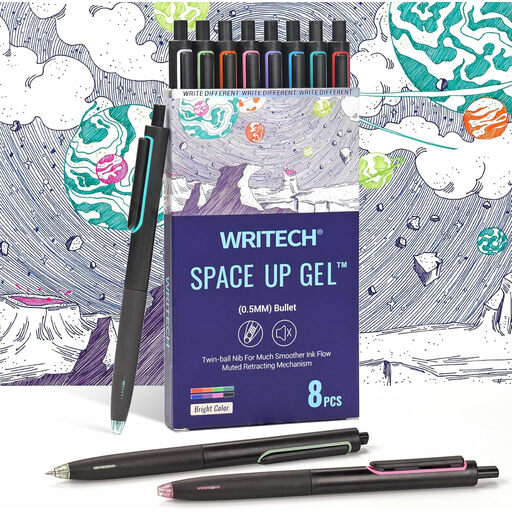
Why this choice suits this profile: This set of eight multi-coloured gel pens is ideal for note-taking, journaling and early sketches. Their retractable mechanism and fine tip make them particularly easy to use every day.
The eight colours are clearly identified and the retractable format limits exposure of the nib in your pencil case.
0.5 mm tip, eight matching inks, triangular body and reportedly silent click.
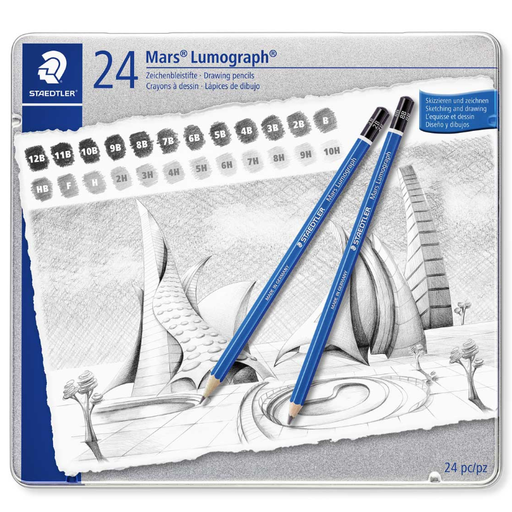
Why this choice suits this profile: Experienced artists, art students and illustrators can make the most of a wide range of hardnesses for value studies and technical drawing.
The grades are printed on the pencils, so you can quickly choose the line you want without relying on a uniform appearance.
24 stated hardnesses, from 12B to 10H, with a storage box and reinforced leads according to the product page.
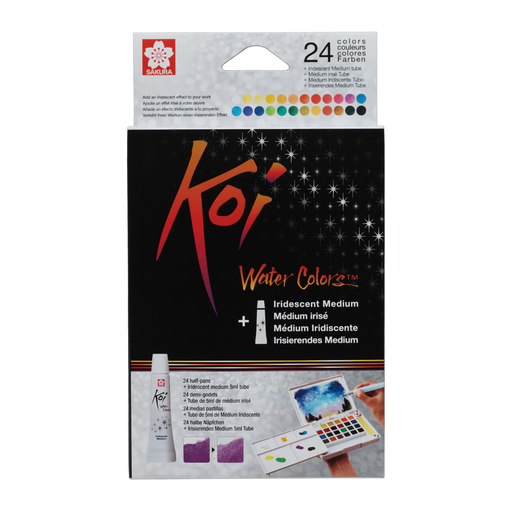
Why this choice suits this profile: Watercolour enthusiasts on the go get a compact case with an integrated mixing palette, ideal for travel journals and outdoor sketching.
Its pocket-sized format means you don’t have to carry several separate pans, and it reduces the bulk of your sketching kit.
24 half-pans, one iridescent medium and a compact case with a stated mixing area.
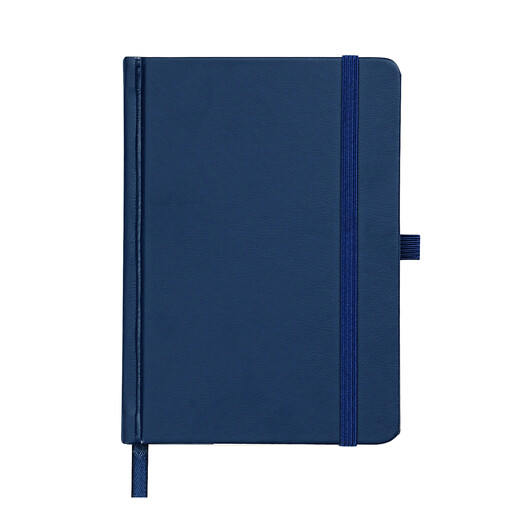
Why this choice suits this profile: Its compact size is ideal for students, teachers and journaling enthusiasts who take notes every day.
The dimensions and paper weight are stated. The elastic closure and pen loop also help reduce the risk of misplacing accessories.
160 pages, 100 gsm offset paper, bookmark, elastic closure and PU leatherette cover.
We’ve put together a comprehensive, real-time updated selection of products that meet these demanding criteria and comply with European safety regulations.
Start with a notebook in a size that suits your needs, a few HB graphite pencils or pencils of different hardnesses, an eraser and some fine black fineliners. If you do journaling or visual note-taking, add a few multi-coloured gel pens.
The A6 notebook is all about portability and small annotations. A large pad offers more space for compositions, proportion studies and drawings that need several levels of detail. The right choice therefore depends on where you plan to use it and the size of your work.
Replace the caps on fineliners and pens after each use, store pencils in their box and protect everything from moisture. For watercolour, clean the palette after each session and let it dry completely before closing it. Also check that the paper is suitable for the technique you’re using to minimise smudging and waste.