
Livraison le jour même ou le lendemain

Qualité garantie

Débloquez vos offres de bienvenue: Livraison GRATUITE | Jusqu'à -80 % | 30 jours d'essai gratuits à JoyPlus
Téléchargez l'application
Whether you're a seasoned artist, an art student, or simply a creative hobbyist, finding the ideal drawing supplies can sometimes feel like an obstacle course. Between marketing promises and obscure technical jargon, the risk of ending up with disappointing materials is very real. As a product expert for Joybuy, my mission is to demystify this world to help you make informed, confident choices.
To avoid throwing your money down the drain, let's review the most common disappointments.
To avoid these pitfalls, two elements require close attention: the paper and the drawing tools.
The choice of your sketchbook or paper will depend entirely on your preferred medium.
Weight (g/m?): This is the key indicator of its thickness and sturdiness.
Texture (the tooth): Paper can be smooth (hot-press), fine-grained (cold-press), or rough. A fine grain will grip the pigments of pencils and pastels well, while a smooth surface is perfect for precision drawing with a drawing pen or marker.
The final look of your line depends directly on this pair.
Here is a selection of products that meet specific needs, in line with the criteria we've just discussed.
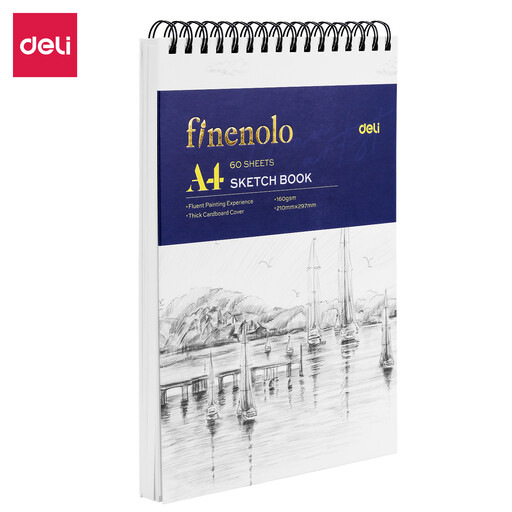
Editor's take: Ideal for getting started without breaking the bank. Its A4 notebook format offers plenty of room to work, and its spiral binding allows it to lay completely flat—a very practical detail for drawing comfortably.
This sketchbook gets straight to the point: a simple, functional surface for dry media (pencil, charcoal, coloured pencils), far from superfluous kits.
Excellent value for money with its 60 smooth, white sheets, perfect for daily practice without holding back.
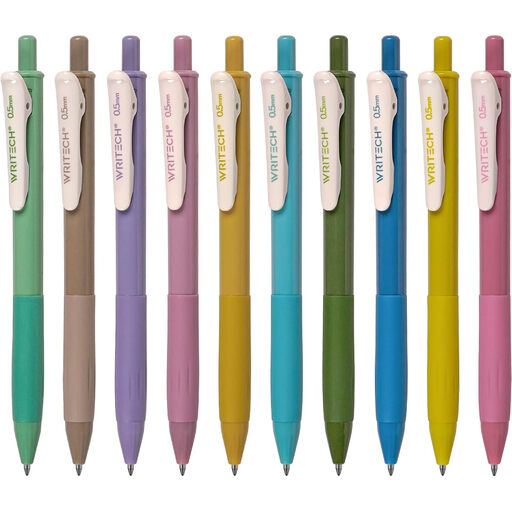
Editor's take: The perfect companion for combining organisation and creativity in a bullet journal or notebook. The palette of 10 unique, vintage-inspired colours lets you categorise your notes while adding a very nice aesthetic touch.
No more smudges! Its gel ink dries almost instantly, a real relief for left-handers and anyone who writes quickly.
The retractable mechanism is ultra-practical (no more lost caps!), and the fine 0.5 mm tip ensures smooth, precise, and snag-free writing.
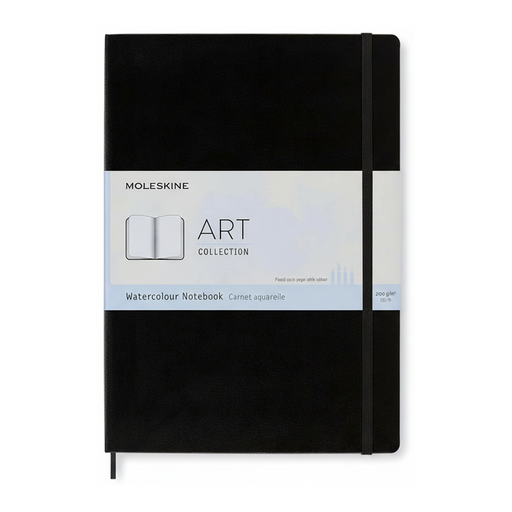
Editor's take: The gold standard for artists who use wet media and demand a reliable surface under all circumstances. This Moleskine notebook is specifically designed for watercolour, with paper that doesn't warp.
Goodbye to paper that buckles or bleeds through. Its thick, cold-press 200 g/m? paper is designed to absorb water evenly without deteriorating.
Its hardcover and elastic closure protect your creations, while its 180° lay-flat opening provides a perfectly flat and stable work surface.
We have compiled a complete selection of products that meet our strict selection criteria and current standards.
It all depends on your use case. For simple sketches with a pencil or ballpoint pen, a 90 to 110?g/m? paper is sufficient. If you plan to use markers or ink, aim for at least 120?g/m? to minimise the risk of bleed-through. For watercolour and very wet media, a specialised paper of 200?g/m? or more is essential.
The first step is to choose a paper with an appropriate weight, as we've just discussed. Next, opt for pigment-based ink markers, which tend to sit more on the surface. Alcohol markers, which are very popular for their blending capabilities, are known to bleed through most standard papers. Fortunately, there are dedicated papers (known as layout paper) that include a barrier to prevent the ink from feathering. When in doubt, always place a scrap sheet under your active page to protect the next one.
It can be a good entry point, but caution is advised. For a beginner, it's often smarter to buy a few high-quality items separately: a good sketchbook, an HB and a 2B graphite pencil, a kneaded eraser, and one or two fineliner pens in different sizes. This allows you to get a feel for pleasant materials and identify your preferences before investing in a more comprehensive set.