
Livraison le jour même ou le lendemain

Qualité garantie

Débloquez vos offres de bienvenue: Livraison GRATUITE | Jusqu'à -80 % | 30 jours d'essai gratuits à JoyPlus
Téléchargez l'application
Whether you're a seasoned artist, a fine arts student, or a parent looking to spark your child's creativity, choosing the right drawing supplies can quickly become a headache. Faced with a jungle of options, it's easy to fall into a trap and regret a purchase. Who hasn't cursed at paper that buckles at the first drop of watercolour, a notebook whose binding blocks access to the left-hand page, or a colouring book with pages so thin that markers bleed right through? We've all been there.
This guide is here to demystify the essential technical criteria and help you find the perfect medium for your craft, whether it's for on-the-go sketching, ambitious watercolours, or digital creation.
Before falling for a pretty cover or a tempting promotion, three technical criteria should guide your choice. These are the true guarantors of a medium's quality and suitability for your needs.
Paper weight, expressed in grams per square meter (gsm or g/m?), is the number one indicator of a sheet's thickness and durability. Choosing the wrong weight is the most common reason for paper that buckles, warps, or tears.
The paper's surface, its "grain," has a direct impact on the final look of your creation.
The way the pages are bound determines how comfortable your notebook or pad is to use.
To help you see things more clearly, here are our recommendations, tailored to each type of artist.
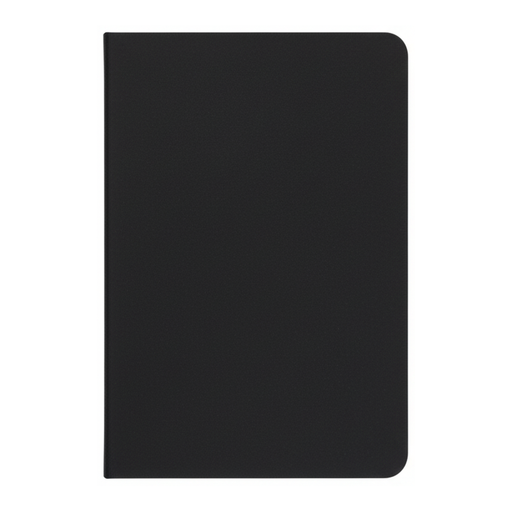
Why we love it: Its pocket size and flexible yet sturdy cover make it the ideal travel companion. It slips into any bag without getting damaged, always ready to capture inspiration on the fly.
Its sewn binding guarantees a true 180° lay-flat opening. This means the entire surface is usable, even near the central fold, unlike poorly designed notebooks where the centre is a dead zone.
Its acid-free, ivory-coloured 120 gsm paper is an excellent all-rounder for sketching and note-taking. The expandable inner pocket is a real bonus for storing tickets and memos.
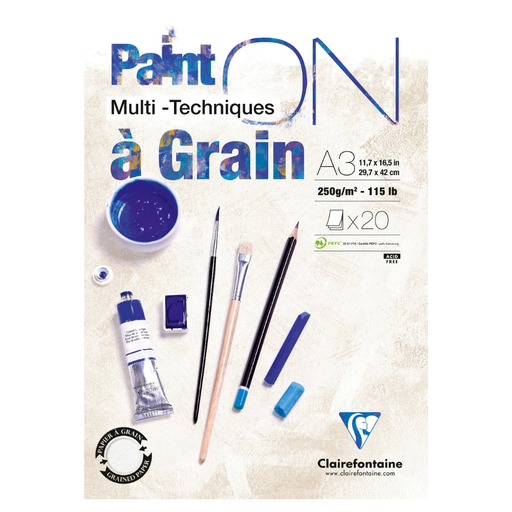
Why we love it: This pad is a reliable choice for those who love to juggle pencil, ink, gouache, and even a touch of acrylic. Its large A3 format offers a generous canvas for expression.
With its sturdy 250 gsm weight, it handles moisture extremely well without buckling. No more frustration with lightweight "multi-technique" papers that warp at the slightest drop of water.
Its versatility: it offers two distinct surfaces. One side has a pronounced grain for textural effects, and the other is finer for detailed work. It even allows for "lifting" (corrections by scraping or washing).
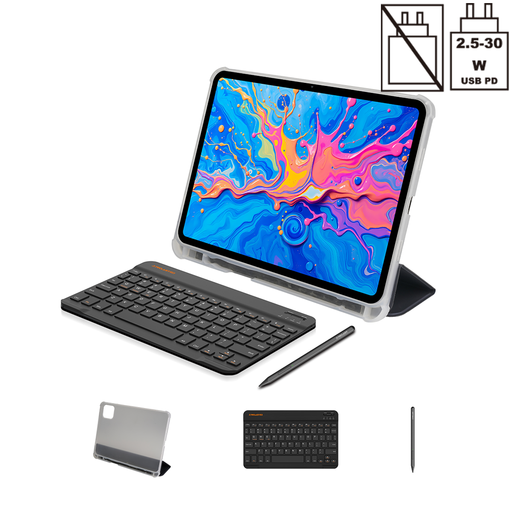
Why we love it: For those who want to break free from the constraints of paper, this graphics tablet offers an infinite canvas. Its large 2K screen and pressure-sensitive stylus allow for incredibly nuanced linework.
It shatters all the limitations of paper: weight, grain, buckling... It's an all-in-one solution that prevents the accumulation of supplies and offers the famous "Ctrl+Z" (undo) command infinitely.
The included stylus supports 4096 levels of pressure, allowing for extremely fine control over line thickness and brilliantly simulating the feel of a traditional drawing tool.
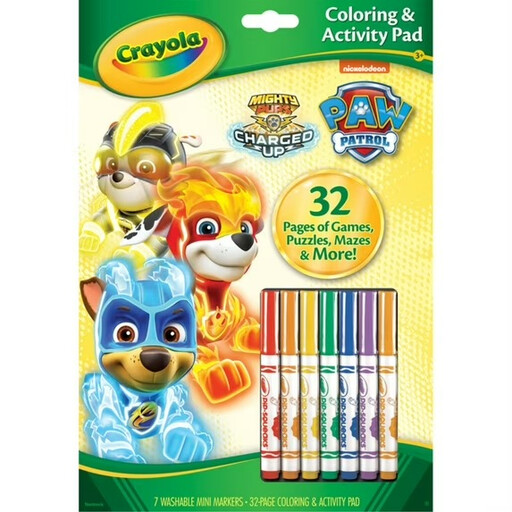
Why we love it: This kids' colouring book combines colouring pages with fun activities (mazes, games) featuring a franchise that children love. It's the perfect turnkey solution to keep them smartly occupied.
Its paper is thick enough to be compatible with kids' markers. No more ink bleeding through the page and ruining the drawing on the back!
It includes sticker sheets, a bonus that adds a playful dimension and helps develop fine motor skills. Its format is perfect for train or car trips.
We've curated a complete selection of products that meet our quality criteria and current standards.
For simple pencil drawing, a weight between 90 and 120 gsm is more than enough. A paper like the Deli Finenolo Sketchbook A4 offers a smooth surface suitable for pencil, charcoal, and even pen, without smudging. There's no need to invest in thicker paper if you only use dry media.
The number one criterion is weight: aim for a minimum of 250 gsm, and ideally 300 gsm or more. The Moleskine A4 Watercolour Notebook with its 200 gsm paper is a good compromise for light washes on the go, but for more intensive work, heavier paper is essential. Another pro tip is to stretch your paper: wet the sheet, then tape it to a rigid board with masking tape until it's completely dry.
Yes, and it's often the most practical choice. The spiral binding allows the notebook to open a full 360° and lay perfectly flat, which is ideal for drawing without being hindered by the central curve. It's also a real plus when it comes to scanning or photographing your creations. The Deli Finenolo Sketchbook is an excellent example of this functional format, valued by students and artists for its ease of use.