
Livraison le jour même ou le lendemain

Qualité garantie

Débloquez vos offres de bienvenue: Livraison GRATUITE | Jusqu'à -80 % | 30 jours d'essai gratuits à JoyPlus
Téléchargez l'application
Whether you draw with felt-tip pens, manga pens, Indian ink or in a sketchbook, your choice of supplies directly affects ease of use and the final result. The range of drawing pens and markers can quickly become confusing: a very comprehensive set may not be suitable for your chosen surface, while a nib advertised as versatile may lack precision.
Before placing your order, here are the most common pitfalls to avoid and the criteria to consider when putting together art drawing supplies that truly suit your creative practice.
A brightly coloured set may seem particularly appealing, but it will not necessarily meet your needs. For technical drawing, manga or bullet journalling, a few carefully chosen line widths are often more useful than a huge palette. Colouring enthusiasts, on the other hand, will benefit from prioritising a wide range of shades and markers that can cover large areas quickly.
Water-based, pigment and acrylic inks do not behave in the same way on porous paper, glass or fabric. A nib designed for paper can also wear out quickly on a rough surface. Always check the recommended surfaces, water resistance and drying time.
Fine nibs and brush pens dry out when their caps are left open or not closed properly. Acrylic markers generally need to be shaken before use and then primed on a test sheet. These steps only take a few seconds, but they extend the life of your tools and help prevent wasted ink.
For precise outlines, hatching and annotations, choose a fine nib with a clearly stated width. A 0.4 mm fineliner, such as the STABILO point 88, is suitable for consistent lines, diagrams and small details. A 0.3 mm nib is even better suited to delicate lines, particularly in architectural drawing or illustration.
Medium-tip felt pens are ideal for colouring and filling areas. Brush pens, meanwhile, allow you to vary line thickness according to the pressure applied. They are particularly useful for lettering, calligraphy and graphic effects.
Do not stop at claims such as ‘artist quality’. Instead, compare the specific information about the nib, ink, compatible surfaces and storage conditions.
A metal case offers better protection for felt pens when travelling, while a cardboard case is usually lighter. To prevent them from drying out, replace the cap immediately after each use. Some products claim to resist drying out for several hours with the cap left open, but this feature is no substitute for closing the felt pen properly.
Acrylic markers should be stored horizontally, away from heat and direct sunlight. Before personalising an object, always test the marker on a scrap of paper or an inconspicuous area.
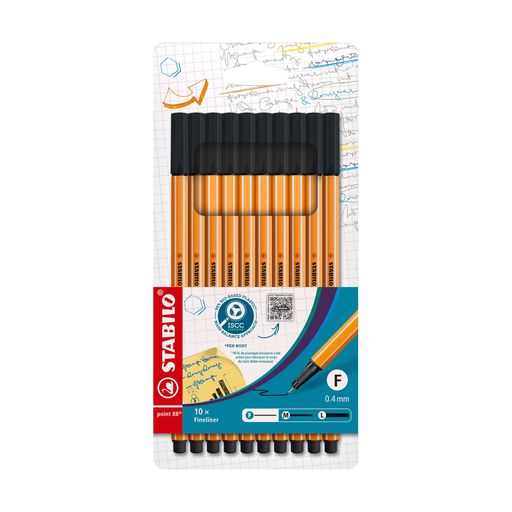
Why this choice suits this profile : This pack of ten black pens provides a simple, effective starting point for drawing, taking notes or getting into bullet journalling, with a precise, consistent line width.
The 0.4 mm nib is clearly defined and reinforced with a metal collar, making it easy to use with a ruler or stencil.
Ten black pens with a fine 0.4 mm nib and a barrel made from 96 % certified ISCC PLUS bio-based plastic, according to the brand.
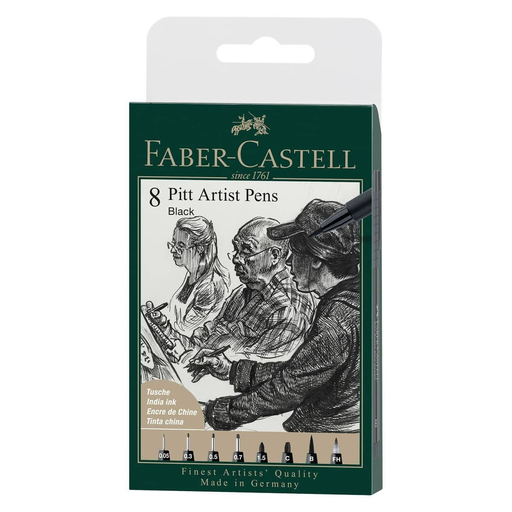
Why this choice suits this profile : Illustrators and calligraphers who switch between details, outlines and expressive strokes have several nib types in one set.
The range of nibs means you do not have to use a single diameter for every stage of inking.
Eight black Indian ink pens with different nibs, advertised as water- and light-resistant once dry.
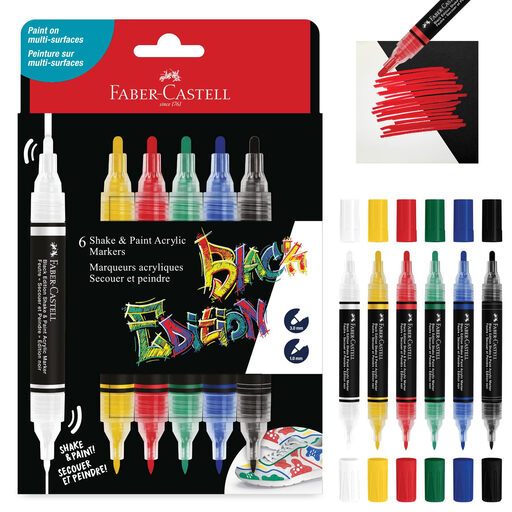
Why this choice suits this profile : Fans of personalisation, arts and crafts and mixed-media techniques can work on several surfaces with nibs suited to both filling and detailing.
The stated compatibility with paper, wood, glass, metal, plastic, stone and fabric makes it easier to choose a tool that is genuinely suited to your project.
Six colours, opaque acrylic ink and two round nibs measuring 1 mm and 3 mm. Shake the marker with its cap on before priming it.
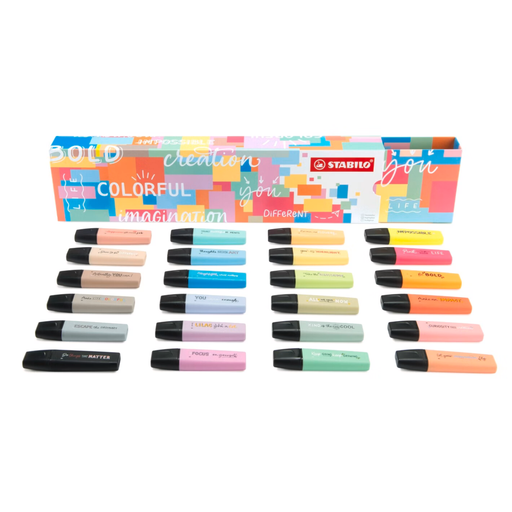
Why this choice suits this profile : Students and notebook enthusiasts can organise their lessons, revision notes and pages with neon, pastel or natural shades.
The chisel tip offers two line widths, so there is no need to buy a different marker for highlighting and framing.
Set of 24 colours, 2 to 5 mm tip and anti-drying technology advertised to last for up to four hours with the cap open.
We have brought together a comprehensive, real-time selection of products that meet these demanding criteria while complying with European safety regulations.
A 0.4 mm fineliner is suitable for many precision tasks. For even finer details, you can choose a 0.3 mm nib. However, keep an eye on the paper you are using : a surface that is too porous may make the line appear wider.
No. They are often advertised as compatible with paper, wood, glass, metal, stone, plastic or fabric, but their adhesion depends on the preparation and texture of the surface. Test the marker beforehand and allow it to dry completely before handling the object.
It depends on how often they are used, the ink formulation and how the cap is replaced. Suitable storage and closing the cap immediately help limit drying out. Any advertised anti-drying features should be viewed as occasional assistance, not as a replacement for proper care.