
Livraison le jour même ou le lendemain

Qualité garantie

Débloquez vos offres de bienvenue: Livraison GRATUITE | Jusqu'à -80 % | 30 jours d'essai gratuits à JoyPlus
Téléchargez l'application
The world of drawing pens is a vast playground, but it's easy to get lost among hundreds of options. The gap between marketing promises and real-world performance can be huge, often leading to disappointing purchases. A pen that bleeds, a tip that frays, or ink that soaks through your cherished notebook?: these are common frustrations for many creatives.
Before you fill your cart, it's best to know the common pitfalls that prove costly for beginners and seasoned artists alike.
Finding the right tool, therefore, isn't about searching for the "perfect" product, but the one that's tailored for your project, your paper, and your style.
To navigate this jungle, focus on three technical criteria that determine 90% of the final result.
The tip is your first point of contact with the paper. Its shape and material determine the type of line you can create.
The ink determines opacity, drying time, and compatibility with other media.
A good pen should maintain its performance over time. To ensure this, check two things:
Instead of an endless list, here are our targeted recommendations for specific user profiles, chosen for how perfectly they meet precise needs.
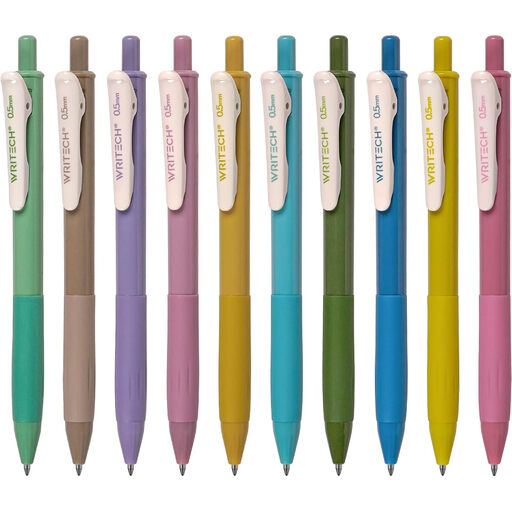
Why we chose it : Perfect for journaling, color-coded note-taking, and scrapbooking. Its vintage color palette stands out from the ordinary, and its 0.5mm fine point ensures precise, legible writing, even in the tight lines of a planner.
Its gel ink is formulated for express drying, which drastically reduces the risk of smudging—a recurring problem with classic gel pens, especially for left-handers.
Its ergonomic body and patented silent click mechanism make it as comfortable for long writing sessions as it is discreet in an open office or library.
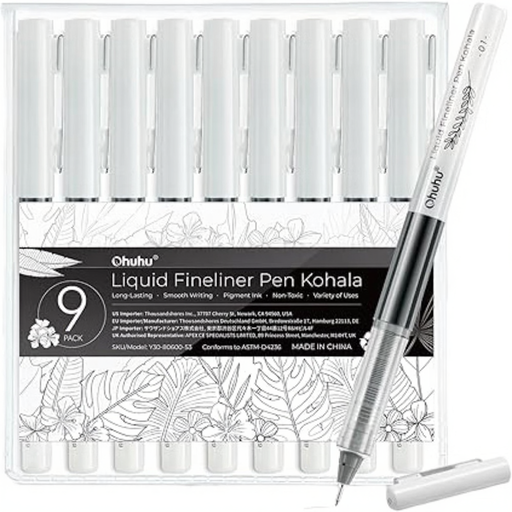
Why we chose it : This set is the complete toolkit for illustrators and technical artists. It covers a wide range of sizes, from an ultra-fine 0.15mm tip to a brush tip, allowing you to switch between meticulous details and more expressive strokes.
Unlike low-end pens with tips that crush easily, these fineliners feature precision Japanese nibs that ensure consistent ink flow and excellent wear resistance.
Its black pigment ink is both water and alcohol-resistant. This means you can color your drawings with alcohol markers or watercolor without fear of the outlines smudging.
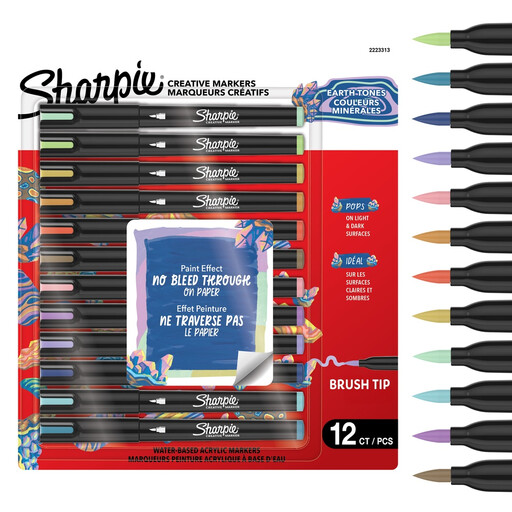
Why we chose it : For creatives who love to express themselves on any surface. These acrylic markers deliver an opaque, high-coverage finish on paper (both light and dark), as well as on wood, ceramic, glass, or stone. The warm-toned palette is perfect for nature-inspired DIY projects.
Where classic markers produce washed-out colors on dark or non-porous surfaces, this acrylic formula guarantees flawless opacity and vibrancy, regardless of the medium.
The brush tip offers great versatility for modulating line thickness. Most importantly, the ink is ready to use without shaking the marker, making the creative process much more fluid.
We have compiled a complete and up-to-date list of products that meet these demanding selection criteria.
The golden rule: always recap the pen securely after each use until you hear a distinct "click." For dual-tip pens, make sure both sides are sealed. Pro tip: store them horizontally so the ink is distributed evenly and doesn't pool at one end.
Water-based ink is less harsh on paper and generally odorless. It's perfect for coloring and journaling on standard paper. Alcohol-based ink, on the other hand, contains a solvent that allows it to dry very quickly and blend for creating gradients. It offers more intense colors but requires thick, coated paper to prevent it from bleeding through the page.
For a notebook or bullet journal with standard paper (around 80-100 gsm), opt for quick-drying colored gel pens, pigment-based pens (like fineliners), or water-based markers. Apply the ink without going over the same spot multiple times. Avoid alcohol markers at all costs, as they will bleed through the page every time.