
Livraison le jour même ou le lendemain

Qualité garantie

Débloquez vos offres de bienvenue: Livraison GRATUITE | Jusqu'à -80 % | 30 jours d'essai gratuits à JoyPlus
Téléchargez l'application
Whether you're an artist sketching your next masterpiece, a journaling enthusiast organising your thoughts, or a student annotating lecture notes, choosing the right drawing pen is crucial. The only problem: the market is flooded with promises that are rarely kept. Smudging lines, a tip that wears out prematurely, or dull colours can quickly turn a creative moment into pure frustration. To avoid falling into these traps, here are the common pitfalls to watch out for to make the right choice.
The packaging is often appealing, but the performance doesn't always measure up. Here are the most common disappointments and our advice on how to avoid them.
To avoid these disappointments, focus on a few objective characteristics. They will help you decode product descriptions and choose the illustration pen or writing tool that truly fits your needs.
The tip determines the type of line you can create. Each shape has its specialty:
The ink is the heart of your pen. Its properties define how it behaves on paper and how it holds up over time.
Rather than a simple product list, we've identified user profiles and selected an option for each that meets specific needs, based on the quality criteria we've just discussed.
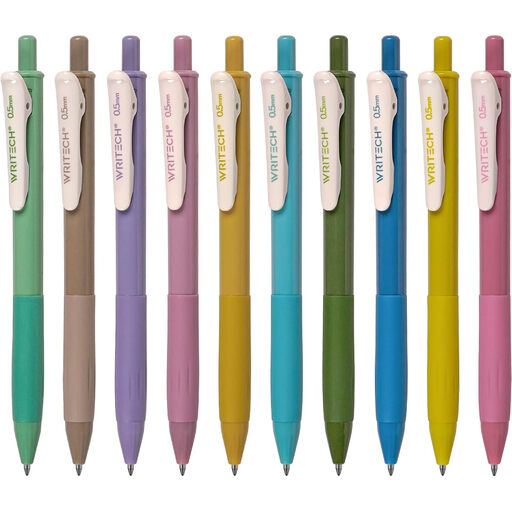
Editor's Pick: Ideal for those who love to organise their planner or notebook with colour codes. The 0.5 mm fine tip allows for precise writing even in the smallest spaces, and the vintage colour palette adds a unique aesthetic touch to note-taking.
The quick-drying gel ink neutralises the problem of smudging, even on the glossy paper of a planner. Its sturdy bullet tip is designed for intensive daily use and resists premature wear.
A smooth, snag-free glide, and an assortment of 10 original colours for an organisation that is as visual as it is creative.
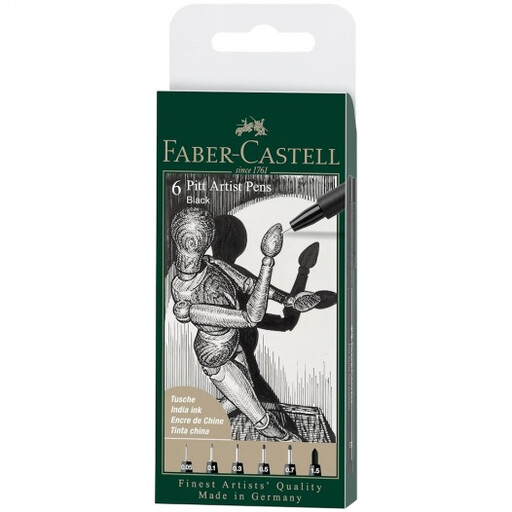
Editor's Pick: Designed for artists seeking reliable tools for inking, comics, or illustration. This set offers archival quality and great versatility thanks to its different tips, allowing for everything from fine outlines to bold colour fills.
The pigmented India ink is permanent and waterproof, which eliminates any risk of smudging when adding other media (watercolour, etc.). The tips are designed for intensive artistic use and hold their shape.
Archival quality (lightfast and water-resistant) and an assortment of complementary tips (brush, fine, medium) in a single set.
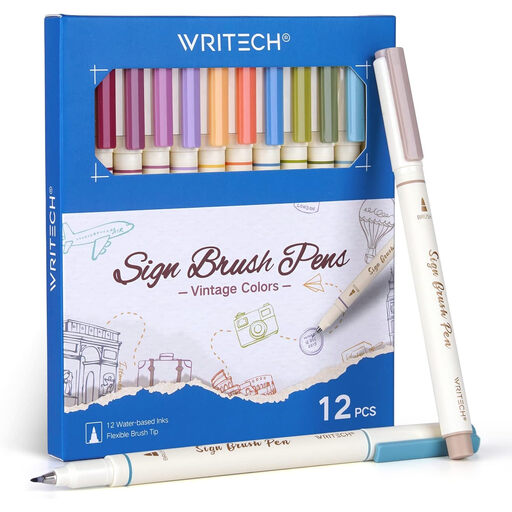
Editor's Pick: Perfect for starting out or perfecting modern calligraphy and lettering. The flexible brush tip is the ultimate tool for creating expressive upstrokes and downstrokes, while the vintage colour palette offers a creative alternative to classic black.
The felt tip is designed to resist wear and maintain its flexibility, thus avoiding the pitfall of tips that get crushed. The water-based ink is blendable, offering better control over shades and gradients.
A flexible, pressure-sensitive brush tip, ideal for modulating line thickness. The ink is blendable, perfect for creating gradients.
We have compiled a complete and up-to-date selection of products that meet our strict selection criteria and current safety standards.
The key factor is paper weight. For liquid or alcohol-based inks, opt for paper that is at least 120?gsm. For gel or water-based inks, 90?gsm paper is often sufficient. In any case, always test the pen on an inconspicuous area of your notebook before you start.
The longevity of a brush pen depends on three factors: the quality of its tip, your technique, and the type of paper. Avoid pressing too hard and choose smooth paper to limit abrasion. Also, always remember to cap the pen tightly so the ink doesn't dry out. A well-maintained pen can last for several months, even with regular use.
Absolutely, in fact, it's one of their greatest strengths. Pigmented India ink, once dry, becomes permanent and water-resistant (waterproof). This means you can draw your outlines with the pen, let it dry, and then apply your watercolour paints over it without any fear of the lines smudging. It's a very common technique in illustration.