
Livraison le jour même ou le lendemain

Qualité garantie

Débloquez vos offres de bienvenue: Livraison GRATUITE | Jusqu'à -80 % | 30 jours d'essai gratuits à JoyPlus
Téléchargez l'application
Buying drawing and painting supplies can quickly become a headache. With all those oversized sets, tempting colour palettes and tips advertised as multi-purpose, quantity alone guarantees neither comfort nor durability.
Before you fill your basket, keep three pitfalls in mind:
For details, outlines and sketches, the fineness of the tip plays a key role. A fineliner from 0.05 to 0.3 mm is ideal for precise hatching and detailed illustrations, while a brush tip lets you vary the line thickness depending on the pressure you apply.
In traditional drawing, HB graphite pencils offer a good balance between hardness and intensity. They work well for writing, light sketching and school exercises. A 0.5 mm mechanical pencil produces a consistent line, whereas a model with a thicker lead is better suited to sketches and shading.
Paper often takes a back seat when buying creative materials. Yet it directly affects the result:
A watercolour pad glued on all four sides, or a block made of thick sheets, also helps to prevent buckling.
A drawing kit should be judged not by the number of accessories advertised, but by how much of its contents is actually usable: distinct colours, spare tips, eraser, sharpener, brushes or a guide. Also check the usage precautions, especially the recommended age and whether it contains small parts.
Products intended for children must be used under adult supervision when the instructions say so. With water-resistant inks, it’s best to protect your clothes and work surface: some stains are particularly hard to remove. Compliance information can be found on the product page and never replaces the usage instructions.
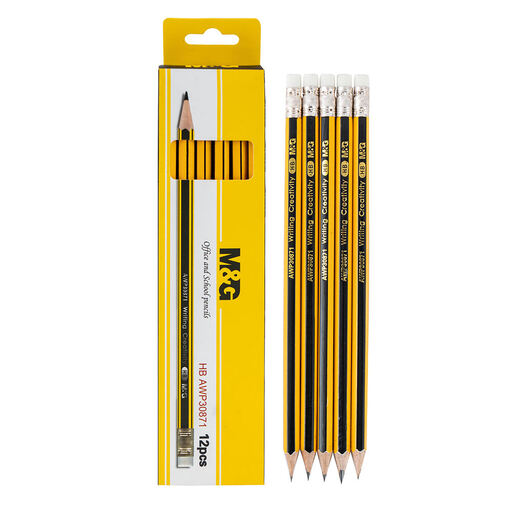
Why this choice suits this profile: This pack is aimed at students, parents and beginners who want to try sketching, writing or everyday drawing with simple, effective equipment.
The set doesn’t just list colours: it brings together 12 pre-sharpened HB pencils, each with an integrated eraser and ready to use.
HB lead, hexagonal barrel that won’t roll off the table and an eraser attached to each pencil.
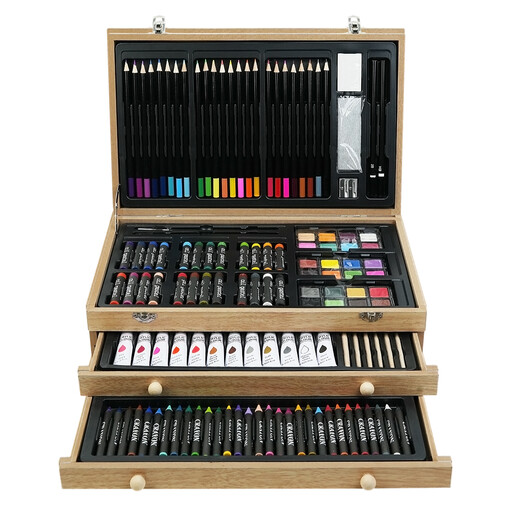
Why this choice suits this profile: Presented in a wooden case, this set is designed for hobbyists who want a versatile, well-organised painting space at home.
The dedicated storage prevents brushes from scattering and makes tidying up after each session simple.
175 pieces as advertised and a cherry red wooden box to store all the materials.
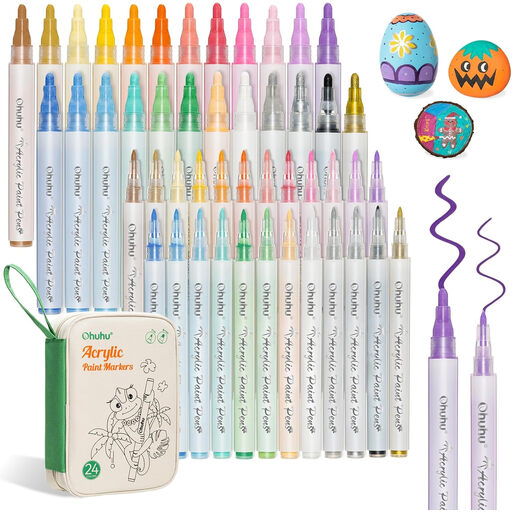
Why this choice suits this profile: These acrylic markers are suitable for regular projects on paper, wood, glass, ceramic, stone or plastic, provided you prepare the surface correctly.
The tips aren’t all the same: the pack combines fine 0.7 mm tips with reversible round or chisel tips.
48 markers, 24 coordinated colours and several tip types for details as well as broad areas.
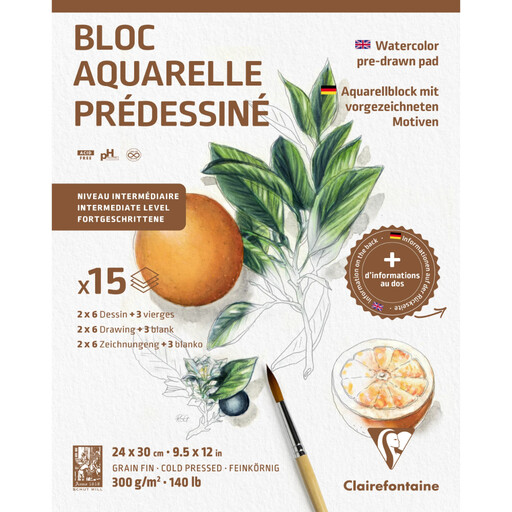
Why this choice suits this profile: Watercolour enthusiasts who prefer to focus on mixing, washes and brush technique will find pre-drawn designs here.
The pad clearly states its composition: fine-grain cellulose paper, acid-free, pH neutral and with a weight of 300 gsm.
12 pre-drawn sheets and 3 blank sheets in 24 × 30 cm format.
We’ve put together a comprehensive selection, updated in real time, of products that meet these strict criteria as well as European safety requirements.
Start with the essentials: HB pencils, an eraser, a sharpener, a suitable pad, a few brushes and a coherent colour palette. Drawing kits can be handy, as long as you check their contents, the tip diameter and the recommended surface type.
Watercolour pens usually use an ink that can be diluted with water on suitable paper. Acrylic markers lay down a more opaque layer and can be used on several surfaces. In both cases, check the manufacturer’s recommendations and test on a scrap piece before starting your final project.
Close the caps carefully after each use, store the pens according to the product page recommendations and keep them away from heat and direct sunlight. After use, rinse the brush fibres, remove any paint residue and let them dry flat or tip-up, depending on their shape. Storing craft accessories separately also reduces knocks and the risk of losing them.