
Livraison le jour même ou le lendemain

Qualité garantie

Débloquez vos offres de bienvenue: Livraison GRATUITE | Jusqu'à -80 % | 30 jours d'essai gratuits à JoyPlus
Téléchargez l'application
Buying drawing and painting supplies sounds simple… until you open the parcel. A nib that is too stiff, ink that bleeds through the paper or a poorly designed palette can quickly turn a promising purchase into wasted money. Whether you are just starting out or already enjoy illustration, it is better to choose based on how you will actually use the supplies rather than the number of colours printed on the box.
A set of 60 or 65 shades may seem generous, but it will not necessarily meet your needs. For colouring, a medium nib and consistent ink may sometimes be more useful than an enormous palette. For portraits, six carefully chosen shades can be enough to create a wide range of mixes. Conversely, a craft project may require acrylic markers that show up clearly on dark surfaces.
Take the time to check what the set contains: the actual number of shades, any duplicates, whether a colour chart is included and the types of nib provided.
Water-based ink can create a lovely watercolour effect on suitable paper, but may bleed through a sheet that is too thin. Similarly, acrylic paint will behave differently on paper, wood, glass or fabric. The term ‘multi-surface’ therefore deserves closer inspection: adhesion and durability vary depending on how the surface has been prepared.
When using watercolour markers, watercolour pencils or watercolour paint, choose paper that is sufficiently thick. For acrylic paint, work on a clean, dry and slightly absorbent surface.
Brush pens and markers dry out quickly when their caps are not replaced properly. Brushes become stiff when paint builds up at the base of the bristles. Acrylic markers may also need to be activated before first use and are best stored horizontally.
Even well-chosen equipment will quickly become less comfortable to use if it is not properly maintained. Storage and cleaning are therefore an essential part of the true cost of your equipment.
The nib has a direct impact on the result:
Dual-tip sets are practical when switching from detail work to filling without having to use multiple tools. However, if you plan to use them frequently, check whether replacement nibs are available.
For everyday indoor use, water-based inks are generally easy to use and clean. In the case of watercolour markers, they can also be blended or reworked with water. Pigment inks described as water-resistant once dry are more suitable for illustrations to which you want to add a wash without causing the lines to bleed.
Acrylic paints dry quickly and become water-resistant once dry, depending on their formulation. Watercolour paints, by contrast, can generally be reactivated with water. This is an important difference to bear in mind when choosing your technique and organising different layers.
Synthetic polyester brushes offer consistent flexibility and good absorption for watercolour, ink and gouache. Firmer hog-bristle brushes are better suited to thick paints, particularly oil and acrylic.
Flat brushes and wash brushes cover large formats quickly while leaving visible marks. Round brushes are better for details, lines and delicate transitions. For projects combining several techniques, an assortment of shapes and sizes saves you from having to buy each brush separately.
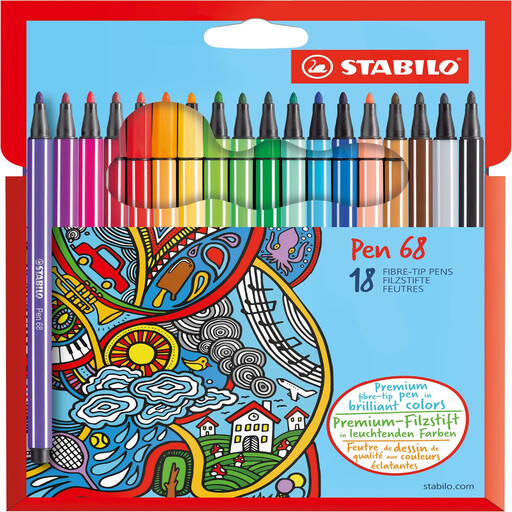
Why this choice suits this profile: This compact set is suitable for students, colouring enthusiasts and anyone wanting to get started with an affordable palette for drawing, creative journalling or solid areas of colour.
The set contains 18 clearly identified shades, without requiring you to invest straight away in a large, expensive box. The water-based ink and 1 mm nib make it easy to see whether this format suits your style of working.
Durable 1 mm bullet nib, odourless water-based ink and a design claimed to prevent drying out for up to 24 hours without the cap.
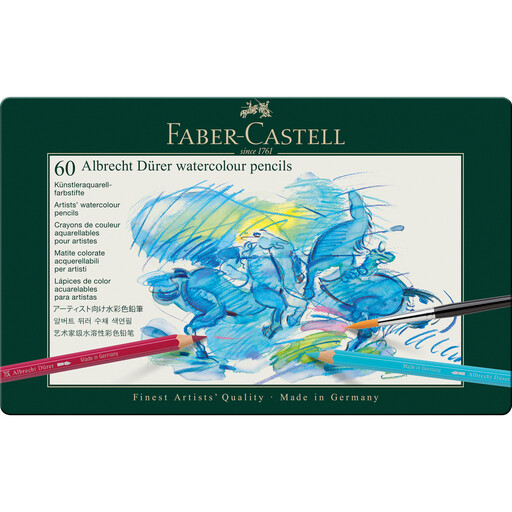
Why this choice suits this profile: Illustrators and artists who switch between dry drawing, gradients and washes get an extensive palette in a metal tin that is easy to carry.
The set clearly states that it contains 60 colours, which can be used dry or with a damp brush. This gives you the chance to experiment with the technique before investing in several separate mediums.
3.8 mm lead with claimed SV bonding, water-soluble pigments and a metal storage tin.
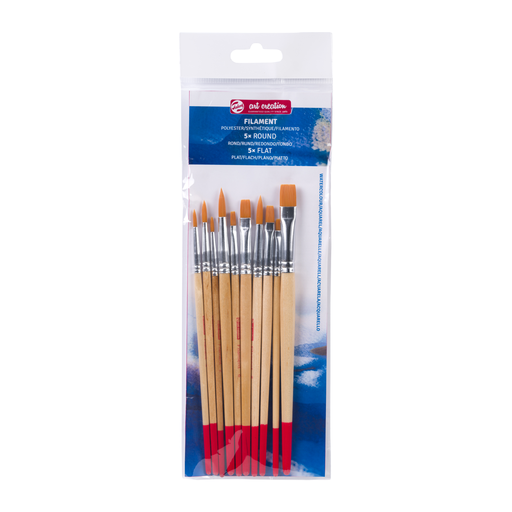
Why this choice suits this profile: Artists who move between watercolour, ink, gouache, oil and acrylic have an assortment of round and flat brushes at their disposal.
The contents specify the five round brushes and five flat brushes, along with their respective sizes. The choice is therefore not based on a vague promise of versatility.
Flexible polyester fibres, good claimed absorption and sizes suitable for both detail work and broad washes.
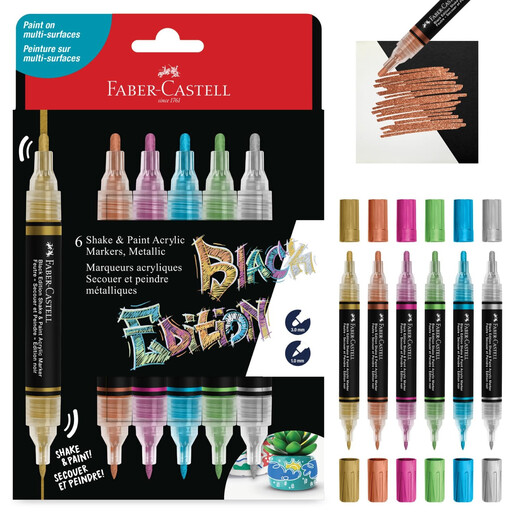
Why this choice suits this profile: This format is designed for personalisation projects on wood, glass, metal, stone, plastic, fabric or ceramics, particularly for decoration and DIY creations.
The two nibs, measuring 3 mm and 1 mm, make it easy to separate filling from detail work. Even so, prepare the surface and test the marker on an inconspicuous area before starting a final project.
Opaque metallic acrylic ink, dual tip and stated suitability for several surfaces. Shake with the cap closed before activating.
We have put together a complete, real-time updated selection of products that meet these demanding criteria and European safety regulations.
To avoid wasting your art supplies:
A set of colouring pens with medium nibs, a few watercolour pencils and suitable paper provide a versatile starting point. You can then add brush pens if you would like to try lettering or calligraphy.
Watercolour markers generally use water-soluble ink to create blends and washes on paper. Acrylic markers contain a more opaque paint designed to cover different surfaces. They are therefore not interchangeable and are not suitable for the same projects.
Clean brushes immediately after use, without allowing paint to dry in the fibres. For markers, replace the caps carefully and follow the recommended storage position. These simple steps help prevent drying out and allow the nibs to retain their shape for longer.