
Livraison le jour même ou le lendemain

Qualité garantie

Débloquez vos offres de bienvenue: Livraison GRATUITE | Jusqu'à -80 % | 30 jours d'essai gratuits à JoyPlus
Téléchargez l'application
Choosing drawing and painting materials isn't simply about counting how many colours come in a box. For a child, a student or an established artist, an ill-suited product can quickly become unusable: leads that snap, paint that's difficult to clean, a palette that's too limited, or accessories that don't match the planned activity.
Some marketing claims are therefore worth a closer look. The term "washable" can, for example, depend on the surface in question and how quickly you clean it up. A very extensive palette doesn't necessarily guarantee practical use. And a set presented as versatile may omit essential accessories such as a sharpener, a palette or suitable paper.
Here are the criteria to check before buying, along with a selection of products to suit different profiles.
A pencil described as watercolour, wax and coloured may seem handy for switching between activities. However, the result depends on the surface used, the pressure applied and the amount of water added. For advanced artistic practice, dedicated watercolour pencils will generally offer more precise control than a multi-function pencil designed for children.
Similarly, acrylic paint pens can be used on wood, glass or ceramic. However, you need to check the tip type, drying time and storage conditions.
A set of 48 colours may look particularly appealing, but it takes up more space and some shades are likely to stay at the bottom of the box. For school or early activities, an assortment of 12 to 24 colours often makes tidying up and learning colour mixing easier.
Artists working on portraits, landscapes or gradients, on the other hand, may look for a wider palette, good lightfastness and sufficiently robust leads.
For children's arts and crafts, the recommended age should be checked carefully. Small parts, caps, sharpened tips and pastel dust all require particular vigilance. The CE mark, age warnings and, where stated, compliance with the EN 71 standard are among the things to check on the packaging or product page.
Even paint described as washable or water-based should not be ingested. For the youngest children, adult supervision remains essential.
Small hands find it easier to hold a thick, short tool. "Jumbo" pencils or those with a triangular body can make gripping easier, while a fine lead is better suited to detail work.
For a children's drawing kit, check in particular:
Washable wax crayons are practical for activities at home or in the classroom. However, it's best to protect clothes and the table, because "washable" doesn't necessarily mean "no trace at all".
Standard coloured pencils are suitable for colouring, hatching and layering. Oil-based pencils often offer a smooth application and blend easily, while watercolour pencils can be used dry or worked with a damp brush.
Children's gouache paint gives a result that is more or less opaque depending on the amount of water added. For a school workshop, tubes with attached caps and a box that doubles as a palette help prevent accessories from going missing. Acrylic, on the other hand, dries quickly and becomes water-resistant on certain surfaces: brushes must therefore be cleaned immediately after use.
The paper you choose depends on the technique you're using. Thick paper is preferable for watercolour and diluted gouache, while standard drawing paper works well for pencils and felt-tip pens. Soft pastels produce a fine dust: work in a well-ventilated space, avoid blowing on the surface and store the sticks flat.
On smooth surfaces such as glass or a reusable board, check whether marks come off with a damp cloth. This property doesn't guarantee cleaning will be as easy on fabric or wood.
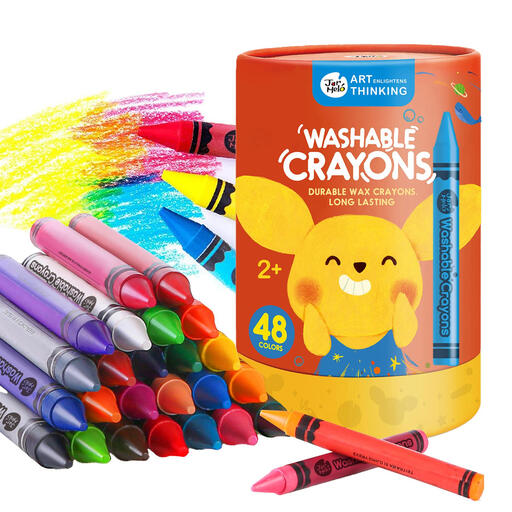
Why this choice suits this profile: The jumbo size and 48 shades make it easy to get started with colouring, both at home and in the classroom. According to the product information, these crayons are washable and made from non-toxic materials.
The thick body is easier to grip, while the washable formula can simplify cleaning on compatible surfaces.
48 jumbo crayons, a wide palette and practical storage for home or classroom use.
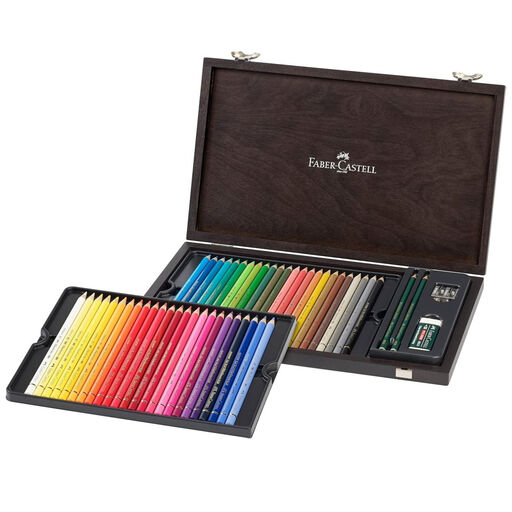
Why this choice suits this profile: This set is aimed at artists who work with gradients and layering, while also wanting durable storage for the studio.
The 3.8 mm lead and SV binder are claimed to be break-resistant, which reduces the risk of weakened tips.
48 oil-based colours, pigments claimed to be lightfast and a wooden storage case.
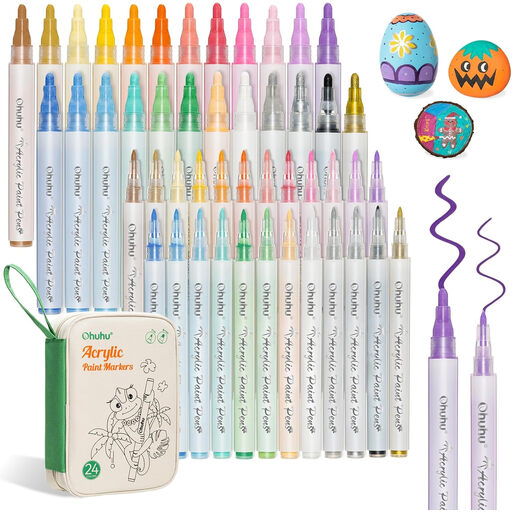
Why this choice suits this profile: The dual tip format allows you to switch from fine details to broad coverage, particularly on wood, ceramic, glass, fabric or paper.
The fine and reversible tips mean you don't need to buy several sizes for the same project.
48 pens, 24 shades and tips of 0.7 mm, 1.8–2 mm and 4 mm, with water-based acrylic ink.
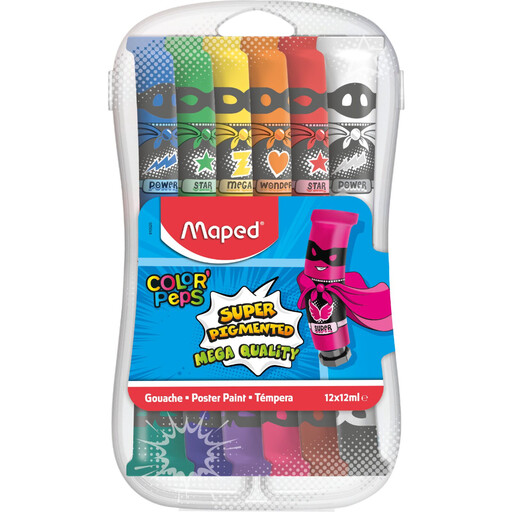
Why this choice suits this profile: The 12 tubes of 12 ml and the box that also serves as a palette make preparing school activities or children's arts and crafts simpler.
The attached caps help prevent lids from going missing, while the four mixing compartments mean you don't need to provide extra accessories.
12 mixable colours, 12 ml tubes, a plastic box and integrated compartments.
We've put together a comprehensive, real-time updated selection of products that meet these demanding selection criteria and European safety regulations.
Begin with a small assortment: coloured pencils, an eraser, a sharpener, drawing paper and water-based paint such as gouache. For a child, add an apron, a stable container and easy-to-hold brushes. A kit that's too large will mainly make storage more difficult without offering any real benefit.
The shelf life depends on the formulation, how often it's opened and storage conditions. Close tubes and pots after each session, avoid exposing them to heat and clean brushes promptly. Thickened, separated paint or paint with an unusual smell should not be used without checking the manufacturer's recommendations.
For gouache and water-based products, rinse brushes in warm water as soon as you've finished, then use a mild soap if needed. Putting the lids back on felt-tip pens immediately after use helps prevent them from drying out; then store them according to the recommendations on the product page. With soft pastels, use a cloth or protective sheet rather than blowing on the dust.