
Livraison le jour même ou le lendemain

Qualité garantie

Débloquez vos offres de bienvenue: Livraison GRATUITE | Jusqu'à -80 % | 30 jours d'essai gratuits à JoyPlus
Téléchargez l'application
Buying drawing and painting materials can quickly add up if you rely solely on the number of colours or the promises printed on the packaging. A large set won’t necessarily suit your technique, whereas a more focused range could perfectly cover your needs.
Whether you’re a beginner, student, teacher, parent or craft enthusiast, three mistakes often crop up when choosing your art supplies.
A set of 72 coloured pencils might look comprehensive, but it can’t replace watercolour pencils, pastel pencils or markers. The composition of the lead or ink directly determines the effects you can achieve: layering, blending, diluting with water or covering dark surfaces.
Applying watercolour to paper that’s too thin can cause it to buckle. Similarly, acrylic markers can bleed through the pages of a sketchbook if the paper weight isn’t high enough. Before you place an order, check whether the product is designed for paper, card, wood, glass, ceramic or multiple surfaces.
Pencils left loose without a case, poorly cleaned brushes or brush pens left uncapped quickly lose their effectiveness and comfort. A metal tin, pencil case or storage roll protects your materials and makes them easier to transport between home, school and the studio.
For coloured pencils, look at the type of lead, its diameter and its resistance to breakage. A thick lead is better for filling large areas, while a fine lead makes detailed work easier. Oil-based pencils, such as certain Polychromos models, are particularly well suited to layering and precise rendering. Pastel pencils offer a drier, chalkier stroke that you can blend with your finger or a blending stump.
If you use soft pastels, work in a well-ventilated space: applying them releases fine particles. A suitable fixative can help limit pigment transfer, but you should still handle your work with care.
The paper should be chosen according to the technique you’re using:
The Large Sketch Pad Art Block featured uses acid-free ivory paper of 120 g/m², opens flat at 180 degrees and includes an inner pocket for storing loose sheets or separate sketches. These are particularly handy details for everyday drawing and carrying your sketchbook around.
For a child, the shape of the pencil matters as much as its colour. A triangular body and a thick lead can make the grip feel more natural. However, products aimed at younger children should always be used in line with the age stated on the packaging, with appropriate supervision around small parts or sharp points.
For creative activities such as scratch art for children, check the recommended age, whether a stylus is included and the storage instructions. Paint sets should be kept away from mouths, eyes and delicate fabrics, even when they are labelled as non-toxic.
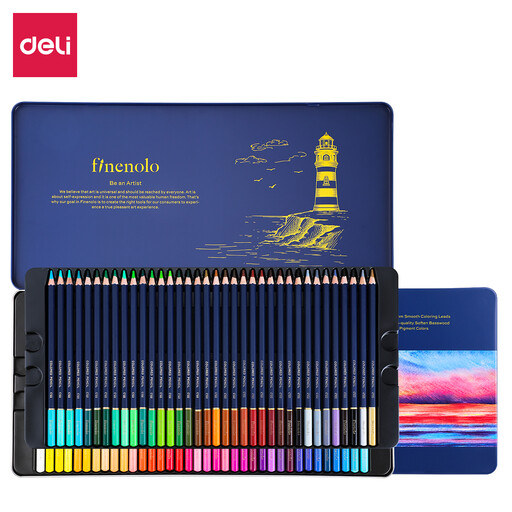
Why this choice suits this profile: With its 72 shades, this set lets you get started with colouring, drawing and gradients using a single metal tin that’s easy to store at home and carry to class.
The tin protects the pencils and stops you from buying several assortments before you even know which colours you use most.
72 colours and a metal storage tin.
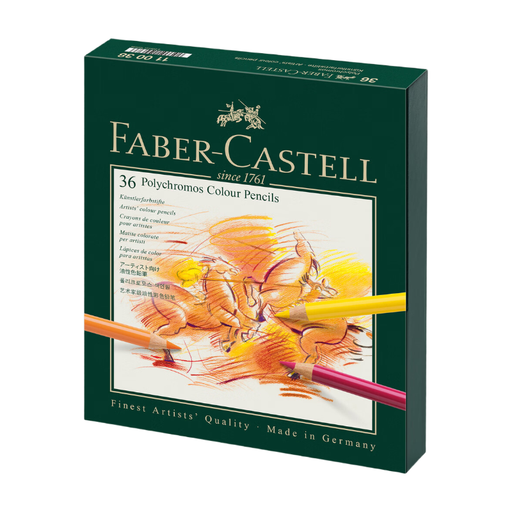
Why this choice suits this profile: Its selection of 36 oil-based pencils with a 3.8 mm lead is ideal for detailed illustrations, portraits and work that requires several layers of colour.
The number of shades is deliberately focused, while the securely bonded lead in the wood and the well-organised tin encourage precise, consistent work.
3.8 mm oil-based lead and Studio Box tin.
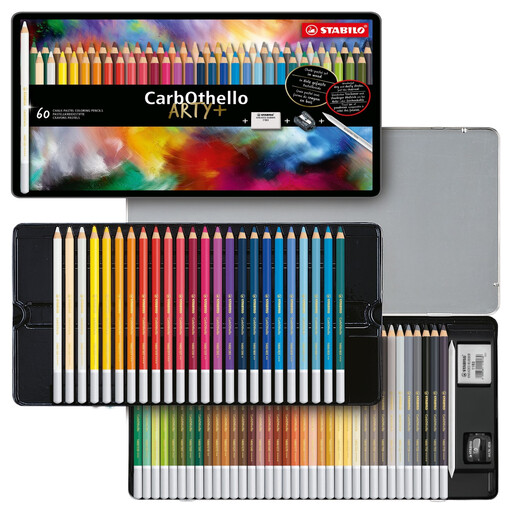
Why this choice suits this profile: This set is aimed at artists who want to work with chalk effects, blending and results close to charcoal on textured papers.
The description clearly states the dry texture, blending possibilities and use with water, rather than presenting these pencils as universal tools.
60 colours, metal tin and lightfastness rating indicated by stars on the pencils.
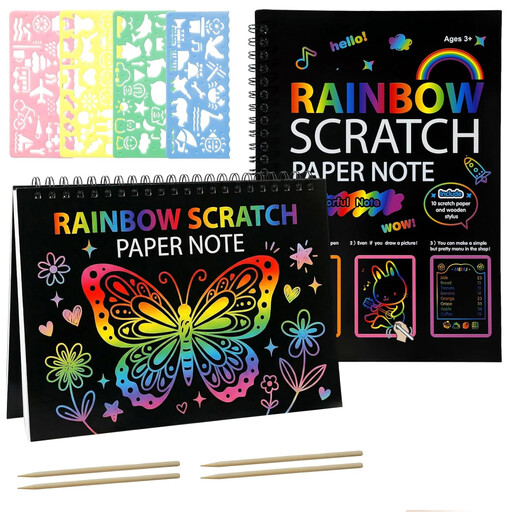
Why this choice suits this profile: With no paint or glue involved, this activity is great for quiet time at home, on journeys and in school workshops, as long as the recommended age is followed.
The thick pages and wooden styluses are included, so you don’t need to buy any extra materials to get started.
Two pads, five wooden styluses and a mess-free activity.
We’ve put together a comprehensive, real-time selection of products that meet these exacting criteria as well as European safety standards.
Begin with a sketchbook, a few coloured pencils, an eraser, a sharpener and a small watercolour palette. If you want to work on washes and details, add brushes of different sizes. A versatile set lets you get started without buying lots of items before you’ve found your preferred technique.
It depends on the material and storage conditions. Close brush pens and markers after each use, clean brushes straight away and store soft pastels flat. Pencils generally last a long time when protected from knocks, damp and heat.
Go for a comfortable grip, thick leads and a set that matches the age stated on the packaging. Triangular pencils, scratch art activities and certain 3-in-1 pencils suit different uses. Always check the warnings, supervise young children and remind them not to put the supplies in their mouths.