
Livraison le jour même ou le lendemain

Qualité garantie

Débloquez vos offres de bienvenue: Livraison GRATUITE | Jusqu'à -80 % | 30 jours d'essai gratuits à JoyPlus
Téléchargez l'application
Buying drawing and painting materials isn't simply about comparing the number of sheets or colours. Paper that's too thin can buckle, a poorly bound sketchbook can quickly become frustrating to use, and unsuitable pens can bleed through the pages. To avoid nasty surprises, it's worth examining the technical specifications before you're swayed by appearance or marketing claims.
120 or 140 gsm paper is perfectly fine for drawing, pencil work and dry techniques, but that doesn't mean it's suitable for washes. Watercolour generally requires a thicker sheet, designed to withstand moisture. A watercolour pad of 300 gsm will handle repeated applications of water far better than a standard drawing paper.
A sketchbook that refuses to stay open can quickly make quick sketches, note-taking or working across a double-page spread awkward. A spiral binding makes it easy to lay flat, while a sturdy sewn binding ensures better durability when a sketchbook is regularly carried around. The size also deserves your attention: A4 is good for detailed studies, whereas a pocket-sized watercolour sketchbook slips more easily into a bag.
Fineliner pens designed for black ink line work don't serve the same purpose as metallic gel pens, which are mainly used to add details on dark paper. For children, an activity pad should also be chosen according to the recommended age, especially when stickers or small parts are included.
Expressed in gsm, the weight corresponds to the paper's thickness and gives an indication of its durability. Above all, it should be matched to the technique you're using:
Texture also affects the finish. A very fine grain makes detailed work easier, while a more pronounced grain holds certain pigments better and gives the surface more character.
To preserve your work over time, choose acid-free or pH-neutral paper. Recycled paper can be perfectly suitable for everyday drawing, as long as you check its weight and texture. The 100% recycled paper from the Clairefontaine Zap Book is advertised as acid-free and pH-neutral. Where stated, PEFC or FSC certification tells you about the origin or management of the fibres, but it doesn't replace checking how the paper behaves with your technique.
A4 offers a comfortable surface for studies and illustrations. An A4 watercolour paper presented in a glued pad is easy to store and allows you to tear off sheets cleanly. A6 sizes are more practical for notes and sketches on the go. Finally, a large number of sheets is good for regular practice, but only if the paper is genuinely compatible with the tools you're using.
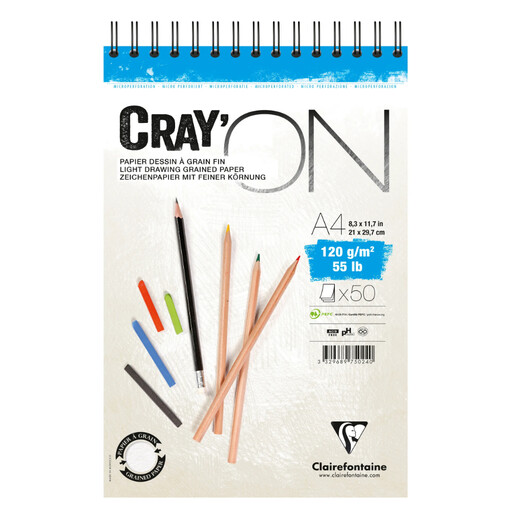
Why this choice suits this profile: Its 50 sheets of 120 gsm are suitable for regular drawing exercises, pencil, charcoal, pastel and repeated corrections.
Its two sides – one slightly textured and the other smooth – let you adapt the surface to the medium you're using, without having to buy several pads.
Extra-white, acid-free paper, 120 gsm, with PEFC certification stated by the manufacturer.
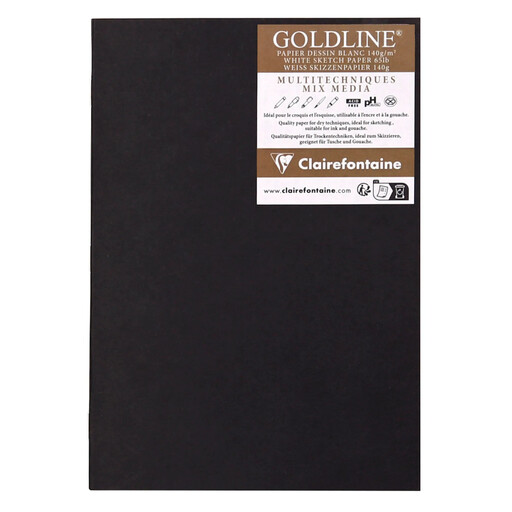
Why this choice suits this profile: Its A3 format and 140 gsm white paper offer a generous surface for studies, compositions and mixed media.
The sewn binding and lay-flat opening prevent the notebook from closing mid-session.
Multi-technique 140 gsm paper, soft black cover and portrait orientation.
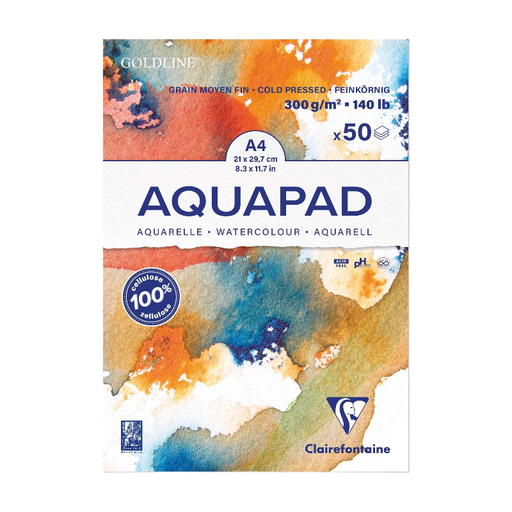
Why this choice suits this profile: Watercolour and gouache enthusiasts get a thick A4 support, suitable for washes, layering and frequent practice.
Its 300 gsm weight and double gluing minimise warping from wet techniques. For heavy washes, it's still best to secure the sheet.
Natural white cellulose, medium to fine grain, acid-free paper and advertised as vegan.
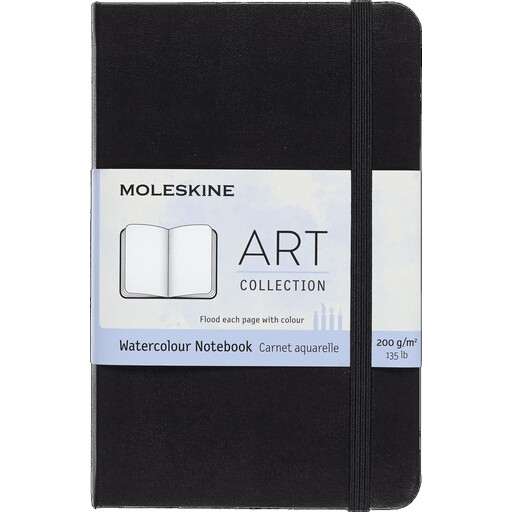
Why this choice suits this profile: Its compact size, hard cover and 200 gsm paper are ideal for sketches and small watercolours on the move.
The elastic closure, 180° opening and hard cover are well suited to the demands of daily travel.
Acid-free 200 gsm ivory white paper, expandable inner pocket and pocket-sized format.
For precise drawing, a selection of fineliner pens with various tip sizes – from 0.15 mm up to brush tip – lets you easily switch from detail work to writing. Just check they're compatible with your paper and let the ink dry thoroughly before adding water.
Metallic gel pens are particularly well suited for highlights on black, kraft or coloured paper. Their fine 0.8 mm tip makes it easy to create patterns, scrapbooking details and decorative annotations. As they can stain fabrics, it's best to work on a protected surface.
For children, creative activities for kids should be chosen according to the recommended age. The CRAYOLA PAW PATROL pad offers colouring, games, puzzles and stickers. It is not suitable for children under 3 due to the presence of small parts. Scratch art for children is another option, without paint or glue, but its use should be supervised according to the stated age.
We've put together a complete, real-time updated list of products that fully meet these strict selection criteria and European safety regulations.
A 300 gsm pad with a surface designed for wet techniques offers a much more stable support than standard drawing paper. For heavy washes, secure the sheet with suitable tape or use a stretching method.
It all depends on how often you use it, the binding and storage conditions. An acid-free sketchbook, stored flat in a dry place, will better protect the pages from yellowing. Avoid humidity, direct light and overstuffed bags, which can warp the cover.
Recycled paper is generally fine for pencil, pen and sketches. For heavily inked pens or alcohol markers, check for bleed-through and place a protective sheet underneath the page you're using.