
Livraison le jour même ou le lendemain

Qualité garantie

Débloquez vos offres de bienvenue: Livraison GRATUITE | Jusqu'à -80 % | 30 jours d'essai gratuits à JoyPlus
Téléchargez l'application
Buying drawing and painting materials can quickly become a headache: overloaded sets, promises of "professional" colours, multi-function tips and accessories presented as must-haves. The result? Part of the contents often ends up at the back of a drawer, because the format, recommended age or surface simply doesn't suit the user's habits.
To avoid disappointing purchases, it's best to start by checking the kit's composition, its compatibility with paper and how easy it is to store. Here are the criteria to run through before choosing your art supplies.
A 100-colour set might seem like a good deal. But between the very similar shades and those you'll never use, the maths soon adds up. For everyday drawing, a few fineliner pens, some HB graphite pencils and a suitable sketchbook can prove far more practical than an assortment that's hard to sort through.
Versatility also comes down to the tips on offer. A marker with a fine tip and a brush tip can be used for outlines, colouring and lettering alike. On the other hand, a set packed with nearly identical tips mostly multiplies the tools without really expanding your possibilities.
Acrylic markers, watercolour pens and brush pens don't behave the same way on printer paper, drawing paper or a watercolour pad. If the paper is too thin, it may buckle, let the ink bleed through or tear when you layer colours.
For wet techniques, therefore, choose paper that's thick enough. For graphite, a smooth or slightly textured surface makes it easier to control your lines and work on shading.
Some creative drawing kits include wheels, tips, caps or other small accessories. Remember to check the age marking before you buy. The Spirograph Cyclex set, for example, is recommended from age 8 and carries a warning about small parts. Activities intended for children from age 3 should also be used in line with the manufacturer's recommendations and, if necessary, under adult supervision.
For lettering, a flexible brush tip lets you vary the line width by adjusting the pressure. A fine-tipped pen of around 0.4 mm is suitable for details and small-scale writing. For technical drawing or precise sketches, a 0.5 mm mechanical pencil gives a consistent line width. A 1.8 mm clutch pencil, on the other hand, will produce bolder, more expressive strokes.
A well-organised set is much more pleasant to use at a desk, in class or on the go. Check whether a pencil case, pouch or colour chart is included. After each session, close your markers carefully and follow the storage instructions. Some pens need to be kept flat to reduce the risk of drying out or leaking.
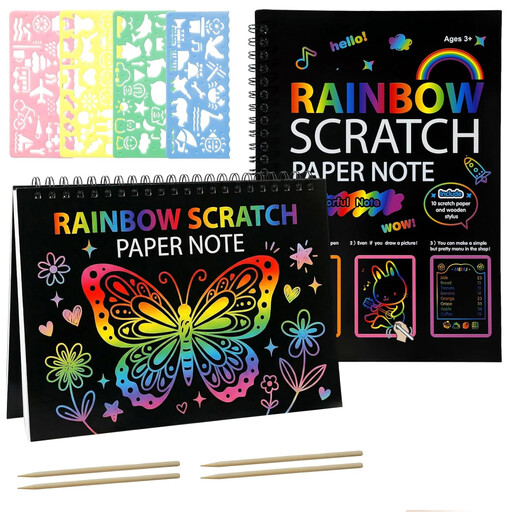
Why this choice suits this profile: This activity is suitable for children from age 3 and requires no paint, glue or special preparation. It works just as well at home as it does in the classroom or on a journey.
The ready-to-use format means you don't need to buy brushes, paints and table protectors separately. The thick pages reduce the risk of tearing during scratching.
Two pads, five wooden styluses and a mess-free, liquid-free activity. The presence of small parts means the recommended age must be observed.
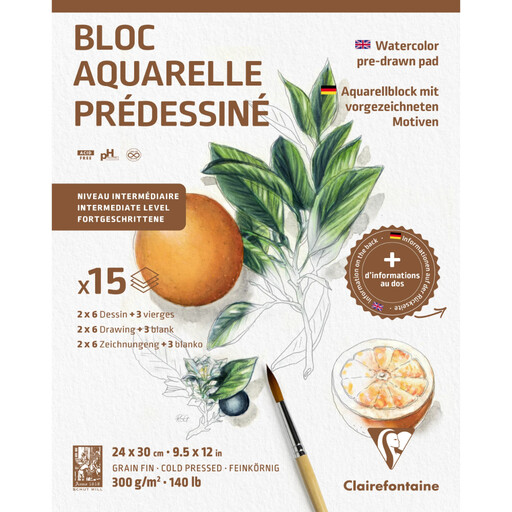
Why this choice suits this profile: With its 300 g/m² paper and 24 × 30 cm format, this pad is ideal for enthusiasts who want to focus on washes, colour blending and brush technique.
The paper's thickness reduces the risk of buckling compared to office paper. The pre-drawn designs mean you don't spend the whole session preparing the sketch.
100% cellulose paper, acid-free and pH neutral, with 12 pre-drawn sheets and 3 blank sheets.
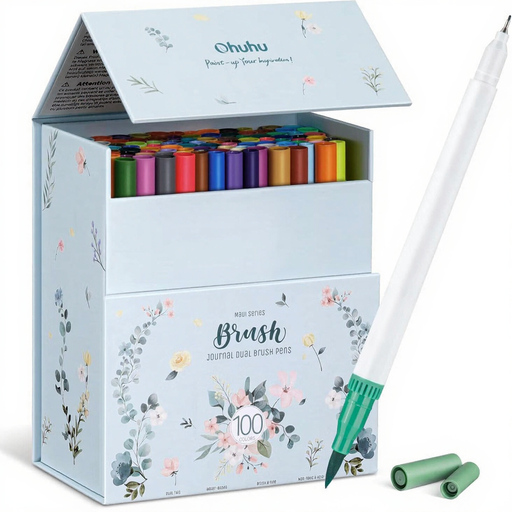
Why this choice suits this profile: With its dual tips of 0.4 mm and 1 to 6 mm, this set is designed for those who switch between illustration, colouring, calligraphy and lettering.
The two tip types mean you don't need to accumulate separate tools for details and large areas. The colour chart helps you find all 100 shades and organise your palette more easily.
Water-based ink stated as non-toxic, five replacement tips and a white case included. For watercolour effects, use thick paper.
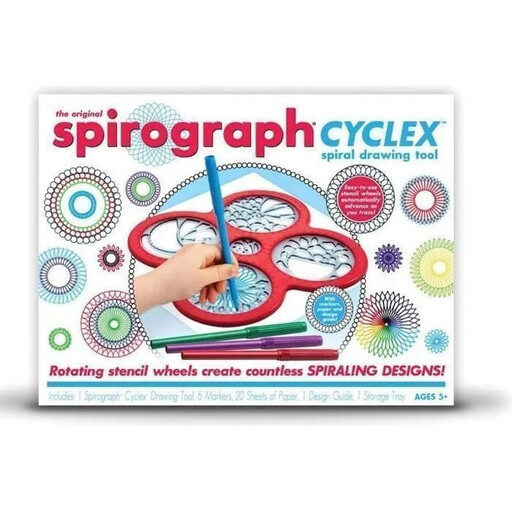
Why this choice suits this profile: This kit is suitable for children from age 8, families and teachers looking for a guided activity around shapes, rotations and geometric patterns.
The wheels integrated into the base reduce slipping during use. The supplied putty holds the pieces in place without piercing the paper.
89 pieces, instruction manual, markers included and compatibility with your own pencils or pens. No batteries required.
We've put together a comprehensive, real-time updated list of products that meet these demanding selection criteria as well as European safety regulations.
To begin, simple equipment is enough: HB graphite pencils, an eraser, a sharpener, a sketchbook and a few fineliner pens. You can then add felt-tip pens or coloured pencils depending on the type of creations you have in mind. This approach lets you try out several techniques without investing in a large set straight away.
Go for paper that's thicker than printer paper, especially if you plan to add water. A watercolour pad limits warping and absorbs wet layers better. Test it on a separate page first: the result also depends on how much water you use and the pressure you apply.
Put the caps back on after each use, don't leave the tips exposed to the air and store your pens according to the manufacturer's instructions. For acrylic markers, shake the tube before first use, then close it carefully. Storing them away from heat and direct sunlight helps preserve the ink and the tips.