
Livraison le jour même ou le lendemain

Qualité garantie

Débloquez vos offres de bienvenue: Livraison GRATUITE | Jusqu'à -80 % | 30 jours d'essai gratuits à JoyPlus
Téléchargez l'application
Buying drawing and painting materials can quickly become a headache: ultra-comprehensive sets, promises of vibrant colours, accessories presented as universal… A product that looks appealing in a photo isn’t necessarily suited to your technique, your surface, or the age of the person who’ll be using it.
To avoid unnecessary purchases, start by checking the actual contents of the set, the compatibility of the materials, and the conditions of use. Here are the essential criteria to know when choosing art supplies for children, students, craft enthusiasts, and more experienced artists alike.
A set that contains lots of items isn’t necessarily the most practical. Some kits pile on accessories, sometimes in very different sizes or qualities, but skip the essentials: suitable paper, a palette, or cleaning materials. Before counting the pieces, ask yourself what they’ll actually be used for. Coloured pencils, brushes, watercolour pans, felt-tip pens, and paper all need to match the way you work.
A standard sheet of paper is likely to buckle when it comes into contact with water, gouache, or several layers of paint. For watercolour and wet techniques, the weight and absorbency of the paper play a crucial role. Conversely, very thick paper won’t add much for simple HB pencil sketches or mechanical pencil work.
Tips, removable caps, dry pastel dust, and small accessories require particular care with young children. The label “washable” doesn’t guarantee that all stains will come out of every fabric. Get into the habit of rinsing brushes promptly and replacing caps on felt-tip pens after each use.
For sketching and writing, a pad of 120 gsm paper can be perfectly adequate. For gouache, watercolour, or mixed media, paper of 200 gsm offers better durability and reduces warping. That said, you still need to let the different layers dry.
The Canson pad shown below contains 50 sheets in A2 size, with a textured surface and a weight of 200 gsm. It is suitable for pencil, charcoal, gouache, and watercolour, depending on the amount of water used.
Round paintbrushes are ideal for details and fine lines, while flat brushes allow you to cover a surface quickly. Synthetic fibres made from polyester or PET are generally easy to rinse and work well for many creative activities. For oil painting, however, you’ll need a suitable cleaner: water alone won’t do the job.
Acrylic markers with a double tip are handy for switching between filling in areas and precision work. They do require careful preparation: shake the closed marker, prime the tip on a scrap sheet of paper, then replace the cap immediately.
An HB pencil offers a versatile line for school, note-taking, and sketching. With its 0.5 mm leads, a mechanical pencil produces consistent lines, particularly useful for technical drawing or fine details.
For coloured pencils, compare the type of lead, the number of shades, and how easily they layer. An oil-based lead and a soft lead won’t give the same result. For children, check the recommended age on the product page, any warnings about small parts, and the need for adult supervision.
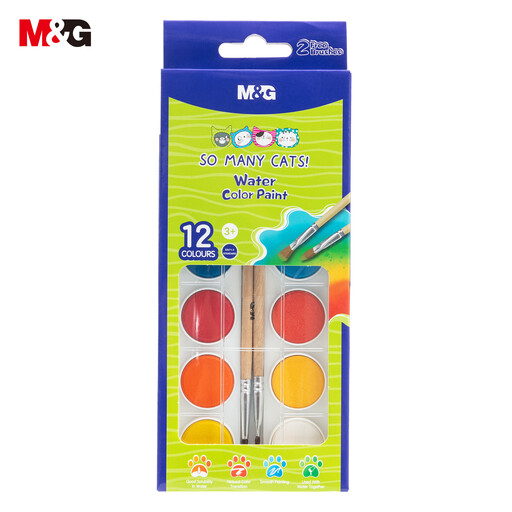
Why this choice suits this profile: The 12 solid colours and the included brush let you get started with watercolour without having to buy lots of extras. Its compact size slips easily into a bag for use at home, in class, or on the go.
The set clearly lists its contents, and its solid format reduces messy handling compared to liquid paint.
12 pans, one brush, approximately 150 g, and suitable from age 3 according to the product page, with adult supervision.
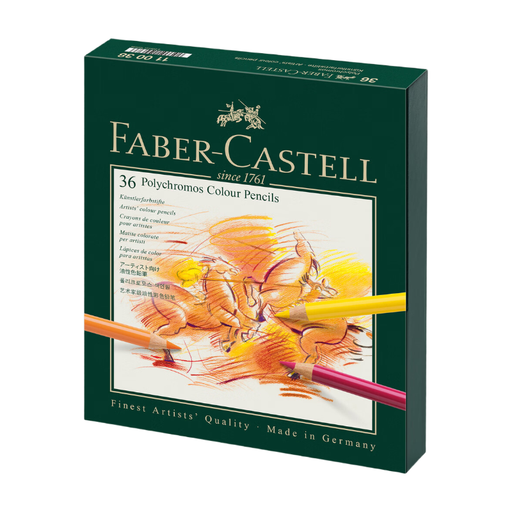
Why this choice suits this profile: This set is aimed at those who create detailed illustrations and want to work with layering using a coherent palette.
The set specifies the number of shades, the 3.8 mm lead diameter, and its oil-based composition, rather than just showing a palette without technical details.
36 colours, a storage box, SV-bonded lead according to the product page, and pigments described as lightfast.
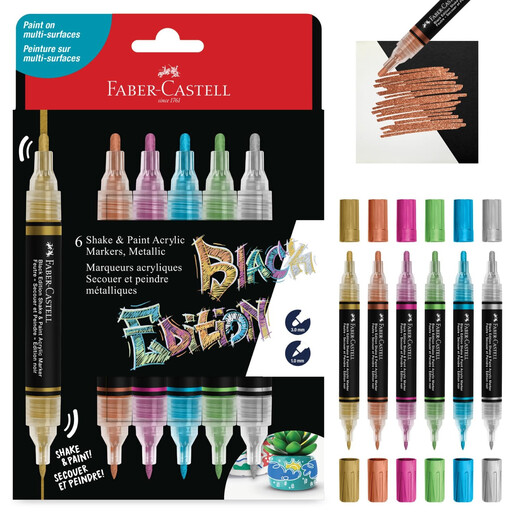
Why this choice suits this profile: For customising wood, glass, metal, plastic, or fabric, the two tips on each marker let you switch from filling in areas to fine details with greater flexibility.
The product page distinguishes between the 3 mm and 1 mm tips, as well as the six metallic shades, making it easy to check the contents before buying.
Double tip, opaque acrylic ink, and compatibility with several surfaces as stated. Replace the caps and store the markers horizontally.
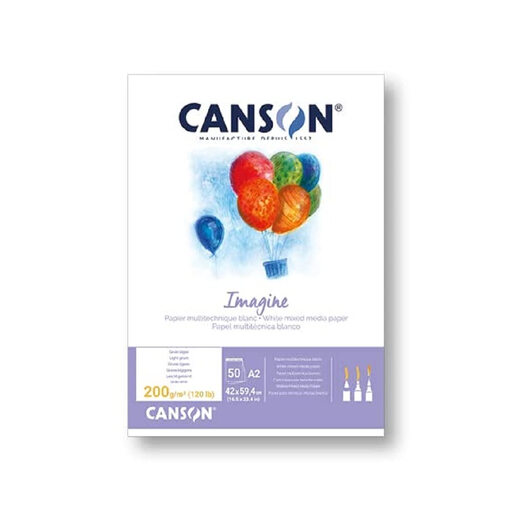
Why this choice suits this profile: Its A2 size and surface compatible with several media make it suitable for workshops, art studies, and large-format compositions.
The 200 gsm weight and compatible techniques are clearly stated, reducing the risk of choosing paper that’s too thin for painting.
50 sheets in A2 size, a natural texture, and compatibility with dry techniques, gouache, and watercolour as stated.
We’ve put together a comprehensive, real-time updated selection of products that meet these exacting criteria and European safety standards.
To begin, get a few HB pencils, some coloured pencils, an eraser, a pad of drawing paper, a small palette of watercolour or gouache, and two or three brushes. A guided creative kit can also make your first sessions easier, as long as its contents are clearly detailed.
Go for paper that’s thick enough – generally 200 gsm or more for wet techniques. A textured surface doesn’t absorb water in the same way as smooth paper: choose according to the finish you want and the number of layers you plan to apply.
Clean brushes straight after your session, reshape the fibres, then let them dry properly. For acrylic or washable markers, replace the cap straight away. Their lifespan will then depend on how often you use them, the pressure you apply to the tip, and whether you follow the storage instructions.