
Livraison le jour même ou le lendemain

Qualité garantie

Débloquez vos offres de bienvenue: Livraison GRATUITE | Jusqu'à -80 % | 30 jours d'essai gratuits à JoyPlus
Téléchargez l'application
Every artist, from beginner to seasoned professional, knows the frustration: a brilliant idea and hours of work, only to have the result ruined by paper that buckles, tears, or lets ink bleed. Choosing a drawing pad? On the surface, nothing could be simpler. Yet, craft store shelves are filled with marketing traps that can be costly and, more importantly, stifle your creativity.
To avoid ending up with an unsuitable surface, it's crucial to sidestep the most common mistakes. The classic pitfall? Being swayed by promising packaging without checking the technical specifications. Here are the pitfalls to avoid:
Fortunately, you only need to master a few key concepts to make an informed choice that perfectly aligns with your artistic practice.
When choosing your surface, the goal isn't to find the absolute best quality, but the perfect match between the paper, your tools, and your style. Three characteristics should be your top priority.
Expressed in grams per square meter (gsm), paper weight is the most direct indicator of a paper's thickness and durability. The higher the gsm, the thicker, more rigid, and better able to handle moisture without warping the paper will be.
The "grain" or "tooth" is simply the texture of the paper's surface. This highly personal choice has a direct impact on the final look of your work.
From an A4 pad for daily exercises to large-format paper for major compositions, the size depends primarily on your ambitions. The binding, on the other hand, directly affects user comfort.
Instead of an endless list, we've matched flagship products with specific artist profiles. Our goal is to help you find the surface that will truly meet your needs.
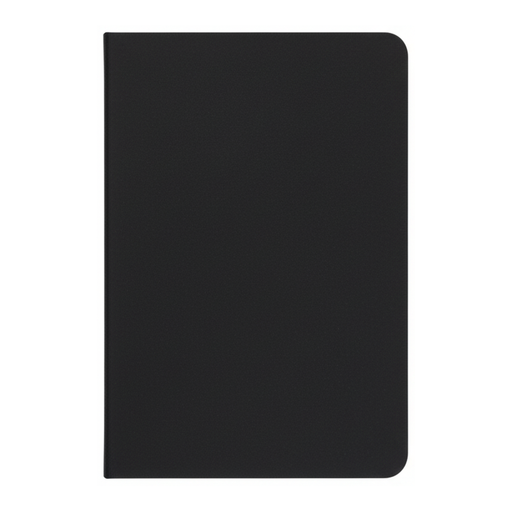
Why we chose it: The perfect companion for artists and students who sketch on the go. Its pocket size, flexible yet sturdy cover, and 120 gsm paper are perfect for quick sketches in pencil or ink, all without the bulk.
It doesn't pretend to be a multi-purpose pad for wet media. Its paper weight is calibrated for dry techniques, preventing the disappointment of torn paper or a pad that's too heavy to carry.
Its sewn binding ensures it opens perfectly flat, and the inner pocket is a real bonus for storing notes. The acid-free paper guarantees excellent long-term preservation of your sketches.
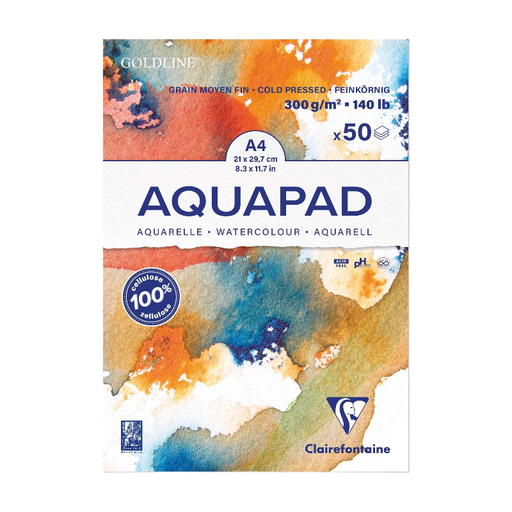
Why we chose it: Designed for students and artists working with watercolour or gouache. Its heavyweight 300 gsm paper and 100% cellulose composition offer excellent water absorption and great stability.
It tackles the problem of buckling paper head-on. Its high grammage provides a level of stability that lighter "multi-media" papers simply can't offer.
It offers very reliable, student-grade quality at an affordable price. Its fine grain is versatile enough to allow beginners to experiment with different watercolour techniques.
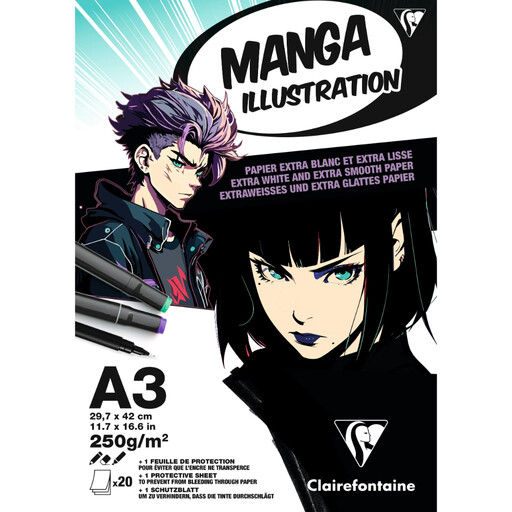
Why we chose it: This extra-white, ultra-smooth Bristol paper was specifically developed for illustrators who work with alcohol markers, fineliners, and ink. Its 250 gsm weight is a game-changer, allowing you to layer colours without fear.
It solves the number one problem with alcohol markers: ink that bleeds and feathers. Its heavy thickness, combined with an included protective sheet, ensures the next page stays pristine.
Its perfectly smooth surface allows for flawless flat colour application with no dotting effect. It's durable enough to withstand erasing or scraping without pilling—a non-negotiable feature for a professional finish.
Explore our complete, updated selection of products that meet our strict selection criteria.
Even with 300?gsm paper, a very wet wash can cause slight warping. For a perfectly flat result, the best technique is to stretch your paper: evenly wet your sheet, place it on a drawing board, and then secure the edges with masking tape or gummed tape. Let it dry completely. The paper will tighten and remain stable while you paint.
Yes, if you want your artwork to stand the test of time. Acidic paper yellows and becomes brittle over the years due to exposure to light and air. "Acid-free" (or pH-neutral) paper ensures much better preservation of your drawings and the vibrancy of their colours. For pieces intended to be kept or sold, it's a non-negotiable criterion.
Cellulose is a wood-based fibre. Papers made from 100% cellulose, like those in the student-grade lines from Clairefontaine or Canson, offer excellent value for money. They are perfect for practice, studies, and even many finished works. On the other hand, 100% cotton paper is considered the gold standard, especially for watercolour. It is more durable and absorbent, allows for multiple corrections (lifting and reworking), and offers exceptional longevity. Logically, it comes at a higher cost. But rest assured: for most purposes, a good cellulose paper is more than sufficient.