
Livraison le jour même ou le lendemain

Qualité garantie

Débloquez vos offres de bienvenue: Livraison GRATUITE | Jusqu'à -80 % | 30 jours d'essai gratuits à JoyPlus
Téléchargez l'application
Buying drawing materials and creative hobby supplies can quickly add up if you're only going by the number of colours, pigment promises or a pretty package. Whether you're an art student, a manga artist, a lettering enthusiast or simply looking for creative activities to share with the family, the right choice depends above all on your practice, the surface you use and how long the materials will last.
A set of 100 colours won't necessarily suit your technique. For taking notes, outlining or creating a bullet journal, fine-liner pens of 0.4 mm can sometimes be far more useful than a very extensive palette. Conversely, a layered illustration demands pencils or markers capable of varying intensity.
Before comparing the number of shades, look at the tip shape, the line width and the type of ink.
Coloured pencils, alcohol markers and soft pastels don't behave the same way on plain printer paper. Paper that is too thin may buckle, fluff up under an eraser or let ink bleed through.
The surface must be suited to the medium: thick paper for wet techniques, smooth paper for manga details and sheets sturdy enough for layering.
Pencils stored badly get damaged more quickly, and pens left uncapped dry out fast. Soft pastels, meanwhile, produce a fine dust: it's best to keep them flat in a well-ventilated space.
A case, a rigid box or a storage roll is therefore not just a decorative accessory. They directly help preserve your art supplies.
For detailed illustration, choose paper whose weight is clearly stated. The CLAIREFONTAINE Manga Illustration Glue Block A4 250g uses extra-white, smooth, acid-free Bristol board with a weight of 250 g/m². Its protective sheet slides under the page when you use alcohol-based markers, to limit ink transfer to the next sheet.
A sketchbook doesn't necessarily need such a high weight. The Moleskine Pocket-Size Watercolor Sketchbook offers acid-free ivory paper of 200 g/m², with a 180° lay-flat opening. This format is better suited to sketches and drawing on the go than to large illustrations.
Graphite pencils in HB are a versatile compromise for writing, sketching and everyday drawing. For deeper blacks or shading, it's better to choose a set offering several graphite hardnesses.
The Faber-Castell 9000 are sold in a set of six. Their hexagonal barrel and break-resistant leads make them tools suited to regular drawing. For school or daily use, the M&G HB pre-sharpened pencils sold in packs of 12 offer a handy supply. Models with an integrated eraser also help reduce the number of accessories you need to carry.
For coloured pencils, also look at the lead composition. The Polychromos use an oil-based binder, while the Faber-Castell Black Edition set focuses on SuperSoft leads and a triangular shape. These choices affect the glide, the layering of colours and the precision of the line.
Brush pens are particularly good for varying pressure, lettering and soft washes. The Ohuhu Maui combine a brush tip of 1 to 6 mm with a fine tip of 0.4 mm, using water-based ink. Their colour chart lets you record the actual result of all 100 shades, which avoids unpleasant surprises on paper.
For precise lines, the STABILO point 88 have a metal-sheathed tip of 0.4 mm. The set of 65 colours includes six fluorescent shades, while the version with 18 mini-pens is designed for portability. In both cases, remember to replace each cap carefully after use.
Soft pastels require a different approach. Their powdery texture blends easily, but also transfers at the slightest touch. A box of 36 Faber-Castell Creative Studio pastels can be used for drawing, shading and mixed-media techniques on paper, card or canvas. The manufacturer recommends storing them flat and using a suitable fixative to limit smudging once the work is finished.
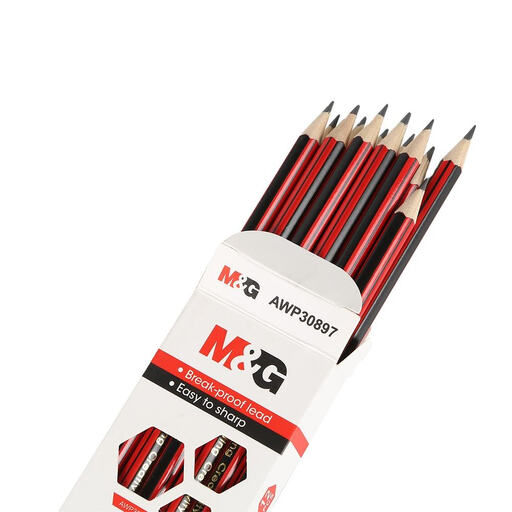
Why this choice suits this profile: This pack is ideal for first sketches, homework and creative activities at home, thanks to its 12 HB pencils that come ready-sharpened.
The pack lets you immediately replace a lost or worn pencil, while the hexagonal barrel stops pencils from rolling off the desk.
HB lead, natural wood, hexagonal shape and pack of 12 pieces.
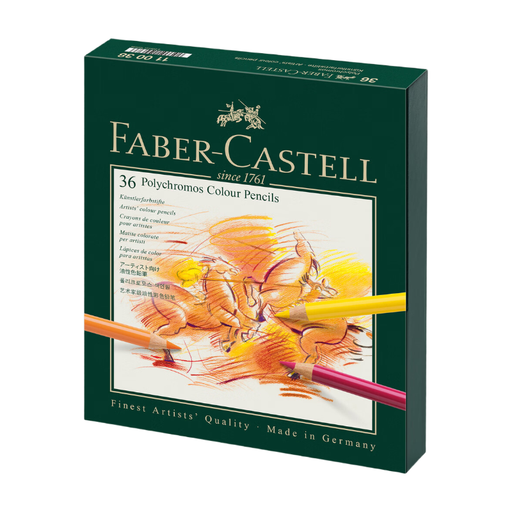
Why this choice suits this profile: This set is aimed at illustrators and artists who work with layers, blends and fine detail over the long term.
The oil-based lead and its 3.8 mm diameter are designed for layering and blending colours, not just quick colouring.
36 colours, Atelierbox, lightfast pigments and SV bonding process.
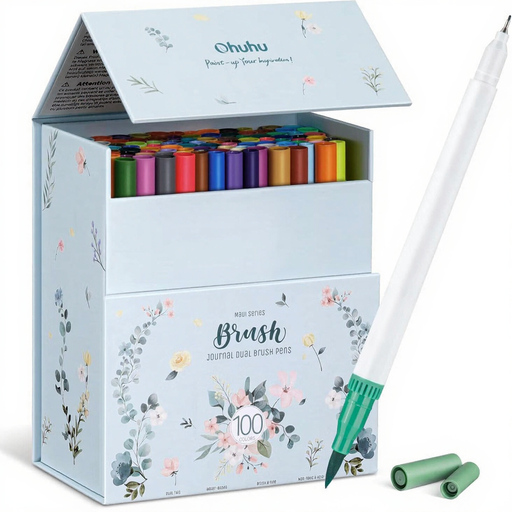
Why this choice suits this profile: This set meets the needs of lettering, calligraphy, creative journaling and illustrations that require two types of line.
The brush tip and fine tip mean you don't need to buy two separate ranges for washes and outlines.
100 colours, tips of 0.4 mm and 1 to 6 mm, colour chart and replacement tips.
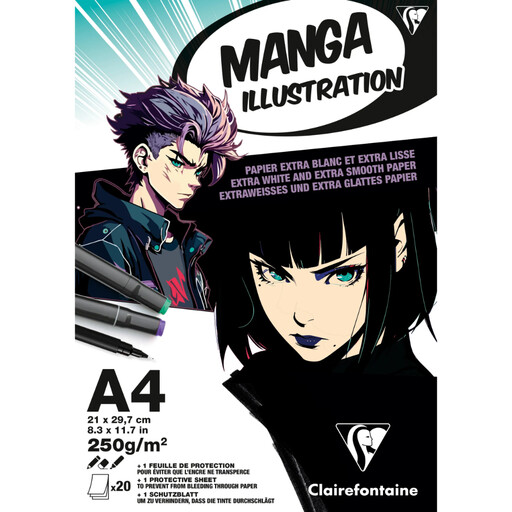
Why this choice suits this profile: Its A4 format and smooth Bristol surface are ideal for comic pages, pen details and marker work.
The 250 g/m² weight and protective sheet minimise problems with bleed-through and damage from repeated corrections.
Extra-white Bristol paper, smooth surface, 100% cellulose composition, acid-free and pH neutral.
We've selected a full range, updated in real time, of products that meet these exacting criteria as well as European safety standards.
A starter kit could include HB graphite pencils, an eraser, a sharpener and a drawing pad suited to your technique. You can then add coloured pencils or fine-liner pens depending on your projects. This approach avoids investing in a large set before you know what you actually use.
With water-based pens, choose paper thick enough to handle blending. For alcohol markers, go for a surface designed to limit ink bleed-through and add a protective sheet. Always test on a separate page: the result also depends on how much ink you apply.
Close pens after each use, store pencils in their box or roll and keep soft pastels flat. Avoid humidity, direct heat and knocks. If the materials are for a child, check the age recommendations and whether there are any small parts before letting them use them unsupervised.