
Livraison le jour même ou le lendemain

Qualité garantie

Débloquez vos offres de bienvenue: Livraison GRATUITE | Jusqu'à -80 % | 30 jours d'essai gratuits à JoyPlus
Téléchargez l'application
Buying drawing materials and creative hobby supplies can quickly become expensive if you rely solely on the colours on the packaging or the number of accessories included. A child’s needs are very different from those of an art student, while an illustrator will be most concerned with paper precision and pigment consistency.
To avoid unsuitable purchases, it’s best to start by identifying the technique you’ll be using, the age of the person who will be using it, and the specific features of the product.
A set packed with pencils or felt-tips isn’t necessarily right for your needs. A children’s drawing set is usually designed for simplicity and durability, whereas an experienced artist will need several grades of graphite pencils, suitable paper and precision tools.
Even very good coloured pencils can produce disappointing results on paper that’s too thin. Sheets may buckle with watercolour paint, tear during corrections, or let ink bleed through. The weight and texture of the paper should therefore be chosen according to the technique you’re using.
Small parts, sharp points and batteries all require extra care. For a child, check the recommended age, safety warnings and whether adult supervision is needed. Also think about cleaning: a washable or water-free activity will be much easier to manage in a bedroom, classroom or while travelling.
For a drawing pad, a weight of 120 gsm is generally suitable for pencils, pastels and dry techniques. Paper of 140 gsm can handle some light wet applications. For repeated washes or markers, a surface of 200 to 250 gsm offers better resistance – always confirm this based on the technique you’re using and the manufacturer’s instructions.
A smooth surface makes detail work, inking and manga easier. A slight grain holds more pigment and can add texture to shading. Acid-free papers, with a neutral pH or PEFC certification, are also worth considering when preserving your drawings is important.
For products intended for children, be sure to check:
This information doesn’t replace reading the instructions, but it does make it easier to compare fine art supplies, creative kits and drawing accessories.
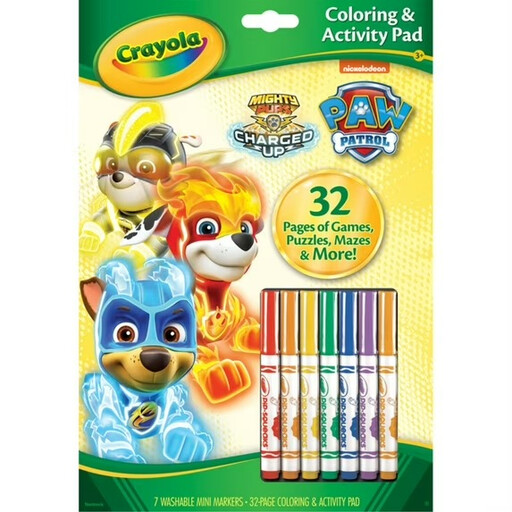
Why this choice suits this profile: This compact pad combines colouring pages, games and stickers. It’s perfectly suited for quiet moments, journeys and children’s first creative activities, with no setup required.
The contents are clearly defined: activity pages and stickers. This means there’s no need to buy a complex set for a child who simply wants to colour.
Easy-to-carry format, colouring pages and games, stickers included. Not suitable for children under 3 years due to small parts.
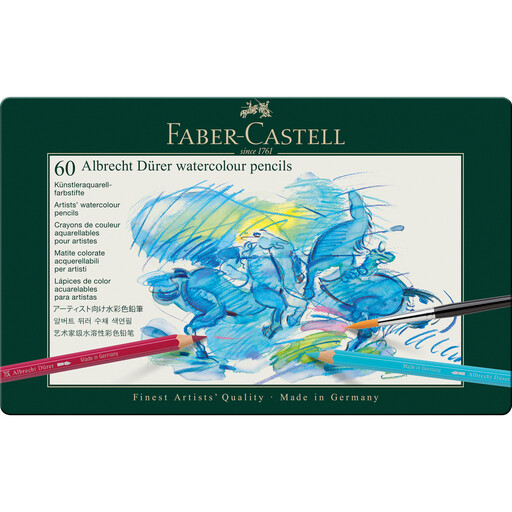
Why this choice suits this profile: This metal tin of 60 shades is aimed at those who want to explore dry drawing, gradients and watercolour effects with a complete, well-organised set.
The number of shades and the 3.8 mm lead diameter are clearly stated. This makes it easier to compare with less complete sets or those with vague specifications.
60 colours, water-soluble lead, metal tin, and can be used dry or wet. You will need to provide suitable paper and a brush for washes.
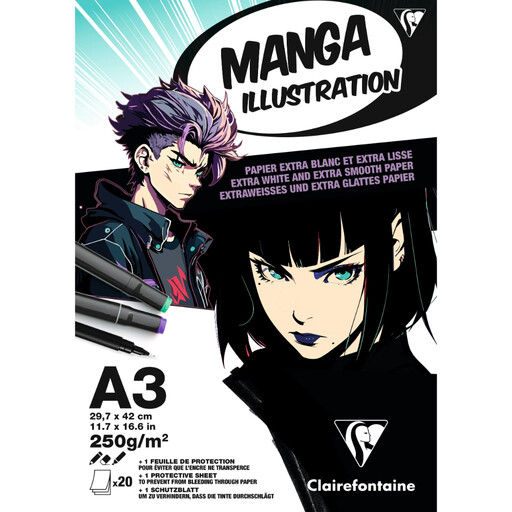
Why this choice suits this profile: This A3 pad is designed for detailed pencil, ink and marker drawings. With a weight of 250 gsm, it meets the needs of illustrators, students and artists who regularly correct their work.
The weight, smooth surface and protective sheet are all specified. This transparency reduces the risk of using paper that’s too thin with alcohol-based markers.
A3 format, smooth Bristol paper, cellulose composition, acid-free and good resistance to repeated corrections.
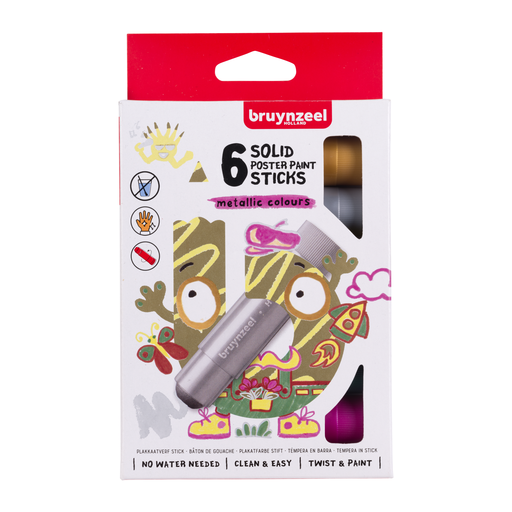
Why this choice suits this profile: The six gouache sticks can be applied directly to paper, card, wood or glass. They’re ideal for family workshops, travel and sessions where you want to keep cleaning to a minimum.
It requires neither a brush nor water. The essential materials are immediately clear, which avoids buying unnecessary accessories.
Six 10 g sticks, quick drying, direct application and hands wash clean with soap and water. Stains on fabrics should be treated promptly.
We’ve put together a comprehensive, real-time selection of products that meet these demanding criteria and European safety regulations.
A sketchbook or drawing pad, a few HB and B graphite pencils, an eraser, a sharpener and a small selection of coloured pencils are enough to begin. For getting started with watercolour, watercolour pencils help keep the number of tools you need to carry to a minimum.
For graphite and coloured pencils, 120 gsm is a versatile starting point. If you regularly use water, choose a thicker paper and check that it’s designed for wet techniques. A 200 gsm sketchbook, like some watercolour pads, offers better durability, but it may also be bulkier.
Keep pencils away from moisture and heat, ideally in a box or compartmentalised pencil case. Close gouache sticks after each use, let brushes dry and store pads flat. For electronic products, remove batteries if they won’t be used for a long time and always follow age warnings.