
Livraison le jour même ou le lendemain

Qualité garantie

Débloquez vos offres de bienvenue: Livraison GRATUITE | Jusqu'à -80 % | 30 jours d'essai gratuits à JoyPlus
Téléchargez l'application
A set of drawing markers and felt-tip pens may seem simple to choose… until you use it for the first time. A nib that collapses, ink that bleeds through the paper or a colour that cannot be erased can quickly turn an appealing purchase into wasted money.
Product descriptions sometimes combine several uses: illustration, writing, clothing customisation or glass marking. Yet a fine black felt-tip pen is not chosen in the same way as an acrylic marker, brush pen or erasable marker. Before comparing sets, it is therefore best to check a few practical features.
A fine-tip felt pen does not guarantee a perfectly consistent line width throughout its lifespan. An unreinforced fibre nib can deform when used against a ruler or stencil. For technical drawing, mandalas or bullet journalling, choose a 0.3 to 0.5 mm nib, protected or designed to remain stable.
Permanent markers and pigment-ink pens are suitable for lines that need to remain visible. However, they can stain the surface and cannot be removed with water. On a whiteboard, glass surface or presentation material, a water-based erasable marker will generally be more suitable.
Glass, metal, wood, fabric and paper do not absorb ink in the same way. An acrylic marker can provide opaque coverage on a dark surface, whereas a watercolour felt-tip pen is primarily intended for paper. Always test it on an inconspicuous area and check the surfaces listed by the manufacturer.
The shape of the nib directly determines which techniques are possible:
A felt-tip pen set is therefore not necessarily more practical simply because it contains more pieces. Three carefully chosen widths may prove more useful than a very extensive but poorly suited assortment.
Water-based ink is generally suitable for paper. Depending on its formulation, it may be washable or erasable. Art drawing pens with pigment ink are popular for their crisp lines and water resistance once dry. As for the term ‘permanent’, it describes a usage property: these inks often leave marks that are difficult to remove.
Acrylic markers contain liquid paint, often opaque, which can adhere to different surfaces. You generally need to shake the marker body, then prime the nib by pressing it down. This preparation helps prevent irregular first strokes, but requires slightly more handling than a fineliner.
Check compatibility with the paper, its weight and its absorbency. With watercolour felt-tip pens, sufficiently thick paper reduces the risk of warping. For glass, plastic or metal, choose a product that clearly states its suitability for smooth surfaces.
Whatever the model, replace the cap after use. Acrylic markers are generally stored horizontally, while some writing pens can be kept in their case. A dry or blocked nib is often the result of poor storage or a cap that has not been closed properly.
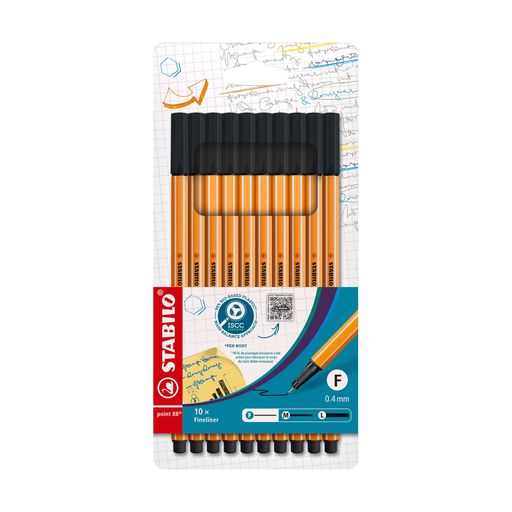
Why this choice suits this profile : With their 0.4 mm nibs, these ten fine black pens cover everyday needs: note-taking, sketching, diagrams and bullet journalling.
The nib is protected by a metal sleeve, making it easier to use with a ruler and reducing the risk of deformation.
0.4 mm line, ten black pens and a barrel made from 96 % bio-based plastic, according to the product information.
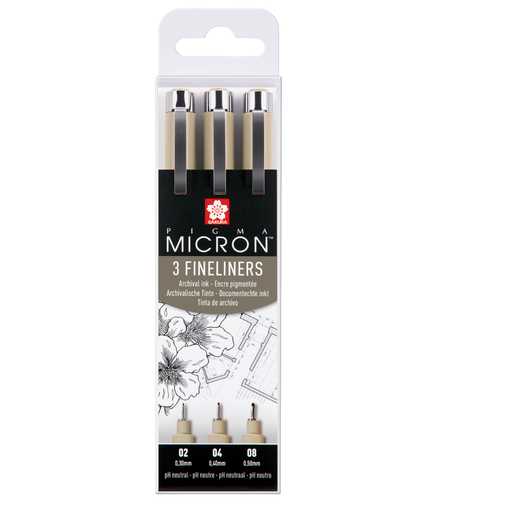
Why this choice suits this profile : The three diameters of 0.30, 0.40 and 0.50 mm allow you to work on details, outlines and intermediate lines.
The description states that it uses water-resistant pigment ink designed for permanent lines, so this set is not intended for temporary marking.
Three precise nibs and pigment ink advertised as resistant to water and fading.
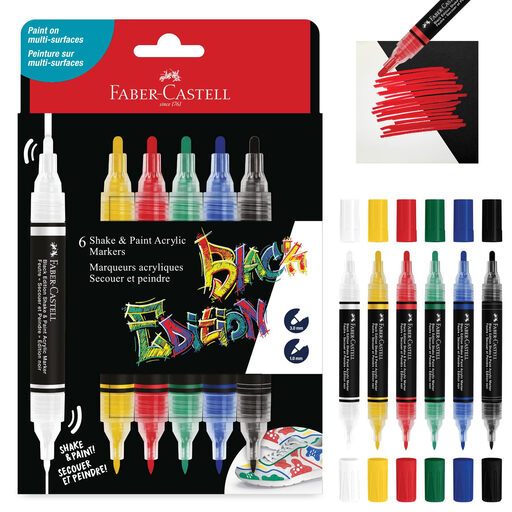
Why this choice suits this profile : This set is designed for creative projects and customisation on paper, wood, glass, metal, plastic, stone or fabric.
The 3 and 1 mm double tip means you do not need multiple tools to switch between solid areas and details.
Opaque water-based acrylic ink, water-resistant once dry, with an ink-level indicator.
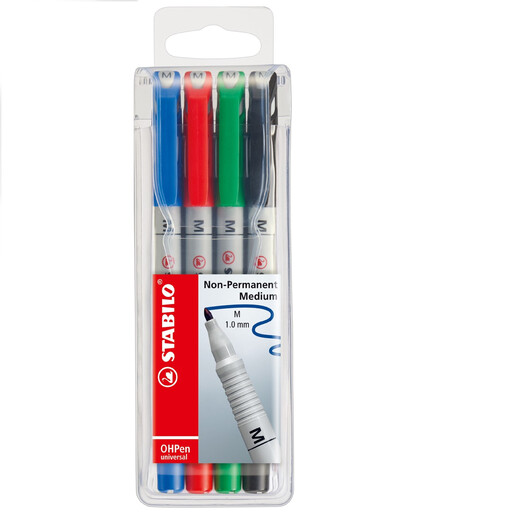
Why this choice suits this profile : Its four colours and medium 0.7 mm nib are suitable for presentations, transparencies, whiteboards and annotations on smooth surfaces.
Its water-soluble ink is designed for temporary marking, helping you avoid accidentally using a permanent marker on a smooth surface.
Marks can be erased with a damp cloth, plus a pocket clip and advertised resistance to drying out for up to 72 hours without a cap.
We have selected a complete, real-time updated list of products that meet these demanding criteria while complying with European safety regulations.
Brush pens are designed to vary pressure and line width. A flexible nib allows you to create thick and thin strokes, while a firmer nib gives beginners greater control. For outlines, pair them with fine black pens.
It depends on the amount of ink applied and the surface used. On a thin sheet, the ink may bleed through or cause the paper to buckle. Choose thicker paper, place a protective sheet underneath and allow it to dry between coats.
Replace the caps immediately and store the markers according to the manufacturer’s recommendations. Acrylic-ink models often need to be stored horizontally. For regular use, keeping a set well organised in a box reduces the chance of leaving pens uncapped and makes it easy to find the right colour quickly.