
Livraison le jour même ou le lendemain

Qualité garantie

Débloquez vos offres de bienvenue: Livraison GRATUITE | Jusqu'à -80 % | 30 jours d'essai gratuits à JoyPlus
Téléchargez l'application
Whether you're an artist preparing your next illustration, a crafting enthusiast who loves adult colouring, or a parent looking for the ideal supplies for an art project, choosing the right marker set can quickly become a headache. The market is saturated, and the marketing promises are often overblown. As a product specialist at Joybuy, my job is to cut through the noise with you to unearth the hidden gems that truly meet your needs, while helping you avoid the common pitfalls.
Before diving in headfirst, let's review the most common disappointments that turn a promising purchase into a real regret:
To avoid these issues, a quick overview of the technical specifications is essential.
There's more to it than just colour. Three fundamental parameters determine a marker's performance, durability, and suitability for your project.
The ink is the soul of the marker. There are three main types:
The tip dictates the line.
To ensure your creations don't fade to sepia after a few months on the wall, lightfastness is a non-negotiable criterion. Inks made with high-quality pigments are far more stable over time than those formulated with simple dyes. Reputable manufacturers, like Faber-Castell, indicate this information (often with a star rating system), guaranteeing "archival" quality for your artwork.
To move from theory to practice, here are a few standout products, each tailored to a specific user profile.
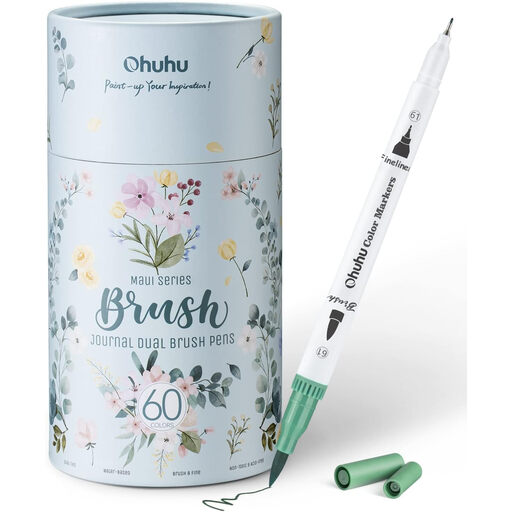
Why it's a great choice: Perfect for getting started with colouring, *bullet journaling*, or illustration. This set offers a wide palette of 60 colours and a dual tip (brush/fine) that covers most needs, all at an unbeatable price-per-marker ratio.
The airtight caps and included replacement tips effectively combat drying and wear. The numbered markers and a DIY colour swatch ensure you always pick the right colour, with no unpleasant surprises.
The versatility of the dual tip (flexible brush + 0.4 mm *fineliner*). The non-toxic, water-based ink can be blended to create watercolour effects.
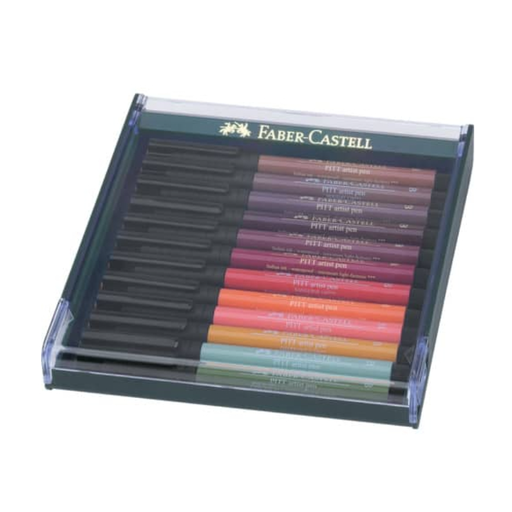
Why it's a great choice: A gold standard for professionals. The pigmented India ink becomes permanent when dry and guarantees excellent lightfastness, a critical factor for works intended for sale or exhibition.
The high-quality fibre brush tip retains its shape use after use, without ever fraying. The pigmented ink won't bleed through good quality, heavy-weight drawing paper, ensuring a flawless result every time.
Its pigmented India ink is waterproof and lightfast. Its brush tip, both flexible and durable, allows for a very expressive line. Odourless, acid-free, and pH-neutral formula.
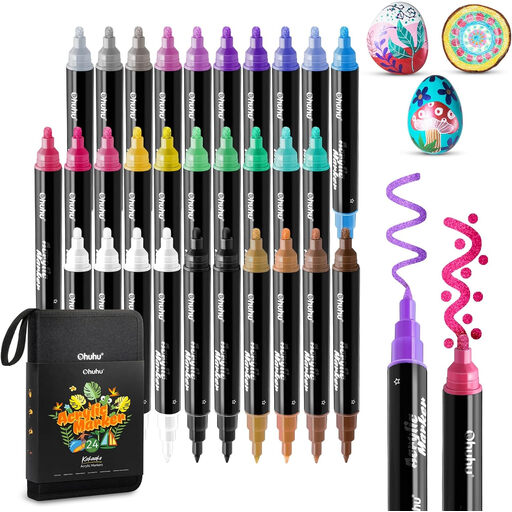
Why it's a great choice: The dream tool for customising objects. Its opaque, high-coverage acrylic ink adheres to a myriad of surfaces (rock, wood, ceramic, fabric, plastic...), making it the perfect companion for all your DIY projects.
Unlike traditional inks that would smudge or be poorly absorbed, the acrylic formula guarantees a clean, opaque finish, even on non-porous surfaces. The robust tips are designed to withstand contact with more abrasive surfaces than paper.
Their multi-surface capability, thanks to the acrylic ink. Water-resistant and good lightfastness once the ink is dry. Dual tip (fine and medium) for greater flexibility.
We have put together a complete and up-to-date selection of products that meet our selection criteria and current standards.
How should I store my markers to make them last longer? The golden rule: always reseal the caps tightly immediately after use. For most markers, especially dual-tip models, storing them horizontally is recommended. This allows the ink to flow evenly to both nibs. Finally, keep them away from heat and direct sunlight.
What paper should I use with alcohol markers to prevent bleeding? Alcohol markers have an unfortunate tendency to bleed through standard paper. To counter this, the best solution is to use paper designed specifically for them, often called "marker paper". It has a special coating that blocks the ink. Alternatively, a very thick, smooth paper like Bristol board (over 200?g/m?) can work, provided you always place a scrap sheet underneath.
Are acrylic markers truly permanent on all surfaces? Their adhesion and permanence depend on the surface. On a porous surface (paper, cardboard, raw wood), the ink penetrates the material and becomes virtually permanent. On a smooth, non-porous surface (glass, ceramic, plastic), the ink adheres well but remains susceptible to friction and scratches. For maximum durability on these materials, applying a clear varnish sealant is highly recommended once your creation is completely dry.