
Livraison le jour même ou le lendemain

Qualité garantie

Débloquez vos offres de bienvenue: Livraison GRATUITE | Jusqu'à -80 % | 30 jours d'essai gratuits à JoyPlus
Téléchargez l'application
Whether you're a seasoned illustrator, an adult colouring enthusiast, or a parent looking to equip a young artist, choosing a marker set can quickly become a headache. With hundreds of options available, it's easy to fall into the classic traps that lead to disappointment: ink that bleeds through the paper, colours that don't live up to their promise, or tips that wear out far too quickly.
As a product expert at Joybuy, my role is to help you navigate the choices. Let's skip the marketing jargon and focus on the criteria that truly matter for a successful purchase. This guide breaks down the three most common mistakes and gives you the keys to avoid them.
To ensure you never make the wrong choice again, keep an eye on these three features before every purchase. They determine 90% of whether a set of drawing pens is right for you.
The tip is an extension of your hand, so choosing the right one is fundamental.
The ink determines the colour, the final look, and compatibility with your surface.
Before you buy a marker set, ask yourself what you'll be drawing on. A set designed for paper will not produce satisfactory results on a ceramic mug. For DIY projects on objects, always opt for acrylic paint markers. For drawing on paper, simply check that the ink is compatible with the paper weight you use.
Here are a few options that meet specific needs, taking into account the criteria we've just discussed.
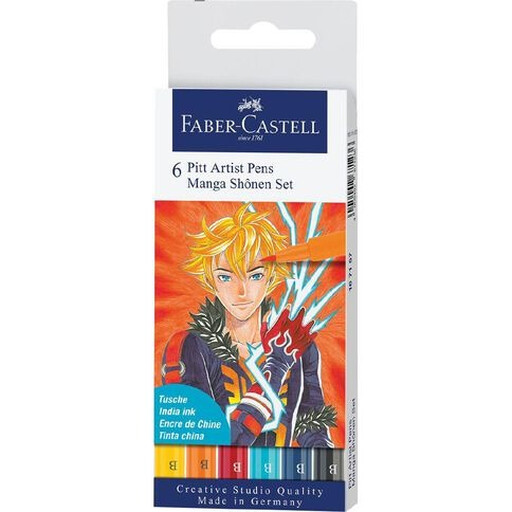
Why it's the right choice: This set is tailor-made for drawing manga. It includes a selection of assorted tips for creating dynamic lines and fine details, while the pigmented India ink ensures a professional and lasting finish.
The permanent India ink is waterproof and won't smudge, allowing you to apply colours (watercolour, alcohol markers) on top without any risk. The tips are designed for intensive artistic use and resist wear.
Archival quality: the ink is lightfast and won't fade over time. The set includes an assortment of 6 different tips for a wide range of expression.
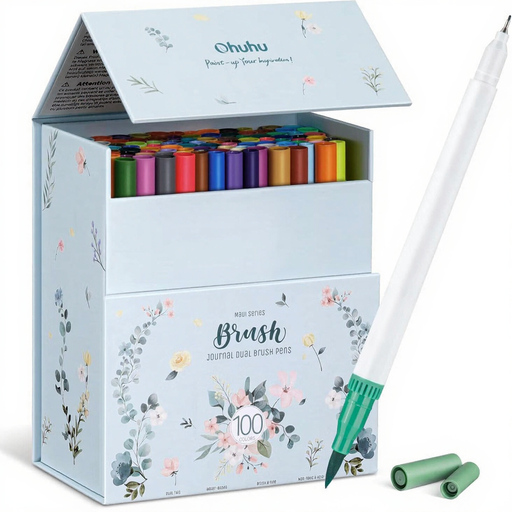
Why it's the right choice: With 100 colours and a dual tip (flexible brush and fineliner), this set offers remarkable versatility for colouring, calligraphy, or creatively organising a bullet journal.
The water-based ink is formulated to minimise bleed-through on suitable paper. The dual tip saves you from buying two separate sets, offering both precision and coverage.
Dual-tip marker for maximum versatility. A vast palette of 100 numbered colours, delivered with a practical storage case and replacement tips.
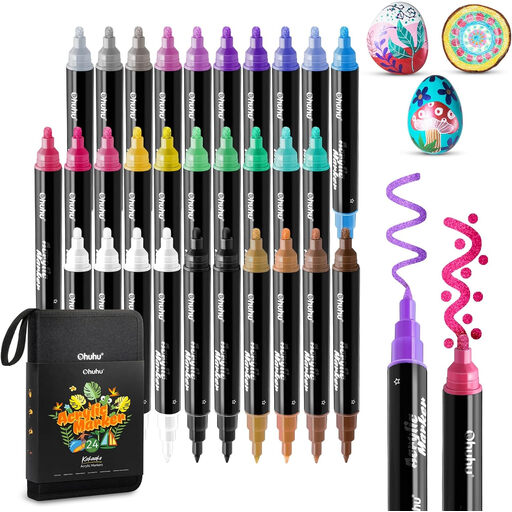
Why it's the right choice: This set is the ultimate solution for those who want to customise objects. The opaque acrylic ink adheres to a multitude of surfaces like stone, wood, ceramic, or fabric, where classic markers fail miserably.
It solves the false versatility trap by being a specialised product. This acrylic paint pen is specifically formulated for strong coverage and perfect adhesion on non-porous surfaces.
Water-resistant and lightfast ink once dry. Dual tip (fine and medium) to handle both details and large fills on all kinds of objects.
We have curated a complete, up-to-date list of products that meet these strict selection criteria and current safety standards.
The easiest solution is to use heavier paper (at least 120 gsm for water-based pens, and 200 gsm or more for alcohol-based markers). There are also paper pads specifically designed for markers, which have a coating that prevents ink from bleeding. Placing a scrap sheet under your drawing is also an excellent habit.
The lifespan depends on the size of the ink reservoir, how often you use it, and how well you care for it. To extend their life, the most essential habit is to always recap them tightly after use to prevent the tip from drying out. Storing markers horizontally ensures an even distribution of ink, a crucial detail for dual-tip models.
No, and this is a very common mistake. Alcohol markers will bleed and feather on standard printer paper (80 gsm). To get good results and be able to blend colours, it's essential to use a coated, smooth, and thick paper, often called "layout paper" or "marker paper." This extra investment is the key to unlocking the full potential of these markers.