
Livraison le jour même ou le lendemain

Qualité garantie

Débloquez vos offres de bienvenue: Livraison GRATUITE | Jusqu'à -80 % | 30 jours d'essai gratuits à JoyPlus
Téléchargez l'application
Whether you're a seasoned illustrator, an art student, or a casual creative hobbyist, a good drawing marker is the tool that brings your ideas to life. But with all the different tips, water-based or pigment inks, and endless color palettes, making the right choice can feel overwhelming.
Our mission: to provide some clarity. This guide breaks down the essential features of drawing markers and presents our selection of the best models, whether you're into detailed sketching or artful coloring.
To ensure you make the right choice, scrutinize these three criteria. They will help you find the set that perfectly matches your creative ambitions.
The tip is what gives your linework its character. Each type opens up a different range of possibilities:
The type of ink is the second decisive factor. It directly affects the vibrancy, longevity, and the way colors interact with each other.
Opting for a drawing marker set is often the smarter choice: it's more economical and ensures a beautiful harmony between the shades. For beginners or those focusing on coloring, a set of 24 to 60 colors provides a very versatile base. For outlining or sketching, however, a simple assortment of black fineliner pens in different thicknesses will do the job perfectly.
We have selected three products that stand out from the crowd, each catering to very specific creative needs.
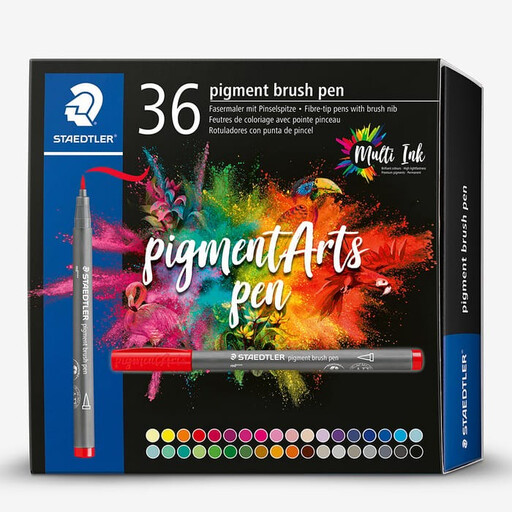
Why it stands out: This set is a perfect marriage of professional-grade pigment-based ink and the flexibility of a brush tip. Its ink, which is water- and light-resistant once dry, is a guarantee of longevity for your creations. The flexible tip, meanwhile, allows you to modulate your strokes with surprising ease, shifting from a fine, precise line to a broad, expressive fill.
Key features:
Who is it for? Illustrators, hand lettering fans, and comic artists who want reliable brush pens designed for artworks that will stand the test of time.
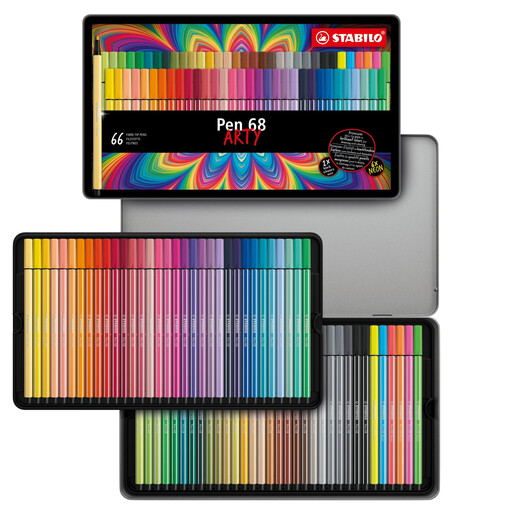
Why it stands out: A true classic, and for good reason. This set is a dream come true for anyone who loves vibrant colors. With 65 shades, the palette is nearly endless. Its sturdy medium tip (1?mm) ensures a consistent line, ideal for detailed coloring and flawless solid fills. The water-based, water-soluble ink opens the door to blending and gradients. The nice bonus, promised by Stabilo: they can be left uncapped for 24 hours without drying out.
Key features:
Who is it for?Adult coloring enthusiasts, students, and all creatives looking for an extra-large color palette for their drawings, bullet journals, or mandalas.
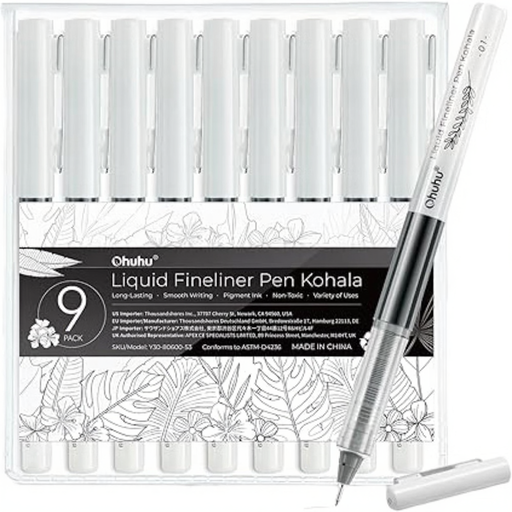
Why it stands out: This is all about precision and the versatility of the black line. This set is a true Swiss Army knife for line art: it brings together 9 fineliner pens of different sizes, from an ultra-fine tip (0.15?mm) to a brush tip. The black pigment ink resists (almost) everything: water, alcohol... making it ideal for working with alcohol markers or watercolor without the slightest smudge. The transparent barrel is a clever touch, allowing you to keep an eye on the ink level.
Key features:
Who is it for? Technical drawers, architects, comic artists, and anyone for whom the precision of outlines, lettering, and details is non-negotiable. A must-have for inking.
Our selection covers the most common uses, but the world of markers is much vaster. Alcohol markers, specialty tips, themed palettes... If you have other needs, feel free to explore our full catalog.
? Discover our complete collection of pigment ink pens
What's the difference between water-based and pigment-based markers? To put it simply, water-based ink uses soluble dyes. It is often water-soluble (ideal for gradients) but can be sensitive to light over the long term. Pigment-based ink, on the other hand, contains fine solid color particles. Once dry, it becomes permanent and resistant to water and light. It's the choice for durability, perfect for artworks you want to preserve intact.
How can I prevent markers from bleeding through the paper? This phenomenon, known as bleeding, depends as much on the marker as it does on the paper. The golden rule: use paper that is thick enough (at least 120 gsm, and even 200 gsm or more for alcohol markers). There are also special marker papers (called layout paper) that have an anti-bleed coating. When in doubt, always slip a scrap sheet under your artwork!
How should I store my drawing markers to maximize their lifespan? Most manufacturers agree that they should be stored horizontally. This position ensures an even distribution of ink, which is crucial for keeping both ends of a dual-tip marker well-saturated. And of course, the basic reflex: always cap them tightly after each use to avoid the tragedy of a dried-out tip.