
Livraison le jour même ou le lendemain

Qualité garantie

Débloquez vos offres de bienvenue: Livraison GRATUITE | Jusqu'à -80 % | 30 jours d'essai gratuits à JoyPlus
Téléchargez l'application
Whether you’re putting together a sketchbook, a bullet journal, a family activity or an illustration project, choosing drawing and creative hobby supplies isn’t simply about counting the number of colours on the box. A very extensive palette can contain shades you’ll rarely use, while a tool marketed as versatile may lack precision or dry out quickly.
Here are the key criteria to consider before buying art supplies, pencils, felt-tip pens or a creative set.
A set of 100 felt-tip pens isn’t necessarily more useful than an assortment of 12 colours. For everyday drawing, calligraphy or revision, the quality of the tip, how clearly the references are labelled and the storage matter just as much as the number of shades.
In particular, check for the presence of fluorescent, metallic or pastel colours, and their genuine variety. A well-identified assortment makes it easier to put together a palette and avoids ending up with duplicates.
A fine tip works well for outlines, annotations and technical drawing, but it will never replace a brush tip for lettering. Soft brush pens also require a certain amount of pressure control, whereas a chisel tip is easier to use for quickly filling in a surface.
The stated width should also be interpreted with caution: a 0.4 or 0.5 mm tip can produce precise lines, but the result also depends on the paper and the pressure you apply.
Watercolour pencils, dry pastels and water-based inks behave differently on ordinary paper. Paper that is too thin can buckle when it comes into contact with water, catch the pigments or let the ink bleed through.
After use, close your felt-tip pens carefully, store your pencils away from moisture and keep pastels flat. For young children, check the recommended age as well as any warnings about small parts and inhalation of dust.
For erasable gel pens, check that an integrated eraser is included. Bear in mind, however, that their thermosensitive ink is not suitable for documents that need to be kept long-term. It can also react to very high or very low temperatures.
Soft-lead coloured pencils deposit colour easily and are well suited to layering. Harder leads are better for details and outlines. Dry pastels offer a powdery texture that can be blended with your finger or a blending stump, but they require careful storage and can produce dust.
For watercolour, use the pencils on paper that is compatible with water. The product description should state whether the lead is water-soluble and whether the set comes with a case or storage box.
A triangular or hexagonal shape stops the pencil from rolling and improves grip. A compartmentalised case, a roll or a rigid box protects the tips and makes it easier to transport your supplies between home, the studio, university or the office.
For school and office supplies, packs of 12 can reduce how often you need to replace them. If you draw regularly, also think about refills, replacement tips and how robust the body of the tool is.
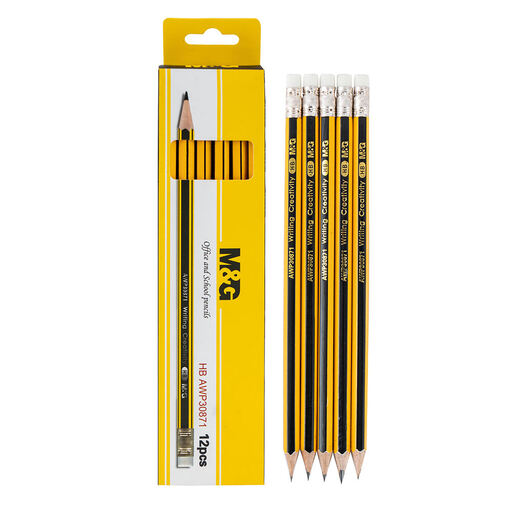
Why this choice suits this profile: This pack is ideal for students, families and anyone looking for a simple tool for writing, taking notes and getting started with sketching.
The HB grade offers a practical compromise for writing and sketching, while the pack of 12 pencils means you won’t need to buy replacements too often.
HB leads, hexagonal barrel that won’t roll, pre-sharpened pencils and integrated eraser.
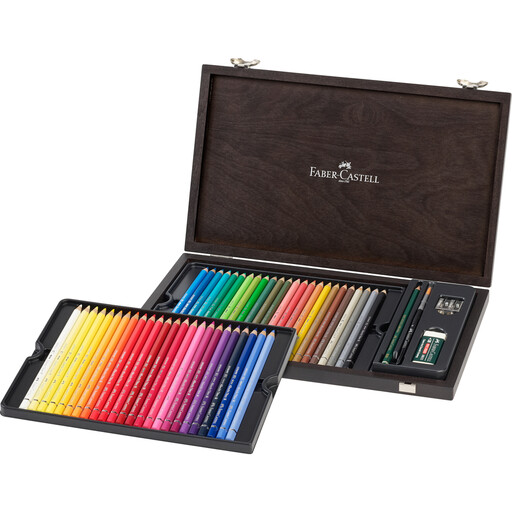
Why this choice suits this profile: This set is aimed at illustrators and experienced hobbyists who want to move from dry drawing to watercolour effects with a single collection.
The description clearly states that the lead is water-soluble and recommends using suitable paper. The technique is therefore clearly defined, with no promise of universal use.
48 colours, 3.8 mm lead, stated SV bonding and wooden box for storage.
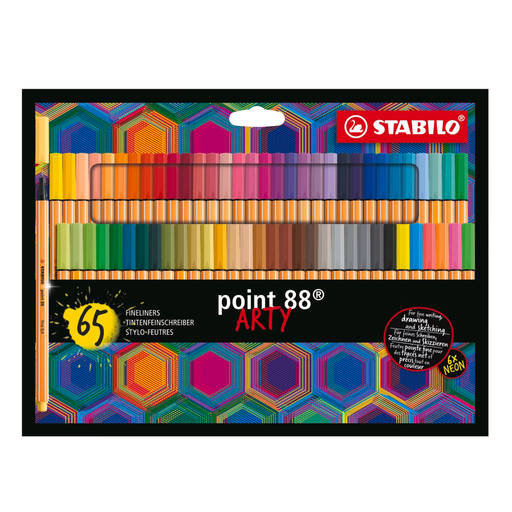
Why this choice suits this profile: This assortment is ideal for bullet journals, mandalas, diagrams and projects that require consistent, precise lines.
The metal-clad 0.4 mm tip is more resistant to bending. Remember to replace the cap after use to prevent drying out.
65 colours, including 6 fluorescent shades, 0.4 mm tip and bio-based plastic stated at 96% according to mass balance.
We’ve put together a comprehensive, real-time updated selection of products that meet these demanding criteria and comply with European safety regulations.
An assortment of HB graphite pencils, an eraser, a sharpener and a notebook with paper that is thick enough make a good starting point. Then add coloured pencils or fineliners depending on the technique that appeals to you. A few tools that are clearly suited to your purpose are better than a very varied set whose possibilities remain unclear.
Yes. You’ll need paper designed to withstand water, a brush and, if necessary, a container. Start by testing the amount of water on a separate sheet. Applying too much water can warp standard paper and cause blends that are difficult to control.
Close each felt-tip pen immediately after use and store it according to the manufacturer’s recommendations. Dry pastels should stay in their box, flat, to minimise knocks and the spread of dust. For activities with children, always keep supplies out of reach of children under 3 when the description mentions small parts or a risk of inhalation.