
Livraison le jour même ou le lendemain

Qualité garantie

Débloquez vos offres de bienvenue: Livraison GRATUITE | Jusqu'à -80 % | 30 jours d'essai gratuits à JoyPlus
Téléchargez l'application
Buying drawing and craft supplies can quickly become a challenge. There are oversized sets, promises of limitless creativity and accessories that end up forgotten in a drawer. Whether you’re shopping for a child, student, teacher or budding artist, the right choice depends above all on the technique, how easy the supplies are to store and safety.
Here are the common pitfalls to avoid, the points to consider and a selection to suit different needs.
A 100-piece set isn’t necessarily more practical than a much simpler pencil case. Some assortments pile on the colours but leave out genuinely useful accessories. If you’re just starting out, check that the essentials are included: a pencil sharpener, paintbrush, surface, storage solution or instructions, depending on the activity.
Small parts, sharp pencil leads and some cutting tools aren’t suitable for children under 3. A kit designed for ages 4–10 won’t meet the same needs as a set for a teenager or illustrator. Always check the age stated by the manufacturer and make sure the right level of supervision is available.
Watercolour pencils used on paper that’s too thin may cause it to buckle or let moisture through. Similarly, a standard sketchbook isn’t always suitable for watercolour painting. Paper weight and durability have a direct impact on how comfortable it is to draw and how well your creations keep.
For everyday colouring, colouring pencils with strong leads that are easy to sharpen are just as practical at home as they are at school. A triangular shape makes them easier to hold steadily and stops them rolling off the table.
Watercolour pencils can be used dry or with water. Simply draw on the paper, then brush over the lines with a damp paintbrush to create gradients and soft, blended effects. This technique does require suitable paper, and the pencils should be stored somewhere dry.
For graphite or coloured pencil sketches, paper around 120 g/m² is suitable for most everyday uses. For watercolour, paper weighing 200 g/m² will generally stand up to moisture better, although the result also depends on how much water you use.
A sketchbook that opens completely flat makes it easier to draw across two pages. A hard cover gives the pages better protection when you’re out and about, while a small format slips easily into a bag for drawing on public transport or outdoors.
A case, roll or compartmentalised box protects pencil leads and stops colours getting mixed up. A portable watercolour set with half pans and a built-in palette is especially handy for trips, classes and painting outdoors. For children’s craft activities, a compact box that’s easy to close also helps prevent pieces from going missing.
Finally, check the product listing for compliance and safety information, including the recommended age, warnings about small parts and the details of the responsible person in the European Union.
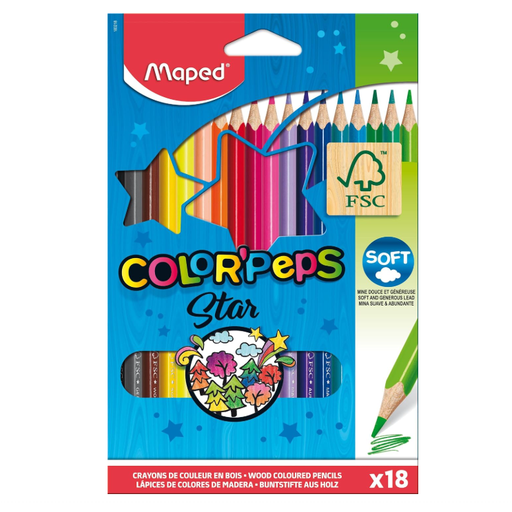
Why it suits this need : This 18-colour set is just right for first drawings, homework and creative activities at home. The triangular shape makes the pencils easier to hold and stops them rolling away.
The number of shades is easy to manage, without a pile of accessories you’re unlikely to use. The product listing says it’s suitable from age 3, with adult supervision for younger children.
18 colours, 2.9 mm lead, FSC-certified wood and a cardboard case.
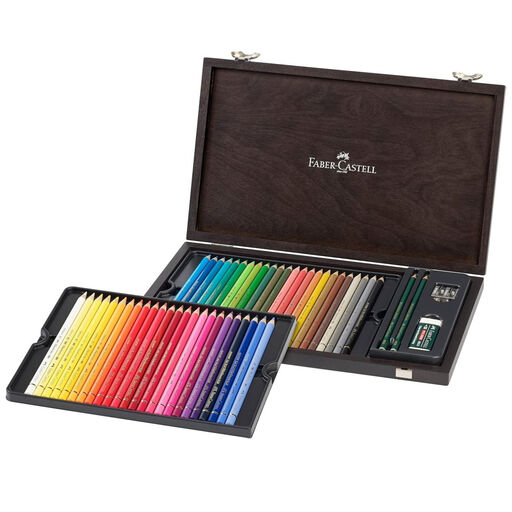
Why it suits this need : With its wooden case and 48 shades, this set is designed for people who draw regularly and want to keep their supplies neatly stored in one place.
The product listing gives a detailed breakdown: 3.8 mm leads, oil-based pencils and protective storage. So you know exactly what’s in the set, rather than relying on the colour count alone.
48 colours, thick leads bonded using the SV process and a wooden case.
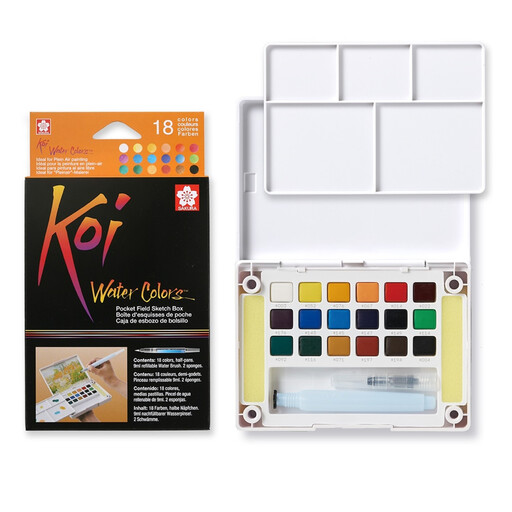
Why it suits this need : This compact set slips easily into a bag for sketching on the go, filling travel journals or painting outdoors. It lets you take plenty of colours with you without carrying bulky supplies.
The 18 half pans, built-in mixing palette and pocket-sized case are clearly listed. That makes it much easier to compare with a standard palette.
Portable format, 18 half pans and a built-in mixing area.
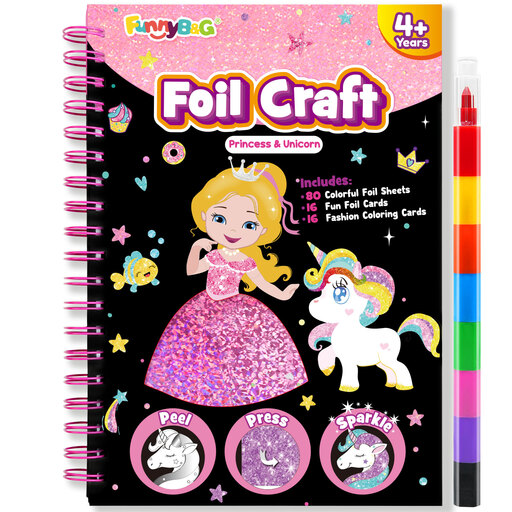
Why it suits this need : This foil art kit for children offers a mess-free activity with no glue or scissors, at home or on the go. According to the product listing, it may suit children aged 4 to 10 and makes an easy-to-give creative gift.
The contents are clearly listed: 16 boards, 80 metallic foil sheets, 16 colouring cards and an 8-colour pencil.
A compact activity with no glue or scissors, featuring several projects to complete.
We’ve put together a comprehensive selection, updated in real time, of products that meet these strict criteria as well as European safety requirements.
To get started, a set of pencils and a sketchbook may be all you need. The price then rises with the number of shades, paper quality, type of pigment and storage system. Above all, compare what’s actually included in the set rather than the number of pieces printed on the packaging.
Keep pencils in their box or roll, away from heat and moisture. Close the watercolour set once the palette is dry. Store your sketchbook flat or in a protective sleeve to stop the pages from becoming misshapen.
Start by checking the recommended age, whether there are any small parts and whether adult supervision is needed. For a calm, low-mess activity, scratch art and foil art are easy to take with you. If your child wants to develop their drawing skills, triangular pencils or a set with templates will often be a better choice.