
Livraison le jour même ou le lendemain

Qualité garantie

Débloquez vos offres de bienvenue: Livraison GRATUITE | Jusqu'à -80 % | 30 jours d'essai gratuits à JoyPlus
Téléchargez l'application
Choosing your drawing and colouring supplies isn't just about counting the number of shades on the box. Between coloured pencils, dual-tip markers, brush pens and soft pastels, the surface, the type of lead and the maintenance requirements all have a direct impact on the final result.
Some purchases disappoint for perfectly predictable reasons: a tip that dries out too quickly, a lead that's too fragile for children, or a generous palette that's poorly suited to the technique you're using. Here are the criteria to consider before you fill your basket.
A set of 72 pencils might seem more complete than an assortment of 12 shades. Yet it won't necessarily be better suited to your needs. For gradients, layering or portraiture, the quality of the lead often matters more than the number of hues. For journaling or calligraphy, a dual tip can prove far more useful than a very extensive palette.
Water-based felt-tips blend easily on thick paper, but they risk bleeding through a thin sheet. Acrylic markers, on the other hand, require a prepared surface and good ventilation. Pastel pencils and soft pastels deposit a powder that often needs a fixative to prevent smudging.
Before you choose, check the surface you'll be working on: drawing paper, card, canvas, glass, wood or a non-porous surface.
A tip must be recapped immediately after use. Pencils should be stored in a box or roll to avoid knocks. For children, check the recommended age, whether there are any small parts and the manufacturer's instructions. Soft pastels can produce fine dust: it's best to use them in a well-ventilated space.
A water-based ink blends easily and cleans up without difficulty, but its finish depends heavily on the paper used. An opaque acrylic ink can work on coloured or non-porous surfaces, provided you follow the manufacturer's recommendations.
For works intended to be preserved, look into their lightfastness. This characteristic can't be deduced from the visual intensity of a colour alone: a very bright pigment can still fade over time.
A well-designed storage case protects the leads and helps you find the right shade quickly. A colour chart is also valuable for seeing the actual finish on your paper. A suitable sharpener, replacement tips or a brush can also save you from additional purchases.
For school or family use, choose a format that's easy to carry. For a studio or regular practice, a metal box, roll or compartmentalised case will be more practical day to day.
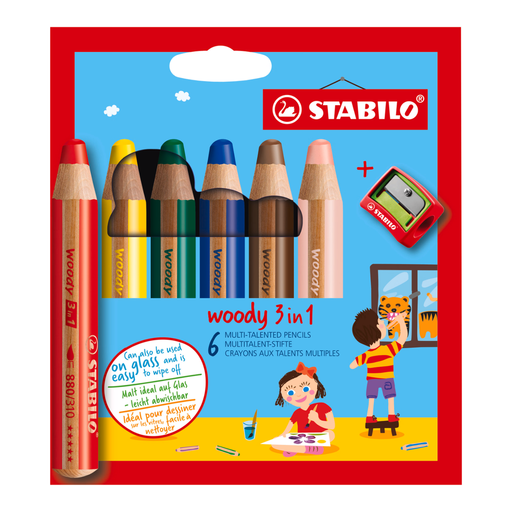
Why this choice suits this profile: This compact format accompanies early creative activities, homework and short trips. Designed for children, these pencils have a 10 mm lead that makes them easy to grip.
The set avoids having to make multiple purchases by combining pencils that can be used as coloured pencils, oil pastels or watercolour pencils. A dedicated sharpener is included.
Six assorted colours, an XXL 10 mm lead and the ability to use on paper, card and smooth surfaces. This product is not suitable for children under 3 years old.
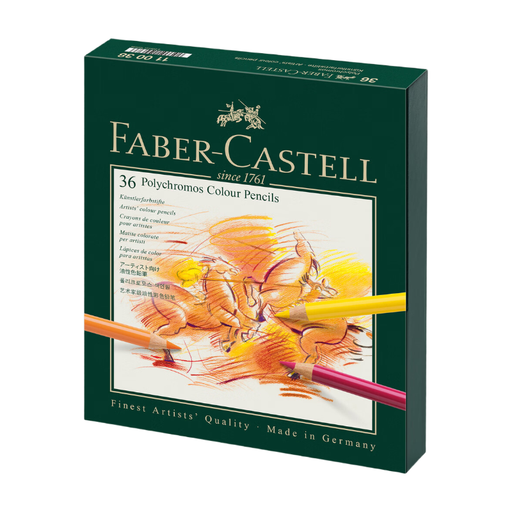
Why this choice suits this profile: Illustrators, art students and fans of detailed finishes will appreciate the 3.8 mm oil-based lead and the Atelierbox case, practical both in the studio and on the go.
The product page specifies the lead composition, its diameter and the SV bonding process. This allows you to compare durability and comfort of use in concrete terms.
36 shades, pigments claimed to be lightfast, an oily lead that's easy to layer and a rigid case. The palette is more focused than a 72-colour set.
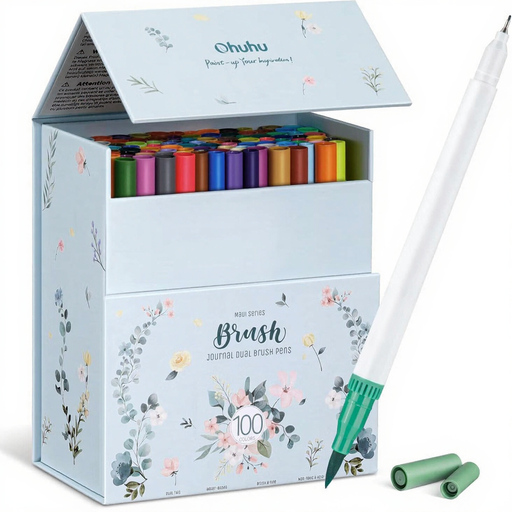
Why this choice suits this profile: This set meets the needs of regular colouring, journaling, decorative drawing and calligraphy thanks to its two tips per marker.
The 0.4 mm fine tip and the 1 to 6 mm brush tip are clearly differentiated. A colour chart and five replacement tips are included.
100 numbered shades, a water-based ink claimed to be acid-free and a white storage case. Remember to recap each marker after use.
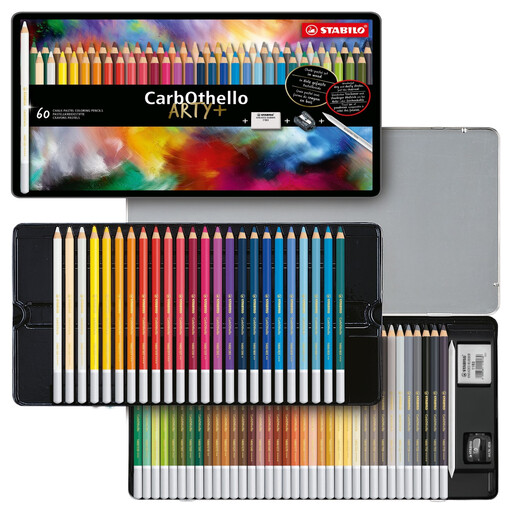
Why this choice suits this profile: Pastel, sketching and blended background enthusiasts have an extensive palette in a metal tin designed for storage.
The type of dry core, blending techniques and use with water are all specified. You can therefore check compatibility with your method before ordering.
60 colours, a powdery finish, the ability to use on dark papers and blending dry or with water. A fixative may be needed to prevent smudging.
We've put together a comprehensive, real-time updated list of products that fully meet these strict selection criteria and European safety regulations.
To preserve your art materials:
Acrylic markers, like coloured pencils, are not intended for contact with food or skin. Use them only on the surfaces specified in the product description.
A thick paper specially designed for wet techniques limits warping and makes blending easier. For felt-tips, a smooth paper can improve line consistency, while a textured paper is better suited to pastel pencils and soft pastels.
The lifespan depends on how often you use them, storage conditions and whether the cap is closed properly. A tip can dry out prematurely if left exposed to air. Store markers according to the manufacturer's recommendations and replace the tips when a spare accessory is provided.
Start by checking the recommended age, the shape of the pencil and the robustness of the lead. Art supplies for children with a thick body, such as some triangular or XXL pencils, are generally easier to hold. Also check for small parts and supervise the child during use.