
Livraison le jour même ou le lendemain

Qualité garantie

Débloquez vos offres de bienvenue: Livraison GRATUITE | Jusqu'à -80 % | 30 jours d'essai gratuits à JoyPlus
Téléchargez l'application
Buying drawing and colouring supplies seems simple… until it is time to compare sets, nib types and promises of vibrant colours. Between pencils that break quickly, pens that dry out after just a few uses and sets that are too bulky for school, some purchases can quickly lead to disappointment.
For families in France, the choice mainly depends on the user’s age, the surface, the storage space available and how often the activities take place. Here are the criteria to consider before choosing creative school supplies, drawing accessories or a set for creative hobbies.
A set of 60 or 70 colours is not necessarily the best choice for a beginner. For homework, everyday colouring or first sketches, 18 to 24 carefully chosen shades are often enough. By contrast, illustrators and creative journal enthusiasts will get more from an extended palette featuring pastel, neon or metallic shades.
Remember to check the type of medium too: watercolour pencils, brush pens and colouring pens produce completely different results.
A fine nib is ideal for outlines and annotations, while a broad nib allows you to fill large areas more quickly. Dual-tip pens combine both uses, but they may be less practical for very young children if the caps are difficult to handle.
On thin paper, very fluid ink may bleed through the sheet. To create watercolour effects, it is better to use thicker paper and carry out a first test on a separate sheet.
A set without compartments or a case can quickly lose its appeal. Pencils roll away, caps go missing and colours become difficult to find. The storage provided — metal tin, roll or case — is therefore a very practical consideration, especially for pupils, students and artists who carry their supplies around.
After each use, pens should be capped properly. Some are best stored horizontally, while pencils should mainly be kept away from damp and heat.
For schoolwork or preparatory drawing, HB graphite pencils offer a common balance between precision and ease of erasing. A hexagonal shape stops the pencil rolling across the table, while a triangular barrel can help position the fingers more comfortably.
For coloured pencils, check the lead diameter and strength. A thick lead is generally more suitable for children, while a fine lead makes detailed work easier. Descriptions such as “SuperSoft” mainly refer to the feel when applying the pencil: their usefulness depends on the surface and the pressure applied.
Water-based pens are very common for colouring and school activities. They often have a milder smell, but their finish can vary considerably depending on the paper. Gel pens are useful for details, annotations and contrast on coloured or black paper.
For gel pens, check the nib diameter — for example, 0.5 or 0.8 mm — as well as the type of ink. Heat-sensitive erasable ink can be handy for correcting notes, but it is not necessarily suitable for documents intended to be kept.
For children under 3, small parts, caps and nibs may pose a risk. Always check the recommended age on the packaging and supervise younger children during the activity. Information about applicable standards, ink composition and whether a representative is present in the European Union also deserves your attention.
A washable product makes cleaning easier, but that does not mean it will protect every surface or fabric. Protect the table and always test the pen on an inconspicuous area.
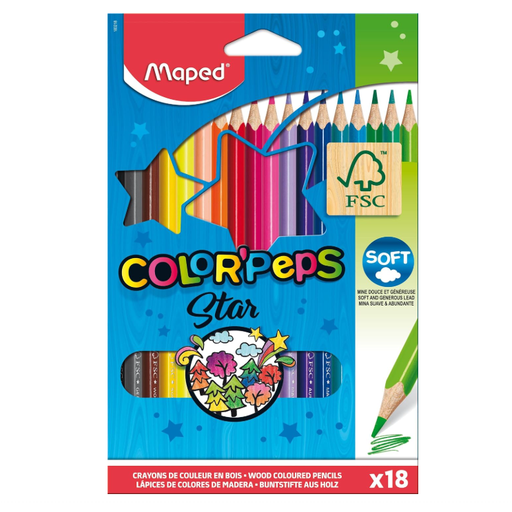
Why this choice suits this profile: With 18 pencils, this set is ideal for first colouring activities, at home or at school, without having to buy an excessive number of items.
The number of shades is manageable and the triangular shape stops the pencils rolling across the table. The 2.9 mm lead is advertised as break-resistant.
18 colours, triangular barrel, FSC-certified wood and a cardboard case that is easy to carry.
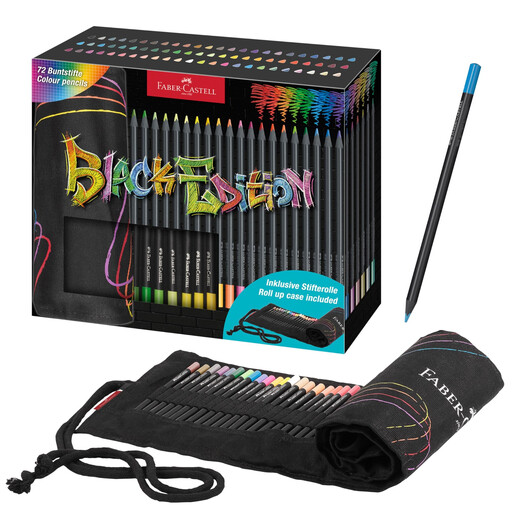
Why this choice suits this profile: Regular artists can enjoy an extensive palette and storage designed with transport in mind.
The roll keeps the pencils organised, while the 72 shades reduce the need to mix colours for illustrations.
SuperSoft leads, triangular shape, 6 neon shades and 6 metallic shades, with roll storage.
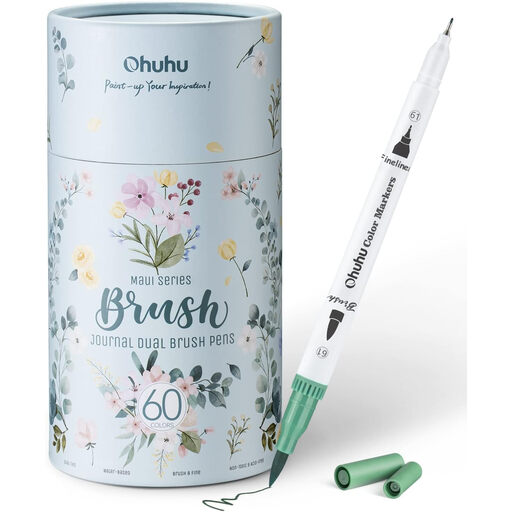
Why this choice suits this profile: Lettering, creative journalling and illustration enthusiasts get a brush tip and a fine tip in every pen.
The dual-tip system means you do not need to buy fine pens and brush pens separately. However, the caps must be replaced after every use.
60 colours, 0.4 mm fineliner tip, 1 to 6 mm brush tip and replacement tips included.
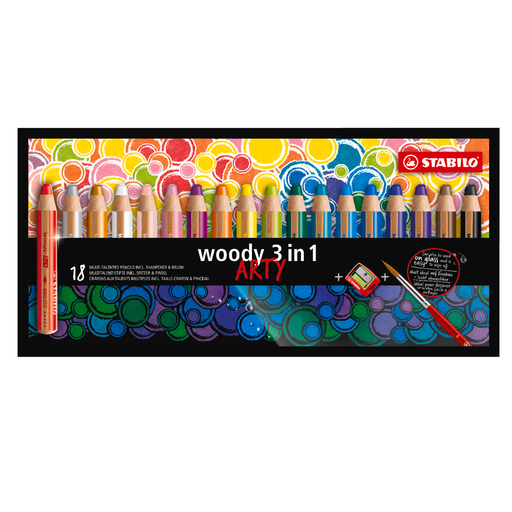
Why this choice suits this profile: This format allows children to switch between a coloured pencil, wax crayon and watercolour effects with a single tool.
The short format and 10 mm core make it easier to hold. The brush and dedicated sharpener mean you do not need to buy additional accessories straight away.
18 pencils, suitable for use on several smooth surfaces, blends with water and PEFC-certified wood. Check the recommended age before buying.
We have put together a complete, real-time updated list of products that meet these demanding selection criteria and European safety regulations.
A set of triangular coloured pencils with a break-resistant lead is a good starting point. To add variety, you can complement it with a set of washable pens or a versatile pencil such as the STABILO Woody. The recommended age on the packaging remains the most important criterion.
You will generally need a fine brush, a container of water and sufficiently thick paper. Start by colouring dry, then gradually add water. Before putting the pencils back in their metal tin, close them and let them dry to minimise damp.
Replace each cap immediately after use and store the pens according to the manufacturer’s recommendations, often horizontally. Avoid leaving them near a radiator or in direct sunlight. With brush pens, applying too much pressure can also deform the tip.