
Livraison le jour même ou le lendemain

Qualité garantie

Débloquez vos offres de bienvenue: Livraison GRATUITE | Jusqu'à -80 % | 30 jours d'essai gratuits à JoyPlus
Téléchargez l'application
Buying drawing and colouring supplies can quickly become expensive: colours that are too similar, nibs that wear out or ink that bleeds through the pages… For families, students, journaling enthusiasts and artists alike, the sheer number of products available makes comparing options far from easy.
Before filling your basket with gel pens, felt-tip pens or coloured pencils, there are three particularly common pitfalls you can avoid:
Choose a nib that matches the activity:
For young children, a thick barrel and a durable nib make pens easier to hold. Always check the recommended age and whether any small parts are present.
Water-based ink is often suitable for notebooks, school drawings and journaling. However, its performance can vary depending on the paper used. Quick-drying gel pens help prevent marks when your hand passes over the writing, but it is best to test them on a similar sheet before getting started.
For coloured pencils, focus instead on the following:
Soft pastels offer a powdery texture that blends easily, but they also create dust and should be stored flat. To preserve your artwork, you may wish to use a suitable fixative, following the manufacturer’s instructions.
Acrylic markers require a few additional checks: opacity, compatible surfaces, drying time and nib cleaning. On smooth surfaces, always test adhesion in an inconspicuous area.
Thin paper may allow some felt-tip ink to show through. For intensive colouring, choose thicker paper or paper specifically designed for markers. With watercolours, gouache and pastels, the texture of the paper also affects colour blending and the final result.
A few simple habits can help extend the life of your supplies:
For children under 3, avoid products containing small parts. Adult supervision is still recommended for activities involving nibs, ink or dust.
The following products meet a range of needs, including creative school supplies, detailed drawing, craft activities and journaling accessories. Their features are presented based on the information available on each product page.
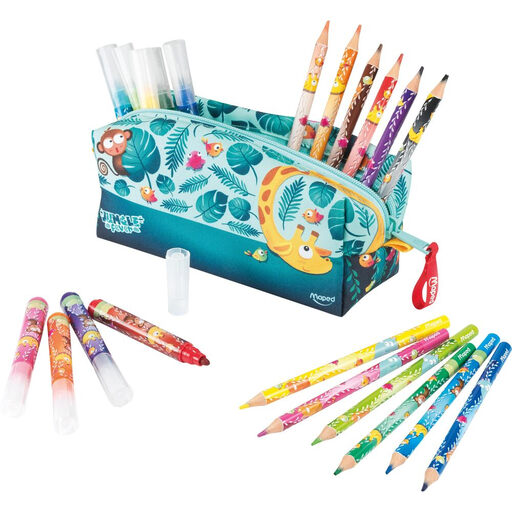
Why this choice suits this profile : this set contains 12 felt-tip pens and 12 coloured pencils in a compartmentalised case. It is an ideal way to get started with drawing or school activities, with a well-balanced assortment that avoids the need for multiple purchases.
The contents are clearly specified, avoiding the need to buy two types of tool separately. The minimum recommended age is 3 years; however, young children still require supervision.
24 pieces, an organised case and colours suitable for drawing, colouring and school activities.
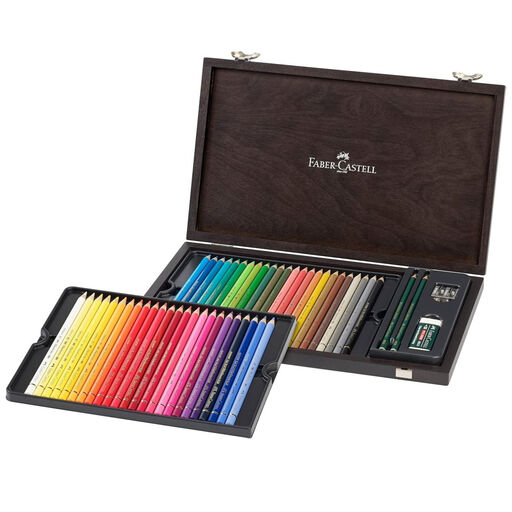
Why this choice suits this profile : this wooden case of 48 oil-based pencils is aimed at users looking for an extensive palette, layered colouring and protective storage.
The contents specify 48 shades and 3.8 mm leads secured using the SV bonding process. The case helps prevent losses and makes organisation easier.
A palette of 48 colours, a break-resistant lead and a wooden box suitable for storage in the studio or for transport.
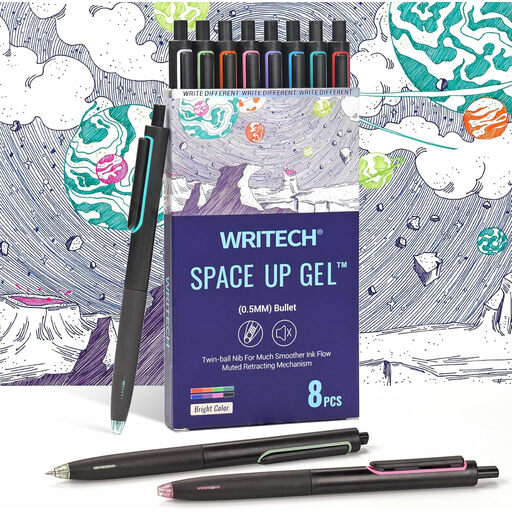
Why this choice suits this profile : these eight retractable gel pens with fine tips are suitable for colour-coded notes, journaling, sketching and long writing sessions.
The 0.5 mm tip is clearly specified, while the retractable mechanism means there is no cap to lose. However, testing the pens on the paper you intend to use is still recommended.
Eight colours, a fine tip, a button described as silent on the product page and a triangular barrel that feels comfortable in the hand.
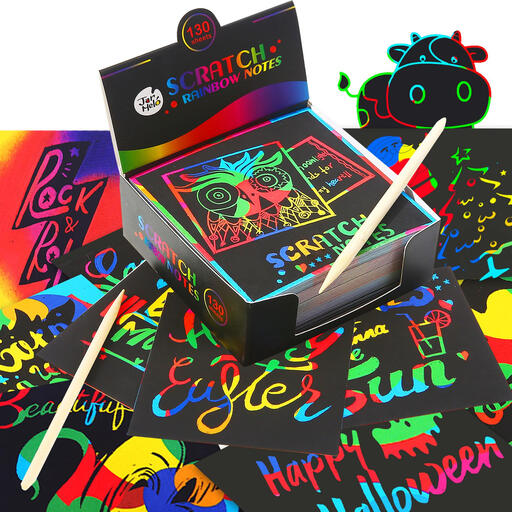
Why this choice suits this profile : these 130 pre-cut sheets of scratch art paper, supplied with a wooden stylus, offer an activity without felt-tip pens or paint, at home, in the classroom or on the go.
The number of sheets and their 8.9 × 8.9 cm format are clearly specified. There is no need to guess the quantity from the packaging.
130 sheets, a black scratch-off surface and a rainbow-coloured layer. Flat storage is recommended to help prevent warping.
We have put together a complete, real-time updated list of products that meet these demanding selection criteria and European safety standards.
A small assortment is usually enough: coloured pencils, colouring felt-tip pens, an eraser, a pencil sharpener and suitable paper. For journaling, add a few gel pens and pastel highlighters. An art kit for children may be suitable for younger users, provided you check the recommended age and safety warnings.
Place a scrap sheet underneath the page before colouring. Also test the chosen nib, as absorption depends on both the ink and the paper weight. Claims such as ‘no smudging’ or ‘does not bleed through’ should be treated as usage guidance, not as a guarantee that applies to every surface.
It depends on how they are stored and how often they are used. Recap felt-tip pens, keep gel pens away from heat and put pencils back in their case. Acrylic markers and soft pastels require particular care: the former may dry out around the nib, while the latter are vulnerable to knocks and moisture.