
Livraison le jour même ou le lendemain

Qualité garantie

Débloquez vos offres de bienvenue: Livraison GRATUITE | Jusqu'à -80 % | 30 jours d'essai gratuits à JoyPlus
Téléchargez l'application
Choosing drawing and colouring pencils isn't simply about counting the number of shades on the box. A well-stocked set can lack genuinely useful hues; a pencil marketed as durable may require a specific sharpener; and a so-called ergonomic shape won't necessarily suit every hand.
To avoid disappointing purchases, focus on the hardness and diameter of the lead, the shape of the pencil body, and the paper you'll be using. Here are the criteria to consider before selecting coloured pencils, graphite pencils or pencils intended for school.
A large number of coloured pencils doesn't guarantee a truly interesting palette. For a child, 12 to 24 shades are usually sufficient for school activities and everyday colouring. For more detailed illustration work, the quality of blending, layering, and the presence of pastel, fluorescent or metallic tones can matter more than the total number of pencils.
A fine lead makes detailing and precise lines easier, but it can break more readily if you press hard. Conversely, jumbo pencils, fitted with a 4 to 4.2 mm lead, allow you to fill large areas quickly and offer a wider grip. Their main drawback: they require a compatible sharpener.
A triangular body can help stabilise the fingers, but its grooves and their orientation may be designed for right-handed or left-handed users. The width of the pencil also deserves your attention, especially for a young child. A model that is too thick can make detailing difficult, while a pencil that is too thin may become uncomfortable during a long session.
HB pencils offer a good compromise for writing, school exercises and simple sketches. Harder leads, such as 2H, produce fine, light lines, suitable for technical drawing, construction work and initial outlines. Softer leads, like 2B, 4B or 6B, are better suited to shading and contrast.
For a set of sketching pencils, it is therefore better to gather several hardness grades than to rely on a series made up of a single grade.
Break-resistant pencils minimise interruptions during colouring and reduce waste when sharpening. However, you need to check their maintenance: a thick 3.3 or 4 mm lead won't necessarily fit into a standard sharpener.
Children who press hard on the paper will generally appreciate a thick lead. For details, fine outlines or technical drawing, a narrower, properly sharpened lead will be easier to handle.
A hexagonal body stops the pencil from rolling off the table and offers a classic grip. A triangular shape with a grip zone can help position the fingers correctly, particularly for children learning to write or colour.
Storage also matters. A metal box protects the tips during transport, while a lighter cardboard case is practical for school. In any case, it's best to keep pencils dry and away from heat.
The references below meet different needs. Their features are presented based on the information provided for each product.
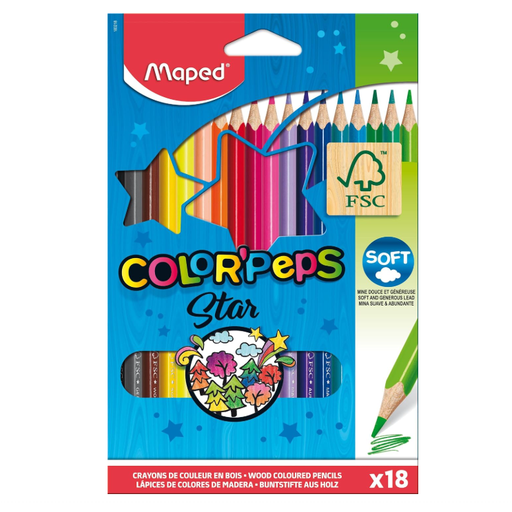
Why this choice suits this profile: With its 18 colours, this set covers colouring activities, homework and first drawings without multiplying purchases.
The triangular shape prevents the pencil from rolling off the table, and the 2.9 mm lead is advertised as break-resistant.
18 shades, FSC-certified wood according to the product sheet, and a triangular body suitable for both home and school.
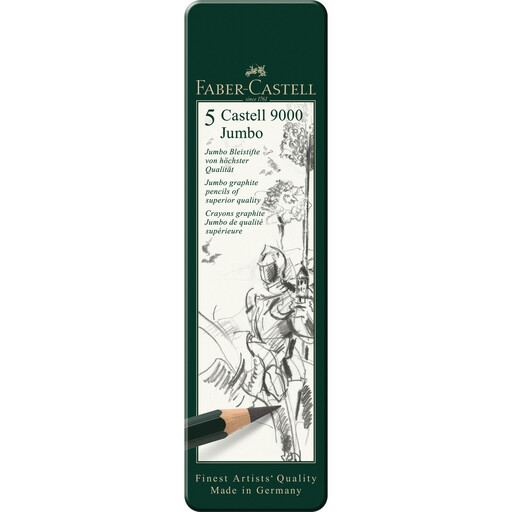
Why this choice suits this profile: This set is aimed at sketching, shading and artistic drawing enthusiasts who want to work with several hardness grades.
According to the product sheet, the set brings together five grades: HB, 2B, 4B, 6B and 8B. That means you can vary your effects rather than being limited to a single hardness.
Jumbo format, break-resistant lead as advertised, and a metal box for storage.
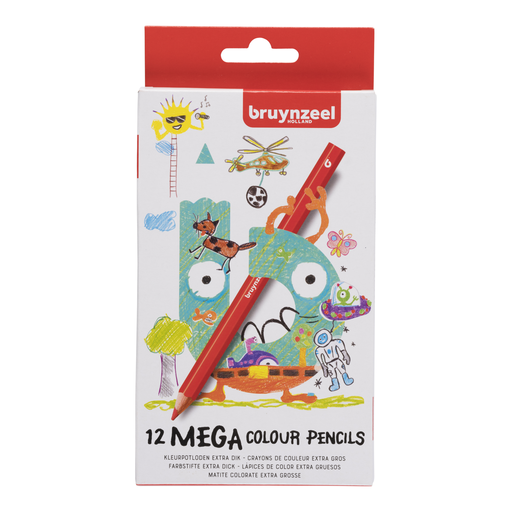
Why this choice suits this profile: Their format is ideal for frequent colouring, large areas, posters and group activities.
The 4 mm lead is designed to cover surfaces quickly and withstand significant pressure.
12 shades, large format and break-resistant lead as advertised. However, do allow for a jumbo pencil sharpener.
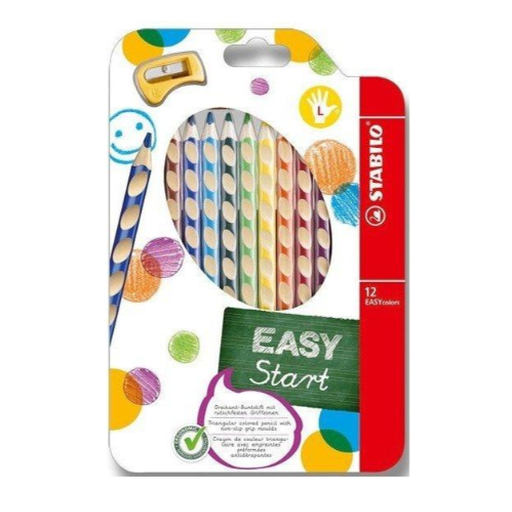
Why this choice suits this profile: Its left-handed version and triangular body target early drawing and colouring activities.
The left-handed orientation, placement grooves and 4.2 mm lead address specific needs, rather than a vague promise of ergonomics.
12 colours, metal case, sharpener included and a space provided for writing a name.
We have put together a comprehensive, real-time updated selection of products that meet these demanding criteria and European safety regulations.
An assortment of coloured pencils offering 12 to 24 shades and a triangular body makes a good foundation for colouring and first outlines. For graphite, an HB pencil is suitable for writing and simple sketches. A small set bringing together several hardness grades becomes interesting for working on shading.
It all depends on how often you use them, the pressure you apply and how frequently the leads are sharpened. Thick-lead pencils can last longer for filling large areas, whereas a pencil used for details will need sharpening more often. Proper storage and a compatible sharpener also help to reduce waste.
Watercolour pencils are worth considering if you want to work them with a wet brush to create blends. They require suitable paper and a brush, which is sometimes included in certain sets. For writing, standard colouring or technical drawing, dry pencils remain simpler to use.