
Livraison le jour même ou le lendemain

Qualité garantie

Débloquez vos offres de bienvenue: Livraison GRATUITE | Jusqu'à -80 % | 30 jours d'essai gratuits à JoyPlus
Téléchargez l'application
Buying drawing and colouring pencils seems simple… until you open the box. A lead that’s too hard for shading, colours that are difficult to blend, or an uncomfortable shape can quickly turn a promising art supply into a disappointing purchase.
To make the right choice, it’s best to start with your own practice: the technique you use, the hardness of the lead, the variety of shades, and the comfort of the grip matter far more than the packaging or the manufacturer’s general promises.
A box of 72 coloured pencils offers a generous palette, but it doesn’t necessarily replace a selection of leads suited to drawing. For a graphite sketch, a few well-chosen hardnesses, from 2H to 8B, will often be more useful than a large colour chart.
Conversely, for colouring or illustration, having several close shades makes gradients and layering much easier. The number of pencils should therefore always match your actual use.
Not all graphite pencils produce the same line. A 2H pencil draws a fine, light line, while an HB is more versatile for everyday writing and sketching. B grades are generally better suited to shadows and dark values.
For coloured pencils, the lead composition also plays an important role. Oil-based pencils, such as Polychromos pencils, lend themselves to layering and gradual blending. Watercolour pencils, on the other hand, can be used dry before being activated with a damp brush. However, avoid dipping the pencil directly into water, and make sure your paper can handle moisture.
A round pencil can roll off the table and lack stability during a sketch. Hexagonal bodies reduce this problem, while triangular models can help position your fingers better, especially for children.
The diameter of both the lead and the body also affects durability and comfort. A lead of 3 to 4.2 mm generally deposits more colour with each stroke, but requires a compatible sharpener. A thick pencil is pleasant for filling in large areas, whereas a slimmer model is better suited to details.
Before choosing a set of drawing pencils, start by deciding on the use and surface it will mainly be for:
The HB marking represents a compromise between hardness and intensity. It’s a practical grade for writing and everyday drawing. 2H is suitable for light lines, construction lines and technical work. Grades 2B, 4B, 6B or 8B allow you to deepen shadows, but they deposit more material on the paper.
A varied set, such as the Faber-Castell Castell 9000 Art, lets you move from a fine line to much darker areas without having to buy each reference separately.
A metal box effectively protects the points during transport. Lighter, a cardboard case is fine for school or home use. A pencil roll makes it easy to carry a large palette, while a wooden case offers fixed, practical storage for the studio.
Also remember to check the exact contents of the set: some assortments include a sharpener, a brush or a desk mat, while others contain only the pencils.
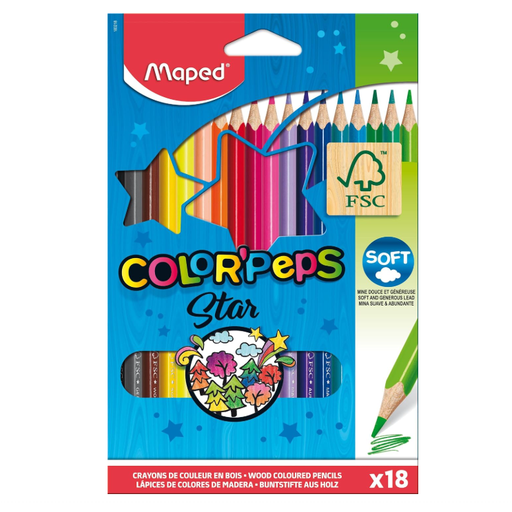
Why this choice suits this profile: With its 18 colours, this set covers drawing and colouring activities at home and at school. Its triangular shape stays stable on the table.
The triangular shape stops the pencil from rolling, and the 2.9 mm lead is said to be break-resistant.
FSC-certified wood, 18 assorted shades and a triangular body for a stable grip.
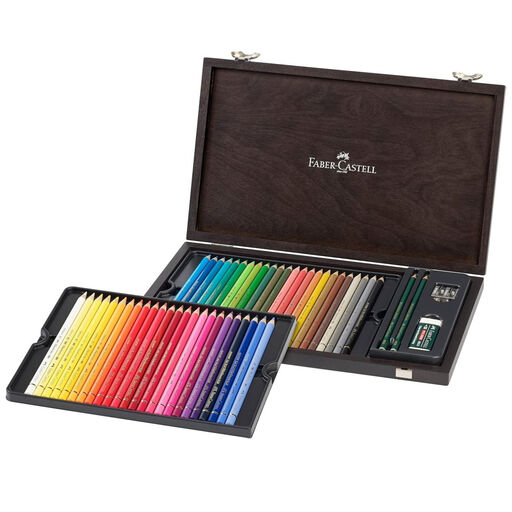
Why this choice suits this profile: This set of 48 professional coloured pencils is aimed at detailed illustrations, portraits and projects that require layering shades.
The oil-based composition and 3.8 mm leads are designed for layering, rather than piling on colours without real control.
48 shades, wooden case and SV process said to strengthen the lead.
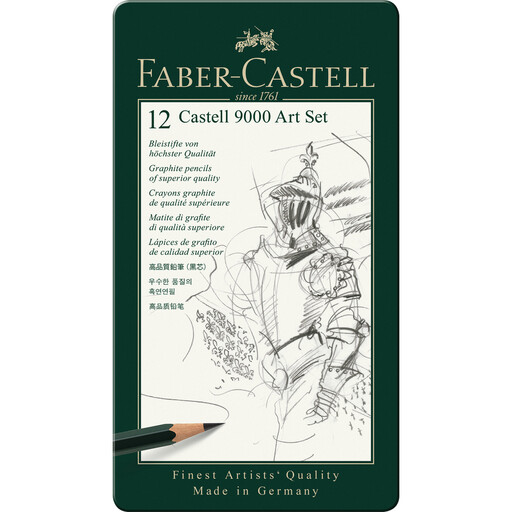
Why this choice suits this profile: Artists, art students and regular users get several hardnesses for construction lines, hatching and shading work.
The variety of grades stops you from doing everything with a single HB, which is often too limited when you need to work on contrasts.
Assortment from 2H to 8B, leads said to be break-resistant and a carry case.
We’ve put together a comprehensive list, updated in real time, of products that meet these strict selection criteria as well as European safety requirements.
HB is a versatile choice for writing, outlines and simple sketches. Add a 2H for light lines, as well as a 2B or 4B for shadows. A set covering several grades allows you to progress without having to replace all your materials straight away.
No, they offer a different technique. Used dry, they behave like standard coloured pencils, and then water diffuses some of the pigment. This method is particularly good for washes and soft transitions, provided you use paper that is strong enough.
It all depends on how often you use them, the pressure you apply and how many times you sharpen them. Protective storage, a well-adjusted sharpener and a strong lead reduce the risk of breakage. For school or occasional use, a box of 12 pencils can last several months. Artists who draw regularly will often be better off choosing a larger assortment or available refills.