
Livraison le jour même ou le lendemain

Qualité garantie

Débloquez vos offres de bienvenue: Livraison GRATUITE | Jusqu'à -80 % | 30 jours d'essai gratuits à JoyPlus
Téléchargez l'application
Buying drawing and colouring materials can quickly become a headache: individual pencils, multicolour sets, dual-tip felt-tip pens, pastels or specialist sketchbooks. A pretty box doesn't guarantee a pleasant experience or equipment that's right for your project.
Two pitfalls are particularly common. The first is choosing a set based solely on the number of colours. A palette of 100 shades can prove impractical if the colours are hard to find or if the tips don't suit your drawing style. The second is underestimating the importance of the surface: a felt-tip pen can bleed through paper that's too thin, while a sketchbook designed for watercolour has different requirements to a simple drawing pad.
Some accessories are also marketed as versatile without their limitations being clearly stated. So before you order, check the technique you'll be using, the compatible surfaces, the recommended age and the storage conditions.
For graphite pencils, the range of hardnesses matters more than the number of pieces. Soft leads are generally suited to shading and contrast, while harder leads allow you to create fine lines and precise sketches. A set offering several grades will therefore be more versatile than a box filled with identical pencils.
For coloured pencils, look at the composition of the lead: waxy, dry or oil-based. Polychromos pencils use, according to the manufacturer's information, an oil-based lead. They are therefore particularly well-suited to layering and colour blending on suitable paper. Softer pencils can be very enjoyable for colouring, but they wear down more quickly when you apply heavy pressure.
Artist felt-tip pens with a brush tip allow you to vary the line thickness by adjusting the pressure. A fine tip is better suited to details, outlines and lettering. Acrylic markers often require a little preparation: depending on the model, you need to shake them and then prime the tip on a sheet of paper before first use.
Also check the type of ink and the compatible surfaces. Acrylic markers can be designed for paper, wood, glass, ceramic or even stone, but testing on an inconspicuous area is still advisable. On non-porous surfaces, let the ink dry according to the manufacturer's instructions and avoid using these products on items intended to come into direct contact with food.
A watercolour sketchbook must use paper that is thick enough to minimise warping caused by water. The paper weight alone isn't enough to judge quality, but it's a useful initial indicator. The Moleskine Pocket-Size Watercolor Sketchbook featured here offers acid-free off-white paper of 200 gsm, lays flat at 180 degrees and has a hard cover.
For dry pastels, plan for flat storage and a surface with enough tooth to hold the powder. The sticks can produce fine dust: ventilate the room, avoid blowing on them and follow the age recommendations. For a drawing kit intended for children, check for any small parts, the recommended age and how easy it is to clean.
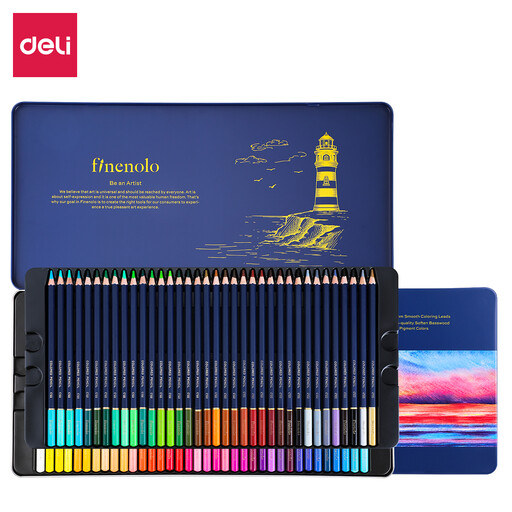
Why this choice suits this profile: This set of 72 pencils offers a broad palette for starting out with colouring, working on gradients and practising shading. Its metal tin is easy to store.
The box protects the pencils and saves you from having to buy several storage accessories straight away.
72 shades and a compact metal tin.
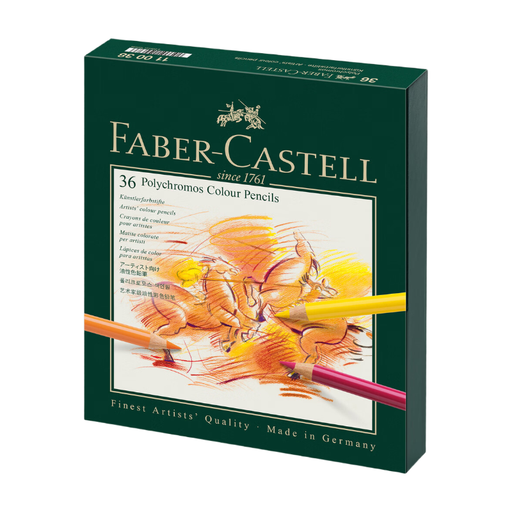
Why this choice suits this profile: This set of 36 pencils is aimed at illustrators and fine art enthusiasts looking for an oil-based lead, suitable for layering and with well-organised storage.
The set focuses on a coherent selection rather than a profusion of shades that would stay at the bottom of the box.
Stated 3.8 mm lead, acid-free pigments and Atelierbox case.
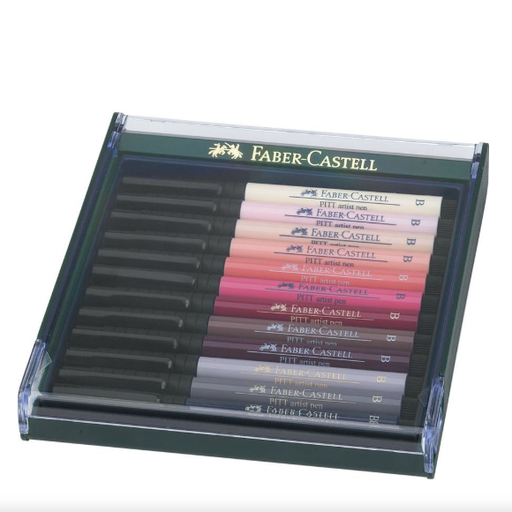
Why this choice suits this profile: Illustrators, creative sketchbook enthusiasts and lettering fans can use the brush tip to move from a fine line to broader areas of colour.
The tip is clearly identified as flexible and the set is limited to 12 portrait tones, making targeted use easier.
Brush tip and pigment ink stated to be water-resistant once dry.
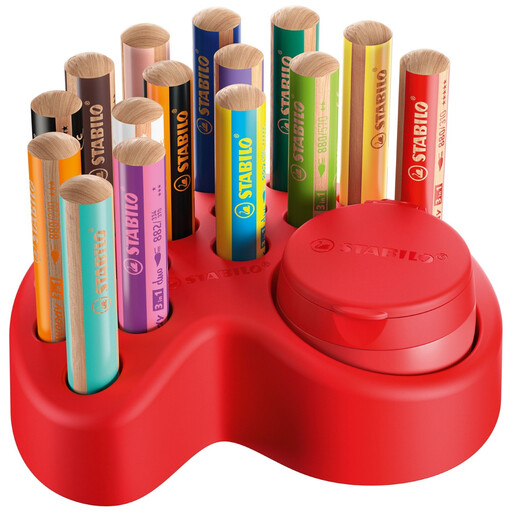
Why this choice suits this profile: This children's drawing kit combines pencils, pastel effects and water-soluble use. It also includes a sharpener and a storage tray.
The included accessories avoid additional purchases and the need to store different supplies separately.
15 pieces, XXL 10 mm lead, brush and reusable tray.
We've put together a comprehensive, real-time updated list of products that meet these strict selection criteria and European safety regulations.
Basic equipment is enough: a few graphite pencils of different hardnesses, an eraser, a sharpener, some drawing paper and a small colouring set. You can then add coloured pencils or artist felt-tip pens depending on your projects. A well-organised set can also save you from buying accessories separately.
Pencils generally keep for years if they stay dry, away from heat and direct light. For felt-tip pens, the lifespan depends mainly on the quality of the cap and how often you use them. Close each cap immediately after use and follow the recommended storage direction, especially with acrylic markers or dual-tip pens.
Dry pastels give the best results on papers with some tooth, but can also be used on card or certain canvases. Acrylic markers are suitable for a variety of surfaces: however, check the product sheet and do a test first. With children, protect the table, keep an eye on small parts and always follow the recommended age on the packaging.