
Livraison le jour même ou le lendemain

Qualité garantie

Débloquez vos offres de bienvenue: Livraison GRATUITE | Jusqu'à -80 % | 30 jours d'essai gratuits à JoyPlus
Téléchargez l'application
Choosing drawing and colouring materials isn’t just about counting the number of shades in a box. A very comprehensive set can quickly become frustrating to use if the leads break, the felt-tips dry out, or the storage isn’t practical for everyday use.
For children, parents, students and craft enthusiasts, three mistakes crop up time and again:
Here are the criteria to consider when choosing supplies that suit your skill level, your surface and how often you use them.
For children and students, how a pencil feels in the hand matters just as much as the colour. A triangular barrel helps position the fingers correctly and also stops the pencil from rolling off the table. The diameter of the lead affects its strength: a thick lead is better for colouring large areas, while a fine lead makes detail work easier.
Faber-Castell Black Edition coloured pencils have a triangular shape and a Supersoft lead. Their SV bonding process is said to be particularly resistant to breakage. For younger children, the STABILO Trio has a 4.2 mm lead and a thick triangular barrel. However, you should always follow the recommended age on the packaging, as well as the instructions for using the sharpener.
Each technique has its own requirements and isn’t suitable for every surface:
A dual-tip felt-tip saves you from having to carry several tools. A brush pen with a brush tip and a 0.4 mm fineliner lets you fill in areas, draw outlines and practise lettering.
However, a large palette needs to be easy to read. A blank swatch card helps you identify the actual colours, which can sometimes look very different from those printed on the caps. For taking your supplies on the go, a roll-up case or a rigid box will protect your pencils better than a simple soft pouch.
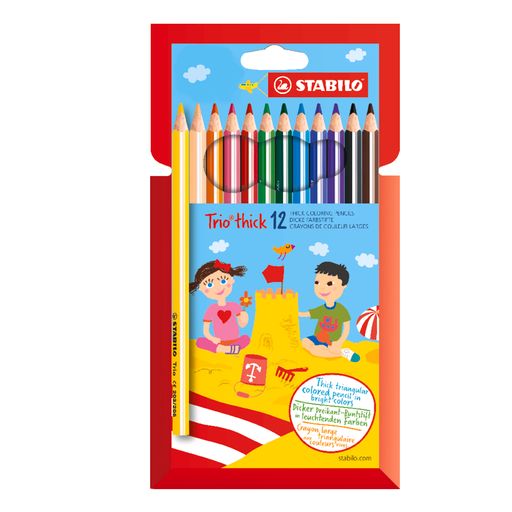
Why this choice suits this profile: This set of 12 pencils is ideal for first colouring sessions, school activities and creative time at home. Their thick, triangular barrel makes them easy for children to hold.
With 12 shades, the contents stay simple to organise. The 4.2 mm lead also reduces interruptions for sharpening while colouring.
Triangular barrel, thick 4.2 mm lead, 12 assorted colours and a cardboard case.
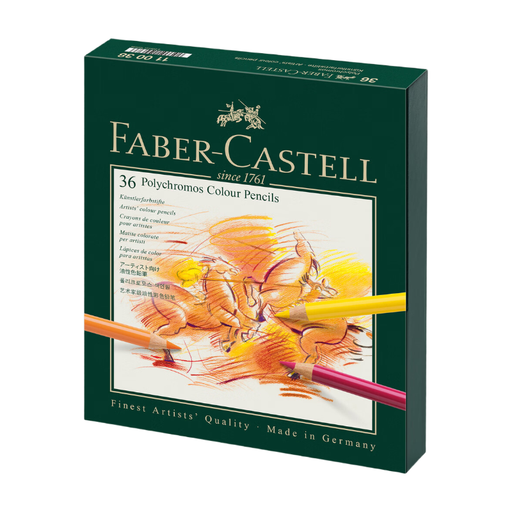
Why this choice suits this profile: This set of 36 pencils is aimed at illustrators, art students and enthusiasts who enjoy layering, blending and detail work on suitable paper.
The product description specifies 3.8 mm oil-based leads, designed for layering and blending. The choice is therefore based on the possibilities it offers, not just the size of the palette.
36 shades, 3.8 mm lead, rigid storage box and pigments described as lightfast in the product information.
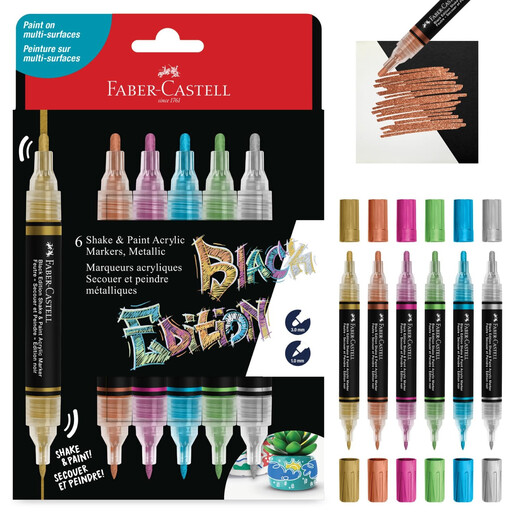
Why this choice suits this profile: This pack is designed for customisation projects and craft activities on paper, wood, glass, metal, plastic or stone. Its tips allow you to create both broad areas of colour and fine details.
The two tips – 3 mm and 1 mm – mean you don’t need to buy several different sizes. You need to shake the marker with the cap on before use, then recap it immediately afterwards.
Six metallic shades, dual tip, opaque acrylic ink and recommended horizontal storage.
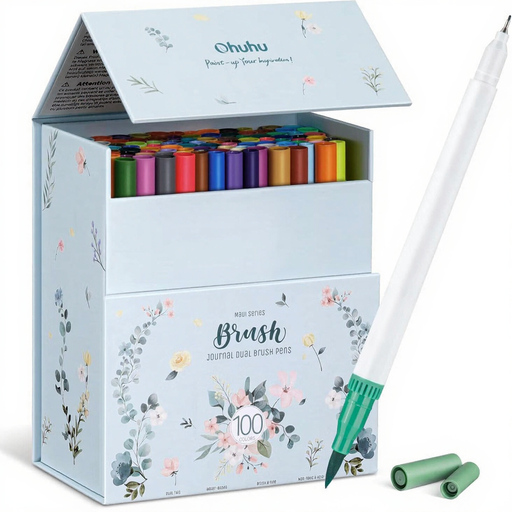
Why this choice suits this profile: The 100 numbered colours meet the needs of detailed colouring, sketching, bullet journaling and calligraphy. A storage case is included.
The swatch card helps you find the shades, while the two tips mean you don’t need lots of different tools. The manufacturer recommends recapping the pens after each use.
100 shades, 0.4 mm fineliner, brush tip from 1 to 6 mm, five replacement tips and water-based ink.
We’ve put together a comprehensive, real-time selection of products that meet these exacting criteria as well as European safety regulations.
To begin with, simple equipment is enough: graphite pencils in several hardness grades, coloured pencils, an eraser, a sharpener and a notebook with a suitable paper weight. You can then add artist felt-tips or watercolour as you wish, rather than buying everything available all at once.
They can be used for colouring and lettering, but do check the recommended age, whether there are any small parts and whether the ink is washable. Thick paper is best to prevent bleeding and stains.
Recap each tool after use, avoid leaving the tip pressed against a surface and follow the storage instructions. With watercolour, clean your brush before closing the palette. For soft pastels, a flat box helps reduce knocks and the risk of breakage.