
Livraison le jour même ou le lendemain

Qualité garantie

Débloquez vos offres de bienvenue: Livraison GRATUITE | Jusqu'à -80 % | 30 jours d'essai gratuits à JoyPlus
Téléchargez l'application
Choosing drawing and colouring materials isn’t just about counting the shades in a box. For a child, a tip that’s too fragile or a pencil that’s difficult to hold can quickly turn a creative activity into a real source of frustration. For teenagers and adults alike, a poorly thought-out set can also lead to duplicates, inks that dry out prematurely, and colours that are hard to find again.
Before placing an order, three common pitfalls keep cropping up:
For young children, go for a wide or triangular barrel, a stable grip zone and a tip that’s sturdy enough. Ergonomic colouring pencils with positioning grooves can help teach the correct pencil hold, especially for left-handed children.
Age recommendations aren’t just there for decoration on the packaging. Some sets contain small parts, such as caps or replacement tips, and are not suitable for children under 36 months. Adult supervision is still advised for the youngest ones. Also remember to check that caps are put back on properly after each use.
The choice of tip has a direct impact on the result:
For school activities, a set of 10 to 20 colours will often be easier to manage than an XXL collection. Regular drawing, manga or creative journal enthusiasts, on the other hand, will appreciate a numbered palette accompanied by a colour chart.
For family or school activities, water-based ink is often the preferred choice. However, it can bleed through some thin papers. For brush markers and watercolour effects, it’s therefore better to choose a thicker paper.
Storage also deserves a bit of attention: a pencil case, a metal tin or a case with a handle prevents losing tips and makes it easier to carry. Markers should be recapped immediately after use. Depending on the model, storing them horizontally or tip-down can help maintain a consistent ink flow.
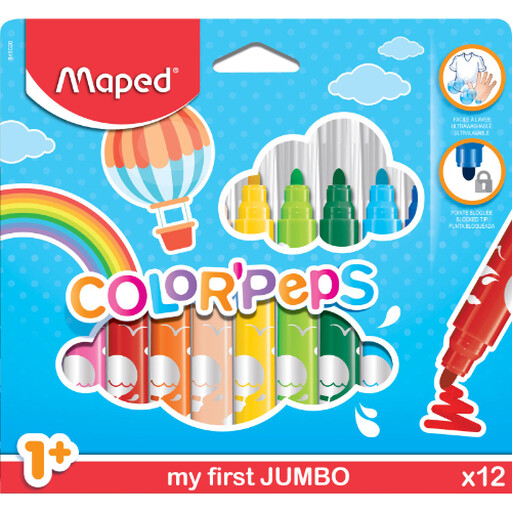
Why this choice suits this profile: The jumbo size and triangular shape are designed for small hands. With its 12 colours, this set is a great starting point for colouring at home or at school.
The tip is locked in both directions to stop it being pushed in when the child presses hard. The water-based ink is described as ultra-washable on skin and most fabrics.
15 cm size, 5 mm broad tip and recommended use from 12 months, under adult supervision.
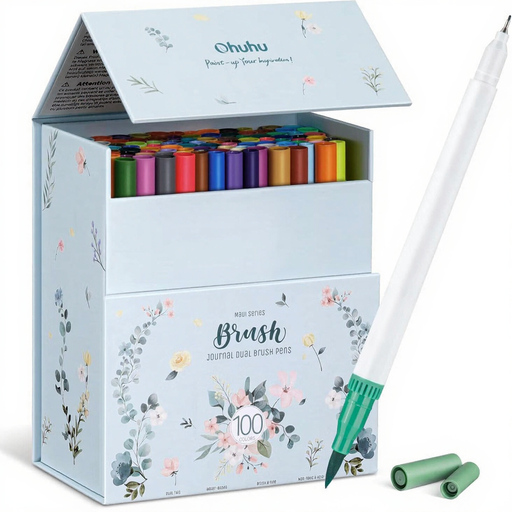
Why this choice suits this profile: Illustrators, lettering fans and creative journal enthusiasts benefit from an extensive palette and two tips per marker.
The colour chart lets you identify shades before using them. Caps must be closed quickly to prevent drying out.
100 numbered colours, brush tip from 1 to 6 mm, 0.4 mm fineliner and five replacement tips included.
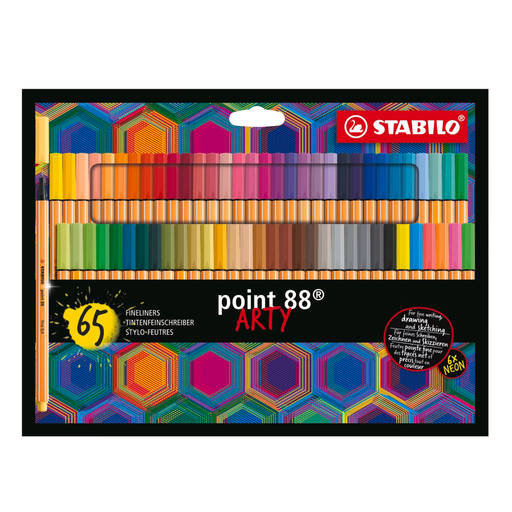
Why this choice suits this profile: Bullet journal, mandala, pixel art and creative writing enthusiasts will find a consistent line and a very extensive palette.
The metal-clad 0.4 mm tip is designed for precise lines and protects the fibre from repeated bending.
65 shades, including six fluorescent ones, 0.4 mm nylon tip and barrel made from 96 % bio-based plastic, according to the information provided for the product.
For a left-handed child just starting out, the STABILO EASYcolors ergonomic colouring pencils in a set of 12 have a triangular barrel, positioning grooves and a 4.2 mm lead. For versatile use at school and at home, the STABILO Trio Scribbi washable felt-tip pens for children feature a spring-mounted tip and a wallet-style case. These two options can be chosen based on the child’s age, how hard they press and their storage needs.
We’ve put together a complete, real-time updated selection of products that meet these demanding criteria as well as European safety regulations.
Go for a thick barrel, a sturdy tip and a water-based ink described as washable. Washable felt-tip pens for children should still be used under supervision and kept away from delicate surfaces. A children’s colouring kit with a case also reduces the risk of losing the caps.
It all depends on how often it’s used, the pressure applied and how well it’s recapped. Replace the cap after each use, store the pens according to the manufacturer’s recommendations and avoid exposing them to heat. A dry tip can sometimes be revived if the instructions allow it, but this doesn’t replace careful storage.
Erasable gel pens, particularly 0.5 mm tip models, are mainly handy for notes, planners and light sketches. Their heat-sensitive ink erases with the special eraser tip, but they don’t replace colouring pencils or markers for filling in large areas. For school use, check the school’s guidelines before using them on official documents.