
Livraison le jour même ou le lendemain

Qualité garantie

Débloquez vos offres de bienvenue: Livraison GRATUITE | Jusqu'à -80 % | 30 jours d'essai gratuits à JoyPlus
Téléchargez l'application
Buying drawing and colouring supplies seems straightforward… until you have to compare tip types, papers, lead hardnesses and colour promises. A well-stocked set can be packed with accessories that aren't suited to how you actually work. Conversely, a product marketed as versatile might lack precision or dry out faster than expected.
Parents, pupils, students, teachers and beginner artists often fall into the same traps:
It all depends on the kind of stroke you're after. HB graphite pencils are generally suitable for writing, sketching and medium-intensity lines. With a mechanical pencil, a 0.5 mm lead makes regular detail work easier, especially for technical drawing, outlines and note-taking.
For illustration, fineliners in different widths let you vary the weight of your outlines. A 0.05 mm tip is ideal for the finest details, while a 0.7 mm or 1 mm tip produces a bolder line. Brush pens, on the other hand, have a flexible tip whose width changes with the pressure you apply. They're perfect for lettering, calligraphy and varied stroke effects.
Water-based felt-tip pens blend more easily on a suitable paper. Watercolour pens can be worked with a damp brush, but the result depends heavily on the paper weight you use. For washes, a 300 g/m² watercolour pad limits warping far better than a standard sheet of office paper.
Acrylic pens lay down a more opaque colour on different surfaces, depending on the manufacturer's instructions: paper, wood, glass, ceramic or plastic. Let your creations dry in a well-ventilated space and protect your table – a resistant ink will also be harder to clean off.
At school and in the office, whiteboard markers need to wipe off cleanly with a suitable cloth. They are not interchangeable with permanent markers or paint.
A large set can be fine for regular use, but a student who carries their materials every day would be better off choosing a compact case. Check whether there's a storage system, whether tips can be replaced, and what the care instructions are. Capping pens after each use and storing certain models flat can help prevent them from drying out or leaking.
For children, check the recommended age, whether there are any small parts, and whether adult supervision is needed. A scratch art kit or a Spirograph makes for an accessible hands-on activity, but sharp accessories and small items should be kept out of reach of younger children.
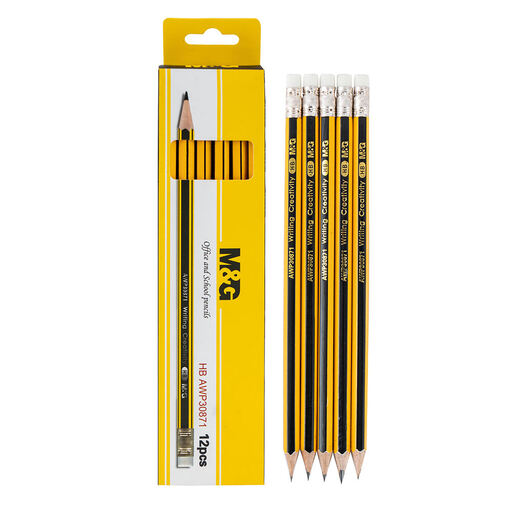
Why this choice suits this profile: This pack covers everyday needs for school, sketching and daily writing, both at home and in the classroom.
The HB grade and the pack of 12 pencils make the features easy to understand, without paying for a palette of unnecessary tools.
HB lead, hexagonal barrel that won't roll away, built-in eraser and pre-sharpened pencils.
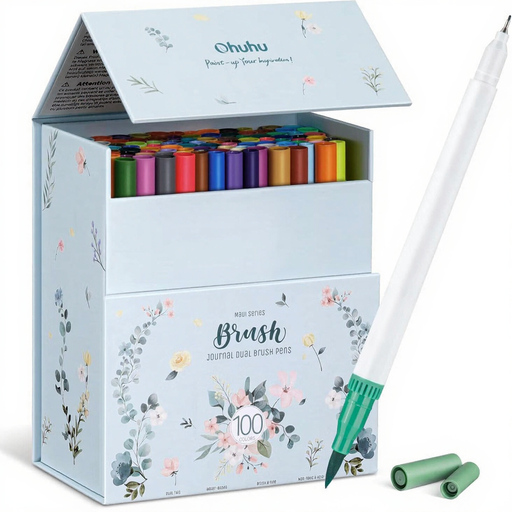
Why this choice suits this profile: Its extensive palette is designed for sketchbooks, bullet journals, illustration and lettering that demand a wide range of shades.
The two tips serve two very distinct purposes, rather than multiplying similar pens in a bulky set.
100 colours, 0.4 mm fineliner, flexible brush tip from 1 to 6 mm, colour chart and replacement tips.
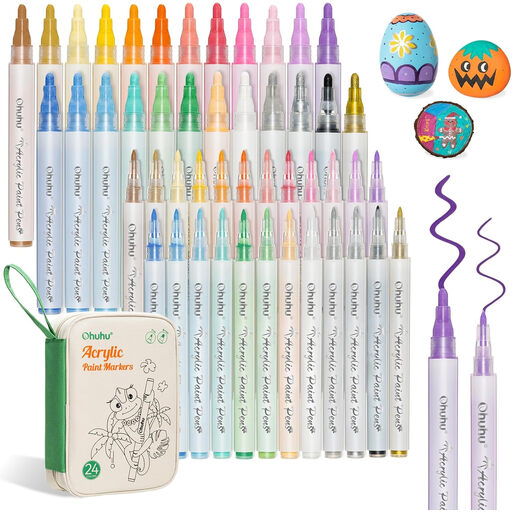
Why this choice suits this profile: This set is suitable for creations on different surfaces, such as wood, ceramic, glass, fabric or paper, according to the instructions provided.
The tips are clearly differentiated: fine 0.7 mm, round 1.8 to 2 mm and chisel 4 mm.
24 colours with two tip families, water-based ink and storage case.
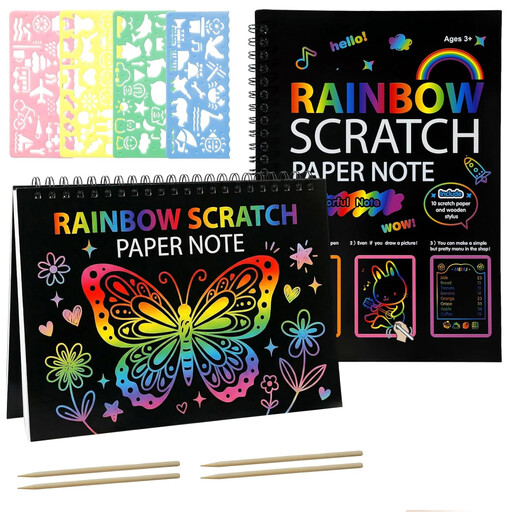
Why this choice suits this profile: This paint-free, glue-free activity is easy to set up at home, on the go or in a creative corner, with very little equipment needed.
The set includes two books and five wooden styluses: you won't need to buy any extra accessories to get started.
Thick pages according to the product sheet, activity recommended from age 3 and simple storage.
We've put together a comprehensive, real-time selection of products that meet these strict criteria as well as European safety requirements.
Thick paper absorbs water better and generally warps less. For washes, go for a watercolour pad of around 300 g/m². With standard felt-tip pens, a lighter drawing paper can be enough, as long as you check that the ink doesn't bleed through.
The wooden HB pencil is suitable for sketching, writing and schoolwork. The mechanical pencil keeps a consistent diameter, for example 0.5 mm, and saves you from having to sharpen the lead regularly. For drawing, the choice mainly comes down to comfort, the level of precision you need and the availability of refills.
Replace every cap after use, keep them away from heat and direct light, and follow the storage position recommended by the manufacturer. For acrylic markers, shake the pen and prime the tip only as instructed. A sketchbook or test sheet is also a good way to check the ink flow before you start a project.