
Livraison le jour même ou le lendemain

Qualité garantie

Débloquez vos offres de bienvenue: Livraison GRATUITE | Jusqu'à -80 % | 30 jours d'essai gratuits à JoyPlus
Téléchargez l'application
A set of drawing and colouring pens might seem simple to choose… until the tip flattens, the ink bleeds through the paper, or half the colours stay unused at the bottom of the box. Between fibre-tip pens, multicoloured fineliners and artist markers, the real differences come down to precision, ink type, the surface you use and how they're stored.
Before you place an order, there are three pitfalls to avoid.
For solid areas, mandalas or bold-lined drawings, an ogive or round 1 mm tip produces a consistent line. The STABILO Pen 68 pens use this format and are particularly good for filling, decorative drawing and large-format creations.
For outlines, annotations and fine details, it's better to go for fine 0.4 mm pens. A metal-reinforced tip or one designed for use with a ruler and stencil reduces the risk of deformation. Fineliners are also very handy for bullet journals, cards, diagrams and mandalas.
Sets that offer multiple widths – for example, pigment ink pens in 0.1, 0.3, 0.5 and 0.7 mm – let you vary your line weights without having to buy lots of different references.
Water-based ink is generally suitable for creative writing, colouring and craft activities. It can also be used to create dilution or blending effects on the right paper. Product descriptions sometimes mention a resistance to drying out for a certain period, but the best habit is to recap each pen as soon as you've finished using it.
Pigment ink pens are designed to produce more durable lines, according to the manufacturer's instructions. Some Faber-Castell Ecco Pigment models are said to be water-resistant and fade-resistant. For an illustration you want to keep, though, always check the surface, drying time and compatibility with other media.
Permanent inks or Indian ink can stain fabrics and certain surfaces. They therefore need more care, especially around children.
Good storage stops you losing the caps and helps you find each colour quickly. A rigid case is ideal for a desk or regular travel, while a roll-up pouch slips more easily into a bag.
To keep the ink flowing well, store your pens capped, away from heat and direct light. When the instructions recommend it, horizontal storage can help maintain an even ink distribution. Reusable cases are also useful for separating colours you've already used from those still available.
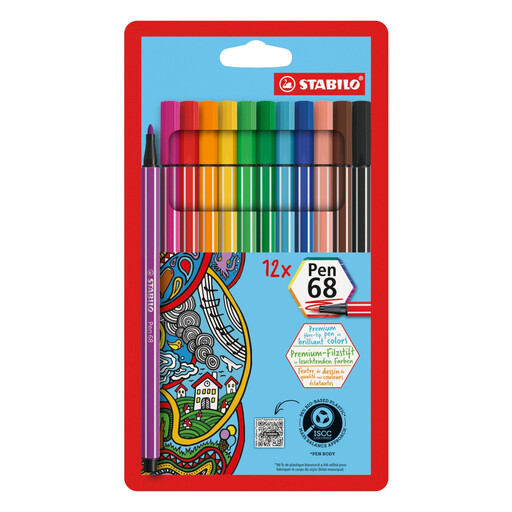
Why this suits this profile: A set of 12 colours lets you start drawing, colouring or bullet journaling without investing in a full range straight away.
The round 1 mm tip is more versatile than an ultra-fine tip, while the water-based ink is suitable for everyday creative uses.
12 assorted colours, 1 mm tip, water-based ink and technology claimed to resist drying out for up to 24 hours without the cap.
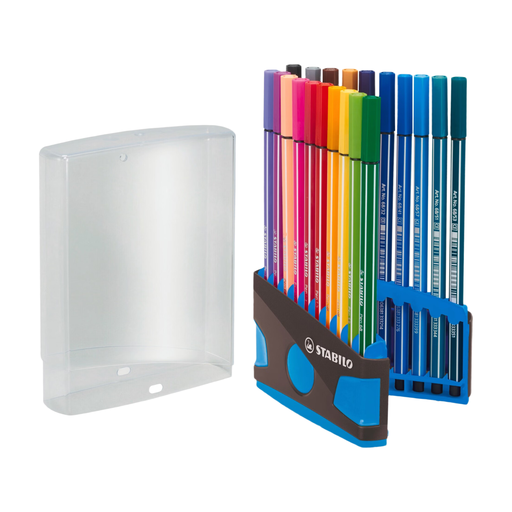
Why this suits this profile: Its reusable rigid case fits perfectly into a well-organised desk and is ideal for regular use at home.
The included storage reduces the risk of losing caps and keeps all 20 colours clearly visible, unlike inconvenient pouches.
20 colours, ogive 1 mm tip, rigid case, and the plastic of the body and cap is claimed to be made from 96% bio-based material.
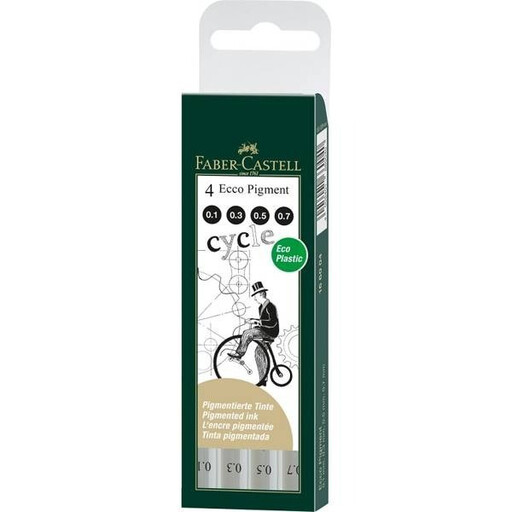
Why this suits this profile: Illustrators, students and technical drawing enthusiasts get four widths to structure outlines and details.
The thicknesses, from 0.1 to 0.7 mm, are clearly separated. This means you avoid using the same pen for every stage of your drawing.
Four tip sizes, pigment ink claimed to be water-resistant and fade-resistant, and a body designed to stay comfortable in the hand during long sessions.
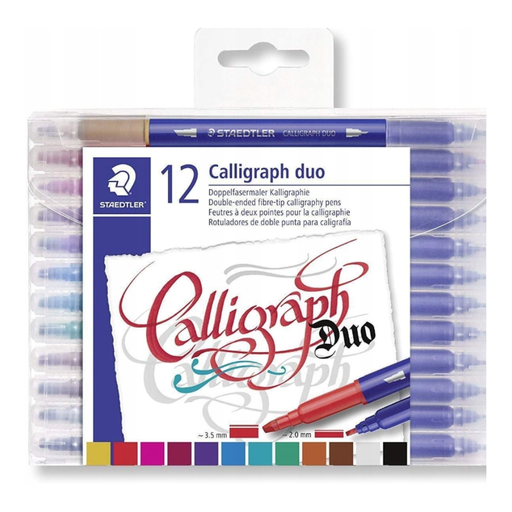
Why this suits this profile: With two tips per pen, this set lets you explore calligraphy, lettering and decorative card-making without buying lots of separate items.
The double tip means you don't have to buy several widths separately to vary your lettering effects.
12 double-ended pens, two tip sizes and water-based pigment ink.
We've put together a comprehensive selection, updated in real time, of products that meet these demanding criteria as well as European safety standards.
A 0.4 mm tip is suitable for compact writing, borders, calendars and details. For headings or solid colour areas, pair it with a 1 mm tip to create visual contrast.
It all depends on how often you use them, how much pressure you apply and how well you recap them. Replace the cap after each use and store them according to the instructions. A claimed anti-drying technology doesn't replace these precautions.
They are particularly good for outlines, illustration, durable writing and technical work. For colouring large areas, a 1 mm fibre tip and water-based ink can be more practical. Always test the result on a scrap of the same paper before starting your project.