
Livraison le jour même ou le lendemain

Qualité garantie

Débloquez vos offres de bienvenue: Livraison GRATUITE | Jusqu'à -80 % | 30 jours d'essai gratuits à JoyPlus
Téléchargez l'application
Double-walled glasses stand out for their transparency, contemporary look and ability to reduce condensation. However, not all of them are designed for the same uses. An 80 ml glass intended for espresso will not be suitable for a latte, while a model designed for coffee may not be stable enough for a cocktail or table service.
Before placing your order, three common mistakes are worth avoiding :
Here are the criteria to consider when choosing thermal glasses suited to your everyday routine, meals and entertaining.
Capacity is the first thing to compare. It should match the amount you actually drink, while allowing for foam, ice cubes and garnishes.
For coffee glasses or cappuccino glasses, a capacity of 250 to 350 ml generally offers the best balance. Larger 400 ml models can also hold a dessert, cocktail or soup, but they will take up more space in the cupboard.
Borosilicate glass is valued for being lightweight and more resistant to temperature changes than standard glass. That does not make it unbreakable, however. Avoid pouring a boiling-hot drink into a very cold glass, and do not place a hot container on a wet surface.
Transparent lead-free crystal is another option, particularly for stemmed wine glasses. It focuses primarily on clarity and presentation at the table rather than thermal insulation. BJÖRN lead-free crystal models are therefore better suited to wine, rosé or cocktails served in a stemmed glass than to hot coffee.
Anti-condensation glasses help reduce water marks on the table, but they still require careful cleaning. Before buying, check :
An integrated valve, such as the one found on some BODUM CANTEEN models, helps balance the pressure between the two walls. It must not be pierced or handled with a sharp object. Always consult the product instructions and discard any glass showing a crack or chip.
The products below meet a range of requirements : a first purchase in a small quantity, everyday use, entertaining guests or versatile use for both hot and cold drinks.
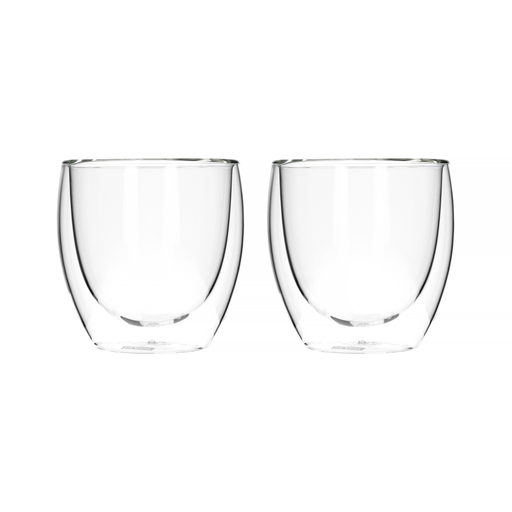
Why this choice suits this profile : With two 250 ml glasses, this set is an affordable first purchase for coffee, tea, milk, juice or an individual dessert.
The capacity is clearly stated, while the compact format means you do not pay for a large glass that is oversized for everyday portions.
Double wall, borosilicate glass and 250 ml capacity according to the product listing.
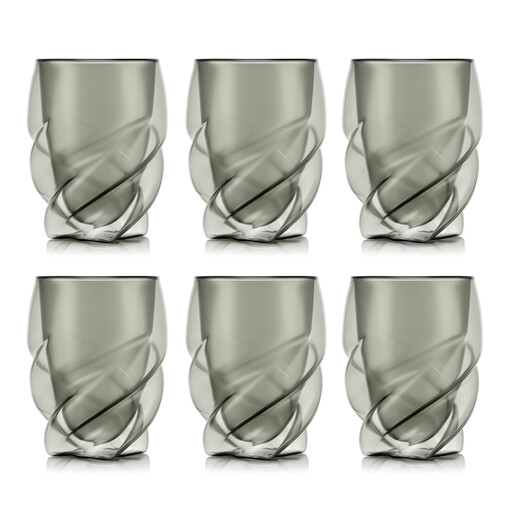
Why this choice suits this profile : With its transparent grey finish and mouth-blown borosilicate glass, this model sits naturally on a contemporary table, both for everyday use and when entertaining.
The listing specifies the material, capacity, number of pieces and dishwasher compatibility : all useful details to check before comparing prices.
Set of six, double wall, mouth-blown borosilicate glass and transparent grey finish.
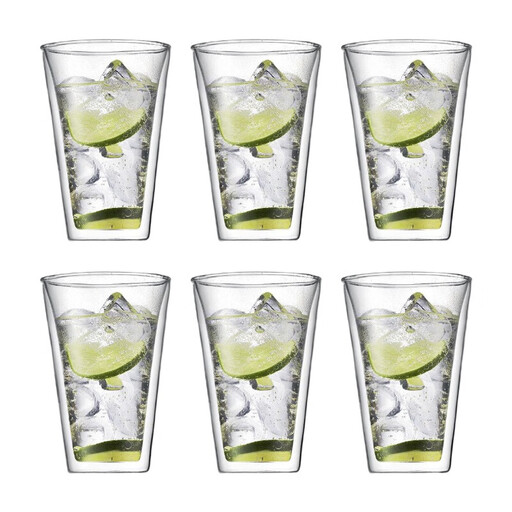
Why this choice suits this profile : Its generous capacity is ideal for large coffees, iced drinks, cocktails, desserts and even some soups.
The listing details the silicone pressure-balancing valve and the precautions relating to temperature differences — information often missing from vague descriptions.
Six 400 ml mouth-blown borosilicate glasses with a double wall and integrated valve. The listing states that they are dishwasher safe.
We have put together a complete, real-time updated selection of products that meet these exacting criteria and European safety standards.
Even when made from borosilicate glass, thermal glasses remain fragile. To reduce the risks :
Instructions may vary from one range to another. Some BODUM glasses are advertised as suitable for use in the oven or microwave, whereas several PAVINA PARIS models are not. The instructions for the model you choose should therefore always take precedence over general recommendations.
Yes. Borosilicate models are generally designed for both hot and cold drinks. They slow heat transfer and reduce condensation on the outer surface. However, you should still avoid sudden temperature changes, including with glasses advertised as resistant to thermal shock.
For a cappuccino, a 250 to 270 ml format is generally suitable, depending on the amount of foam. For a latte, iced coffee or a drink served with ice cubes, 350 ml is preferable. Capacities of 400 ml and above provide more room, but the glasses are also bulkier.
No. Compatibility depends on the model and must be stated in the product listing or instructions. Even when dishwasher use is permitted, hand washing remains a sensible option for preserving transparency and reducing the risk of knocks during the cycle.