
Livraison le jour même ou le lendemain

Qualité garantie

Débloquez vos offres de bienvenue: Livraison GRATUITE | Jusqu'à -80 % | 30 jours d'essai gratuits à JoyPlus
Téléchargez l'application
Double-walled glasses first catch your eye with their visual appeal: the coffee seems to float, the colour of your drinks stays beautifully visible, and the outer surface feels pleasant to hold. But not all models are equal when it comes to everyday use. An 80 or 90 ml espresso glass won't work for a latte, while a large 450 ml model can take up too much space in an already full dishwasher.
Before you buy, it's worth avoiding three common pitfalls:
Borosilicate glasses are very common in this category. This material is prized for its clarity, relatively light weight and better resistance to temperature changes compared to ordinary glass. That said, it is still breakable: a drop, a knock against the sink or a sudden thermal shift can cause a crack.
The double wall traps a layer of air between two glass surfaces. This limits the heat you feel on the outside with a hot drink and reduces condensation with a cold drink. That's what makes condensation-free glasses so useful for keeping a table or desk dry.
The capacity should match the recipe you're serving:
Espresso cups are generally more compact, while latte macchiato glasses are often tall to show off the different layers of coffee, milk and foam. For versatile use, the 270 to 350 ml formats offer a particularly practical compromise.
Check the symbols and details on the product page before you buy. Some models are sold as dishwasher-safe glasses, while others recommend hand washing to preserve their clarity and finish.
The "microwave-safe" label doesn't automatically apply to an entire range. For example, some Bodum BISTRO glasses are advertised as dishwasher and microwave safe, whereas several DeLonghi models featured here should not be used in the microwave. Always rely on the instructions for the specific product you choose.
In any case, avoid pouring a boiling drink into a very cold glass, or placing a hot glass on a cold, damp surface. Also inspect the rim and base before each use. A chipped or cracked glass should be set aside.
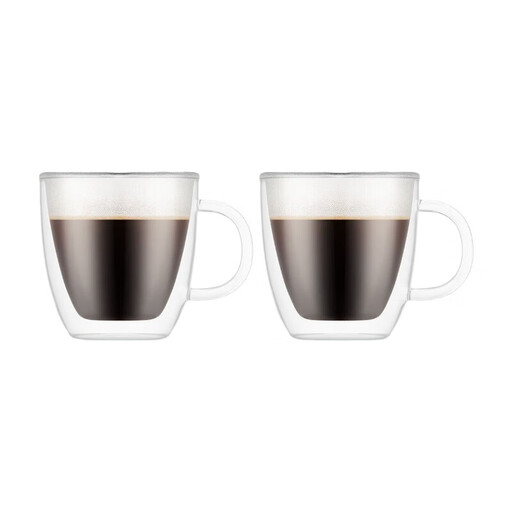
Why this suits this profile: This set of two cups is perfect for discovering thermal glasses, especially with an espresso, short coffee or small drink.
At 150 ml, this model stops you paying for large glasses that aren't suited to small extractions. The product page states it is dishwasher and microwave safe.
Mouth-blown borosilicate glass, double wall and a set of two matching pieces.
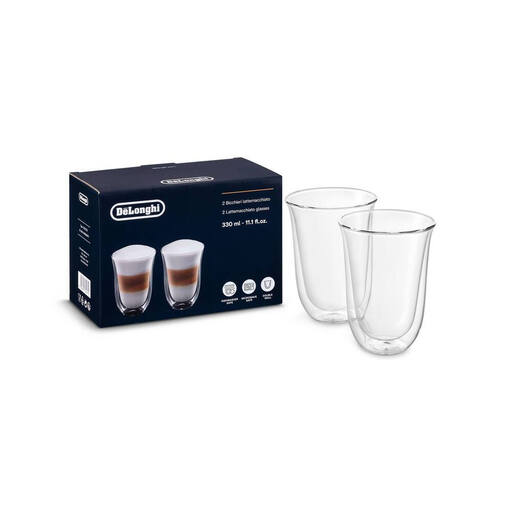
Why this suits this profile: This set of two 330 ml glasses is aimed at lovers of milky drinks who want to show off the different layers of a latte macchiato.
The capacity is clearly stated and suits milky coffees. The product page also confirms the glasses are dishwasher safe, but not microwave compatible.
Two mouth-blown borosilicate glasses with a 330 ml capacity, reportedly made in Italy.
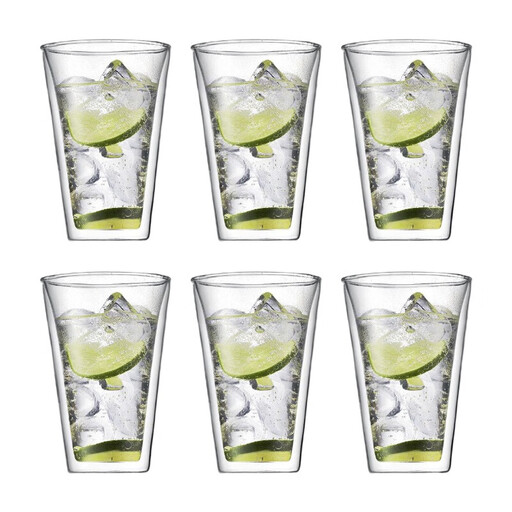
Why this suits this profile: The large format and set of six pieces are ideal for well-stocked households, offices, cafés and meals with several guests.
The 400 ml capacity is stated for each glass, making portion calculations easy. The product page also confirms dishwasher compatibility and a silicone pressure compensation valve.
Six mouth-blown borosilicate glasses, suitable for hot and cold drinks, desserts and certain culinary presentations.
For a household that entertains regularly, a set of six double-walled glasses avoids mixing shapes and colours. The 270 ml models are versatile for serving water, coffee, cocktails or juices. The 350 to 450 ml formats are better suited to larger drinks and desserts.
With an espresso machine, it's best to go for smaller formats, such as the 80, 90 or 150 ml models. The DeLonghi DLSC310 glasses, for example, come in a pack of two and hold 90 ml each, while the DLSC312 format is aimed at 330 ml milky drinks.
If you're also looking for standard glasses for water, juices or spirits, double-walled models aren't your only option. A set of lead-free crystal tumblers, like the Björn STEN 33 cl, can complete your glassware without replacing your thermal models.
We've put together a complete, real-time updated selection of products that meet these exacting criteria, while complying with European safety regulations.
They slow down cooling thanks to the space between the two walls. However, how long they keep your drink warm depends on the starting temperature, the amount served, the shape of the glass and the room temperature. They don't replace a sealed vacuum flask.
No. Many models are advertised as dishwasher safe, but you should always check the product page for the specific item you choose. To minimise knocks, keep the glasses away from metal objects and avoid rough handling when putting them away.
Its lifespan depends mainly on knocks, stacking and thermal changes. Gentle washing, separate storage and regular inspection reduce the risks, but they don't make the glass unbreakable.