
Livraison le jour même ou le lendemain

Qualité garantie

Débloquez vos offres de bienvenue: Livraison GRATUITE | Jusqu'à -80 % | 30 jours d'essai gratuits à JoyPlus
Téléchargez l'application
Double-walled glasses appeal with their floating-drink effect and outer surface, which often stays dry. However, not every model is suited to the same uses. An 80 ml cup designed for espresso will not be suitable for a generous cocktail, while a 450 ml glass can quickly feel cumbersome for everyday use.
Before buying a set of thermal glasses, it is therefore worth looking beyond the design. Capacity, material, care requirements and usage precautions will make all the difference over time.
The double wall creates a layer of air between two glass surfaces. It limits heat exchange with your hand and the surrounding environment, but it does not turn the glass into an insulated container. A drink will always eventually cool down or warm up.
Marketing claims such as ‘keeps the temperature for hours’ should be treated with caution when no duration or testing conditions are specified. To compare models, look instead at their design, material and capacity.
Even borosilicate glasses can break. They generally withstand temperature changes better than standard glass, but this resistance has its limits. Avoid pouring a very hot drink into a glass straight from the fridge, or placing a hot glass on a cold, wet surface.
A cracked, chipped or deeply scratched glass should no longer be used. Models fitted with a silicone valve, such as some Bodum glasses, must not be pierced or taken apart.
The stated capacity generally corresponds to the maximum volume. In practice, an 80 to 100 ml glass is suitable for espresso, digestifs and small tastings. A capacity of 250 to 280 ml is more versatile for long coffee, tea, juices and certain cocktails. For large drinks, desserts or soups, 350 to 450 ml formats are more suitable.
Borosilicate glass is often preferred for thermal glasses because it is lightweight, transparent and more resistant to temperature changes. This does not mean you can handle the glasses carelessly. Used for some whisky glasses, soda-lime glass can offer a weightier feel and good stability, but it is not intended for the same thermal applications.
For coffee or tea, choose a product listing that clearly states the material, the presence of a double wall and the usage limitations. For cold drinks, also check the information regarding condensation. The design may limit droplets on the outer surface without eliminating them in every situation, particularly when ambient humidity is high.
Shape matters too. An espresso glass often has a narrower opening, while a cocktail glass needs to leave enough room for ice cubes and garnishes. For a versatile table setting, straight or slightly rounded silhouettes are easier to pair with different tableware.
The dishwasher-safe label is convenient for family use, in a café or at gatherings. However, check the details for each model: some manufacturers recommend hand washing to preserve clarity and reduce the risk of the glasses knocking against one another.
In the dishwasher, position the glasses so that they do not come into direct contact with plates or cutlery. An integrated silicone valve must not be removed. Do not use an abrasive scourer, and dry the glasses promptly to reduce water marks.
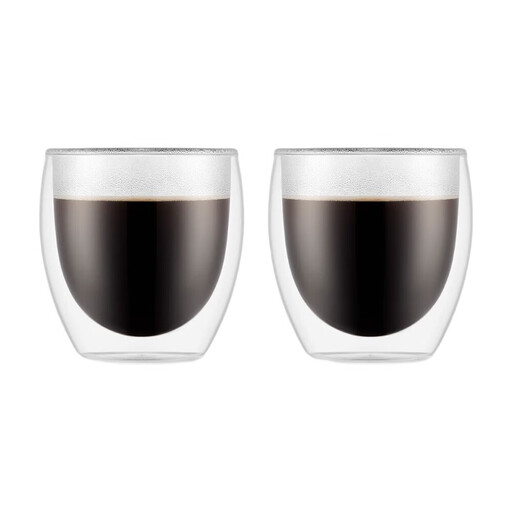
Why this choice suits this profile : With two 250 ml glasses, this set is an affordable way to get started without investing in a large set. It is suitable for coffee, tea, cold drinks and certain cocktails.
Its mid-range capacity helps you avoid choosing a glass that is too small or oversized for everyday use. The double wall also helps to limit condensation on the outside.
Borosilicate glass, double wall, set of 2 and dishwasher compatibility stated on the product listing.
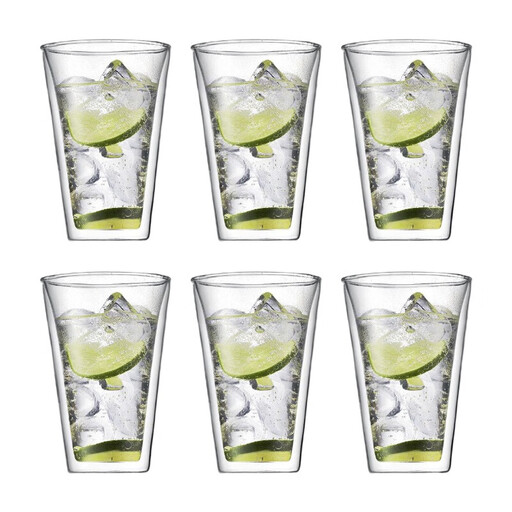
Why this choice suits this profile : Their transparent grey finish and mouth-blown borosilicate glass provide an elegant presentation, whether for coffee and tea or drinks served at the table.
The product listing specifies the capacity, material, double wall and care instructions. This makes it easy to check the product’s characteristics rather than relying solely on its appearance.
Mouth-blown borosilicate glass, 270 ml capacity, set of 2 and dishwasher-safe cleaning indicated.
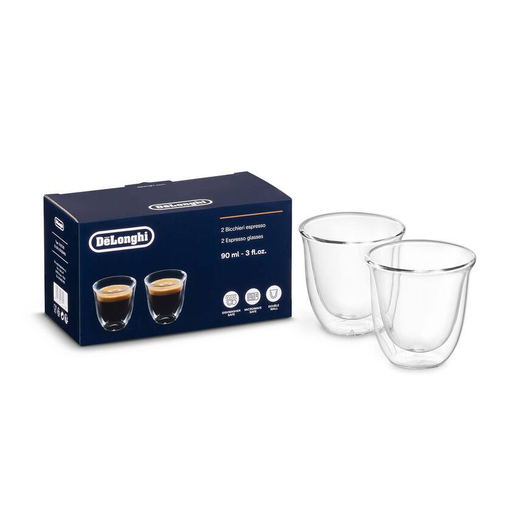
Why this choice suits this profile : With a 90 ml capacity, these glasses are designed specifically for ristretto, espresso and short coffees. Their compact format makes regular serving easy, both at home and in a professional setting.
Its capacity is clearly designed for short coffee, so you avoid using a large glass that is poorly suited to the extraction. The product listing also states that it is dishwasher-safe and does not produce condensation on the outside.
Set of 2, 90 ml capacity, hand-blown borosilicate glass and manufacture stated as Italy.
We have put together a complete, real-time updated list of products that fully meet these strict selection criteria and European safety regulations.
Double-walled glasses are still made of glass: the insulation improves comfort, but it does not eliminate the risk of breakage or the need to handle them with care.
Yes, many models are designed for both uses. However, you should follow the manufacturer’s recommendations and avoid thermal shock. A glass designed for espresso will not have the same capacity as a model intended for cocktails or cold drinks.
Some models, including several Bodum and De’Longhi references featured here, are stated to be dishwasher-safe. Always check the product listing. To preserve the clarity of the glass, hand washing with a soft sponge may nevertheless be preferable.
For an espresso or ristretto, a capacity of 80 to 100 ml is generally suitable. For a longer coffee, tea or a drink served with ice cubes, choose a 200 to 280 ml format instead.