
Livraison le jour même ou le lendemain

Qualité garantie

Débloquez vos offres de bienvenue: Livraison GRATUITE | Jusqu'à -80 % | 30 jours d'essai gratuits à JoyPlus
Téléchargez l'application
A drink that appears to float in mid-air, coffee that stays hot longer without burning your fingers, or an iced tea that leaves no condensation rings on your table. The promise of a double-walled cup is alluring: it combines modern design with thoughtful functionality. However, the experience can quickly turn to disappointment. A sudden thermal shock and the glass cracks, fog appears between the walls after a few washes, or the grip is simply uncomfortable.
As the Head of Product Recommendations at Joybuy, I'm here to bring some clarity. Here are the key points to watch out for and the essential criteria for choosing a double-walled glass cup that will live up to all its promises.
While the design may catch your eye, durability and ergonomics are the real deciding factors. Watch out for these common flaws that can ruin the experience.
To avoid these disappointments, simply focus on a few key technical specifications.
The vast majority of quality double-walled glasses are made from borosilicate glass. Unlike standard soda-lime glass, it offers far superior resistance to thermal shock. It's also lighter and has remarkable clarity, perfect for showcasing your drink. This is the first criterion to check—a true guarantee of durability for daily use with hot beverages.
The choice of the ideal cup depends primarily on your habits.
Examine the base of the cup. The plug that seals the air layer should be discreet and perfectly integrated. Reputable brands have mastered this manufacturing process, ensuring an optimal seal at this sensitive point and drastically reducing the risk of water infiltration.
Here is our selection, designed for different profiles and based on our quality and ergonomic criteria.
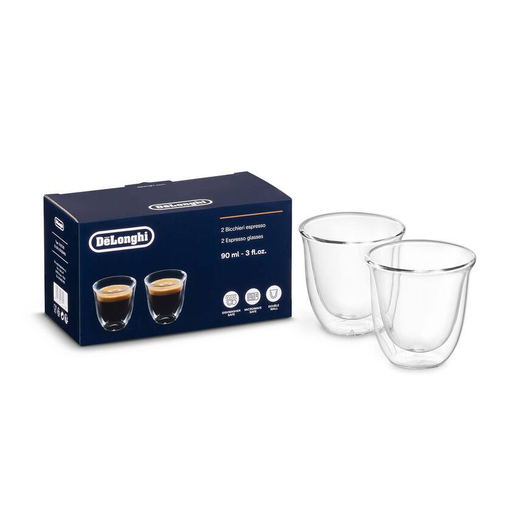
Why we chose it: For those who take their espresso ritual seriously, this set combines the prestige of a specialist coffee brand with a perfectly calibrated design.
Manufacturing by a specialist brand like De'Longhi ensures rigorous quality control over the seal, limiting the risk of condensation. The mouth-blown borosilicate glass is designed for coffee.
A 90 ml capacity, perfectly calibrated for an espresso or ristretto. The set of two is perfect for sharing the moment.
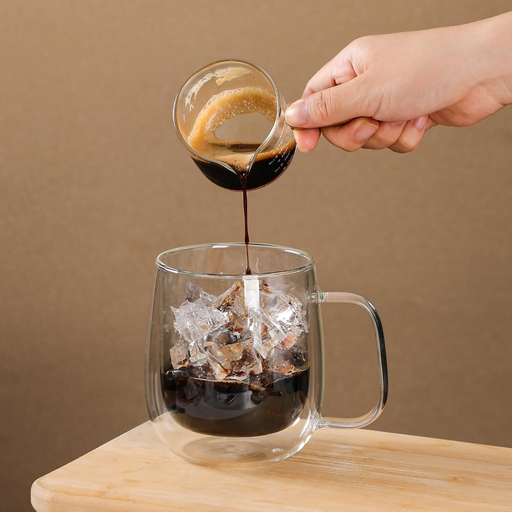
Why we chose it: For morning coffee or afternoon tea, this set combines a generous capacity, the convenience of a handle, and excellent value for everyday use.
The built-in handle solves the ergonomic problem of holding wide glasses, which can sometimes be awkward. Its dishwasher-safe design is a real bonus for daily use.
Its 350 ml capacity makes it very versatile. The set-of-two format is both convenient and economical.
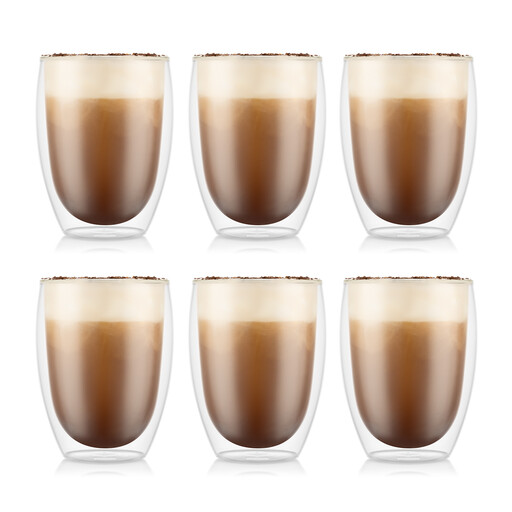
Why we chose it: For those who love to entertain, this set of six glasses with a clean, Scandinavian design is a reliable choice. Bodum is the pioneering brand and the undisputed benchmark for double-walled glassware.
Bodum's reputation speaks for itself: the quality of its borosilicate glass and the reliability of its sealing plug minimise risks. The handle-free design remains very comfortable thanks to a perfectly studied shape.
A set of six glasses, perfect for stocking up or for entertaining. The 350 ml capacity offers great versatility.
Discover our full selection of products that meet our quality criteria and safety standards.
Most borosilicate glass cups are dishwasher safe. However, to preserve their clarity and the integrity of the seal over the long term, hand washing is still preferable. As for the microwave, caution is advised. Even if the glass can withstand the heat, the air trapped between the walls can expand and create overpressure. It is therefore imperative to always check the manufacturer's instructions. De'Longhi and Bodum, for example, advise against using the microwave for their models.
This dot is a hydrophobic silicone plug that seals the hole left over from the glass-blowing process. It allows the air between the walls to equalise its pressure with the outside, without ever letting water in. It's a crucial technical component for the cup's seal. A poor-quality plug is the number one cause of fogging.
The number one precaution: avoid thermal shock. Never pour a boiling liquid into a very cold cup, or vice versa. Also, do not immerse it in cold water right after it has held a hot drink. Finally, remember that despite their resistance, they are still made of glass: handle them with care, avoid impacts, and be gentle when using metal spoons.