
Livraison le jour même ou le lendemain

Qualité garantie

Débloquez vos offres de bienvenue: Livraison GRATUITE | Jusqu'à -80 % | 30 jours d'essai gratuits à JoyPlus
Téléchargez l'application
Keeping your coffee piping hot without burning your fingers, sipping an iced tea that stays chilled, all within a transparent vessel that elevates your drink. The promise of the double-walled glass cup is certainly appealing. Yet, the experience often ends in disappointment: a cup that cracks, fills with condensation, or simply fails to deliver on its promises.
As a product expert for Joybuy, my mission is to help you navigate this landscape. Let's break down the pitfalls to avoid and the criteria that truly matter before you buy.
While marketing praises their design, durability and performance hinge on technical details that are often overlooked.
To ensure you invest in a reliable and high-performing model, here are the three points to inspect closely.
Borosilicate glass is the material of choice for an insulated glass cup thanks to its high resistance to thermal shock. Unlike standard soda-lime glass, it won't crack when faced with sudden temperature changes.
However, the thickness and uniformity of the glass are crucial. A quality product will have a uniform wall, with no visible bubbles or imperfections. This is a far more reliable sign of durability than the mere mention of the material.
Design isn't just a matter of taste; it must first and foremost suit your habits.
Don't forget to check the dimensions to ensure the cup fits under your coffee machine.
Turn the cup over and examine the sealing point. It should be discreet, smooth, and perfectly integrated. A coarse or poorly finished plug is a sign of cheap manufacturing and a future entry point for water and condensation. A quality set of glass cups will have a consistent finish on every piece.
Here are a few models that meet specific needs, taking into account our quality and design criteria.
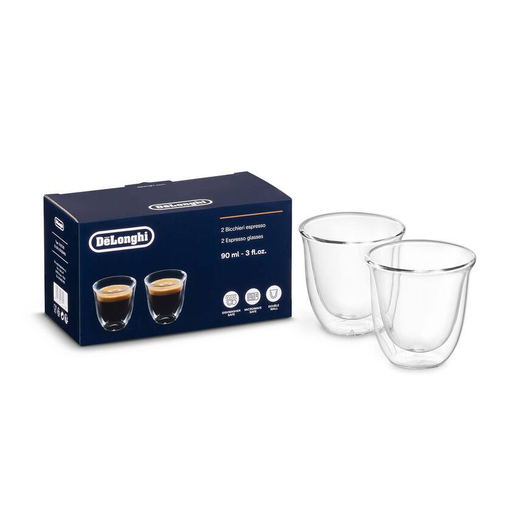
Why we love it: To enjoy your espresso the proper way. The 90 ml capacity is perfectly calibrated for an espresso or ristretto, preserving the crema and temperature. The minimalist design showcases the drink.
The "hand-blown" mention is often a guarantee of superior quality control, reducing the risk of fragility and manufacturing defects typical of entry-level models.
Keeps espresso at the optimal temperature for longer without burning your fingers. Dishwasher-safe for easy cleaning.
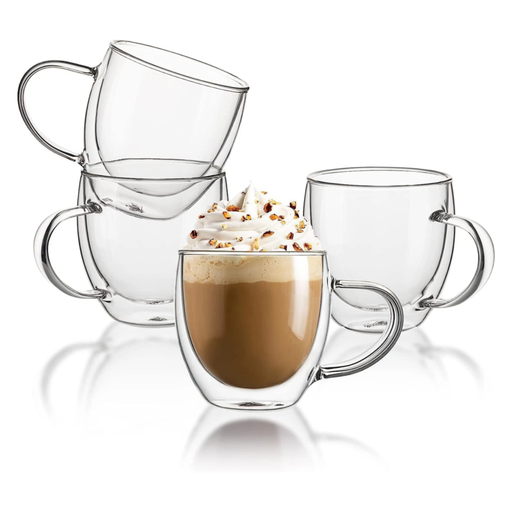
Why we love it: The perfect mug for your morning coffee or afternoon tea. Its 250 ml capacity is an excellent compromise, and its ergonomic handle ensures a comfortable and secure grip, ideal for daily use.
The presence of a sturdy, well-insulated handle addresses the need for safety and comfort, a practical aspect often overlooked by purely aesthetic designs.
An excellent balance of capacity, comfort, and safety. Its design is stackable, a bonus for optimising storage space.
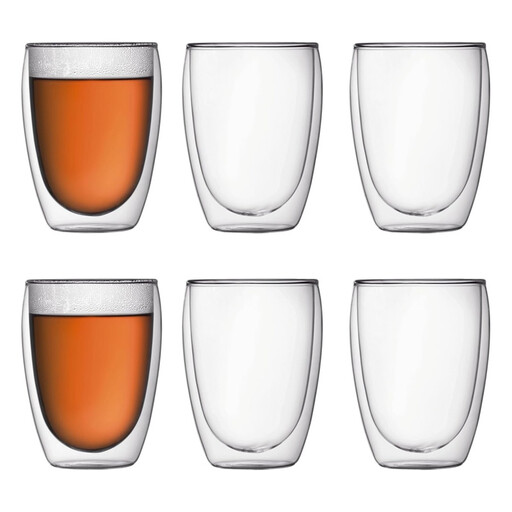
Why we love it: Perfect for fans of latte macchiatos, smoothies, or large iced teas. Its tall shape and generous 350 ml capacity are designed to hold and showcase layered drinks, with enough room for milk foam.
This model avoids the misleading capacity trap by being explicitly designed for large drinks, ensuring a usable volume suitable for lattes and other generous preparations.
The transparency and height of the glass perfectly showcase the different layers of your drinks. The insulation remains effective even with large volumes.
Discover our full selection of products that meet our quality criteria and current standards.
Yes to the dishwasher; most quality borosilicate glass models are designed for it. However, always check the manufacturer's instructions. For the microwave, caution is advised. Although the glass can withstand the heat, the pressure of the air trapped between the walls can increase with the heat and damage the cup. It is therefore safer to heat your drink separately.
This is the tell-tale sign of a failed seal at the silicone plug under the cup. Water has seeped between the walls during a wash. Unfortunately, this defect is irreversible, and the cup has lost all its insulating properties. This is why the quality of this finish is such an important purchasing criterion.
A quality model, if well-maintained, can last for years. Breakage (from an impact) and water infiltration are the main causes of failure. To maximise its lifespan, avoid extreme thermal shocks, handle it with care, and if washing by hand, avoid letting its base soak in water for long periods.