
Livraison le jour même ou le lendemain

Qualité garantie

Débloquez vos offres de bienvenue: Livraison GRATUITE | Jusqu'à -80 % | 30 jours d'essai gratuits à JoyPlus
Téléchargez l'application
The double-walled glass is everywhere. It's no surprise, as its design, which creates the illusion of a levitating drink, always makes an impression. Add to that its ability to keep hot drinks hot and cold drinks cold, and its success is easy to understand. But be warned: behind the aesthetics lie some very real disappointments. Glass that cracks at the first shock, stubborn condensation that gets trapped between the walls, a laughably small capacity… nasty surprises are common.
As the Head of Product Recommendations at Joybuy, I've tested dozens of models. My goal with this guide is simple: to give you the keys to cut through the marketing hype and choose an insulated glass that truly delivers on its promises of style, durability, and performance.
Before we even get into the technical details, let's review the deal-breaking flaws that plague a good portion of the models on the market.
To make the right choice, forget the marketing fluff and focus on these few technical points that signify the quality (or lack thereof) of a thermal glass.
Borosilicate glass is the star material for this type of product because it's lightweight and highly resistant to thermal shock. But be careful, not all grades are the same. A good glass must be thick enough to withstand the rigours of daily use. Mouth-blown models, often the hallmark of renowned brands like Bodum, are a guarantee of craftsmanship and durability. Of course, this comes at a price.
Turn the glass over and inspect its base. You should see a small silicone plug. Far from being a defect, this is a crucial hydrophobic valve. Its role is to equalise the air pressure between the walls as the temperature changes, which prevents the glass from shattering. A quality valve prevents water from seeping in. If the glass doesn't have one, or if the seal looks suspicious, the risk of fogging is maximal, especially if you plan to put it in the dishwasher.
Ask yourself what you'll be drinking from it.
The shape also matters. A wide opening is practical for ice cubes or milk foam, while a narrower rim will concentrate the aromas of your coffee.
To help you visualise how these criteria apply, here are a few recommended options, each suited to a specific need.
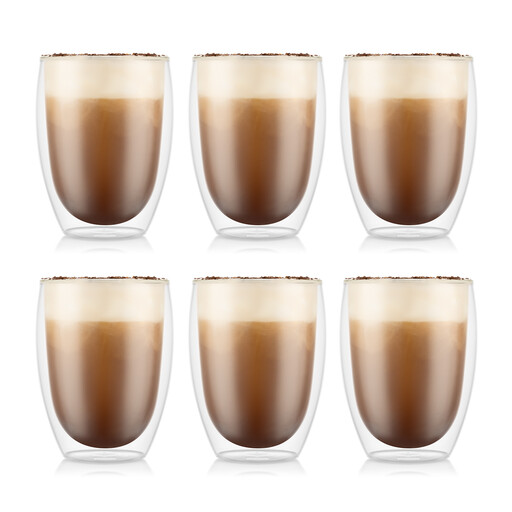
Why it's a great fit: Perfect for daily use with its generous 350 ml capacity, ideal for lattes, teas, or hot chocolates. The 6-pack is economical and practical, ensuring you never run out, even with family.
Bodum are masters of their craft: the hydrophobic silicone valve prevents any water from getting in, thus stopping condensation from forming. Their borosilicate glass is renowned for its everyday durability.
Excellent thermal insulation, versatile 350 ml capacity, and a very practical 6-pack format.
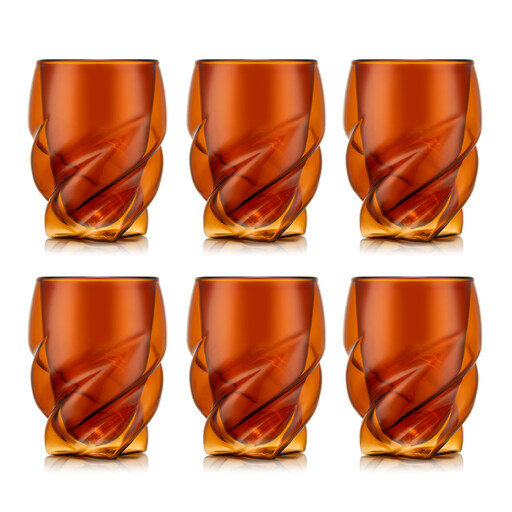
Why it's a great fit: Its vibrant red hue adds a real touch of originality. It's the perfect choice for showing off cocktails, iced teas, or simply brightening up the table. A designer glass set that stands out from the crowd.
The mouth-blown borosilicate glass combines elegance with resilience. The manufacturing quality, a Bodum signature, is a safeguard against the fragility that often plagues more unique glass designs.
A colourful, modern design that enhances your drinks. Versatile 270 ml capacity and a 6-pack format, ideal for entertaining guests.
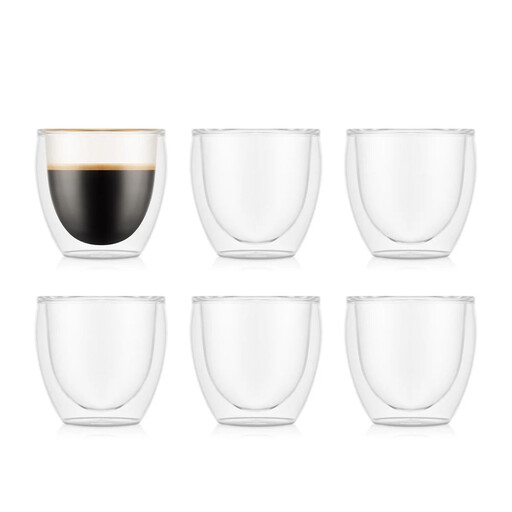
Why it's a great fit: With their 80 ml capacity, these cups are perfectly sized for a single or double espresso. They keep the coffee hot and its crema intact, without ever burning your fingers. The ultimate tasting experience.
Their compact size and robust construction protect them from knocks. The 80 ml capacity is clearly advertised for espresso, so there are no nasty surprises about the size.
Compact 80 ml size, ideal for espresso. Maintains heat perfectly without burning your fingers.
Discover our full selection of glasses that have passed our tests and meet our criteria for quality and durability.
It's a bad idea in most cases. The air trapped between the walls will expand with the heat and could cause the glass to shatter. The rule of thumb: always check the manufacturer's instructions. Only a few very specific models are designed to withstand it.
It's not a defect, quite the opposite! It's an essential hydrophobic valve. It allows air to escape or enter to equalise the pressure when the temperature changes (for example, when you pour a hot drink). It's designed to let air pass through but block water, thus ensuring it remains sealed.
The secret is to take good care of the little silicone valve. Avoid letting your glasses soak in water. Even though many models are advertised as dishwasher-safe, washing by hand is the best long-term guarantee for preserving the seal and preventing moisture from seeping in.