
Livraison le jour même ou le lendemain

Qualité garantie

Débloquez vos offres de bienvenue: Livraison GRATUITE | Jusqu'à -80 % | 30 jours d'essai gratuits à JoyPlus
Téléchargez l'application
The appeal of a double-walled glass is undeniable. Watching your coffee or tea appear to float weightlessly, keeping your drink at the perfect temperature for much longer, and being able to hold the glass without burning your fingers... the promise is certainly appealing. Yet, the experience often ends in disappointment: a glass that cracks at the slightest impact, or unsightly condensation that gets trapped between the walls. To help you avoid these pitfalls, our editorial team has analysed the market. Let's break down the traps to avoid and the criteria that truly matter to find THE glass that will elevate your drinking experience.
The market is flooded with models that look alike, but they are far from equal in quality. A nasty surprise is just around the corner if you're not careful.
To avoid these traps, focus on a few key technical points.
Borosilicate glass is the gold standard for any good thermal glass. Lighter and, most importantly, far more resistant to thermal shock than ordinary glass, it is simply essential. Be careful, however, as its presence alone is no guarantee of quality. The thickness of the walls and the quality of the seal are what will make the real difference in terms of durability. A poorly made borosilicate glass will remain hopelessly fragile.
The choice of style will depend on your habits and personal taste.
This is a common-sense criterion, but one that's often overlooked. Here are a few guidelines to help you get it right:
Opting for a set of double-walled glasses is often a cost-effective and practical way to create a cohesive collection for your kitchen.
Rather than a simple list, we've matched each product to a user profile to help you find the one that's truly right for you.
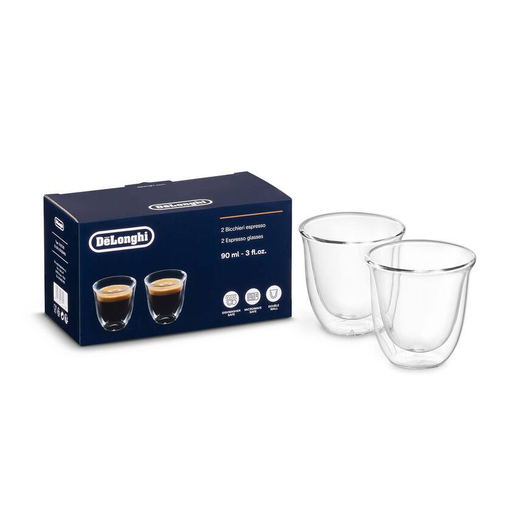
Why we love it: When you take your espresso ritual seriously, the size and shape of the glass are not minor details. This set is specifically designed for that purpose.
With a 90 ml capacity, it's perfectly calibrated for an espresso. No more falling into the trap of a glass that's too large, which cools the coffee instantly and destroys the *crema*. The borosilicate glass is, of course, designed to handle the high extraction temperature.
Designed by a coffee specialist, this glass fits under most espresso machines, and its shape is engineered to enhance the tasting experience.
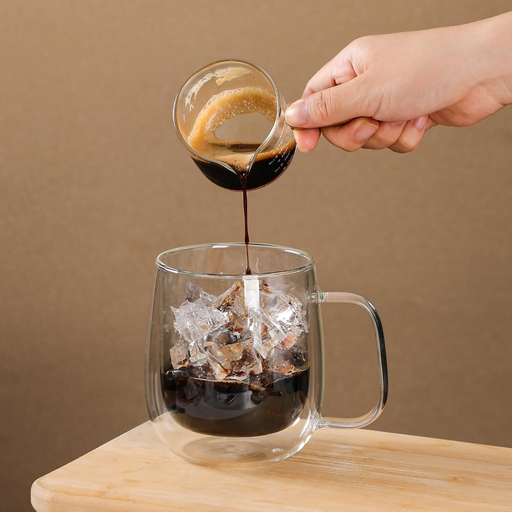
Why we love it: Whether it's for your large morning coffee or your 4 p.m. tea, you need a reliable, comfortable mug with a good capacity. This handled model checks all the boxes.
The sturdy handle eliminates the risk of the glass slipping (even though a good model is a condensation-free glass) and provides a secure, reassuring grip. This bypasses the problem of perceived fragility.
Its 350 ml capacity is the ultimate versatile size. Sold as a pair and dishwasher-safe, it's the practical choice for everyday use.
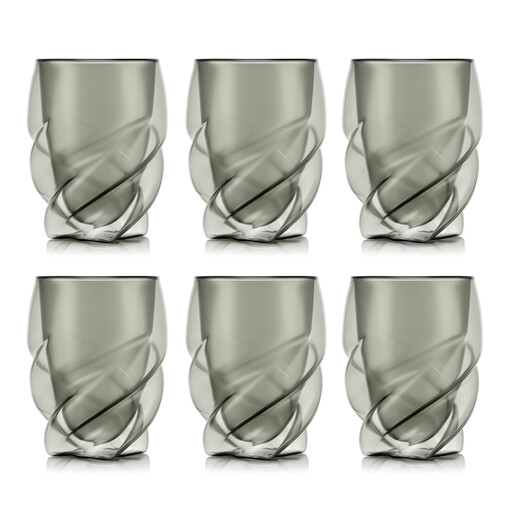
Why we love it: Entertaining is also about presentation. This set of 6 glasses from Bodum combines function with a sophisticated touch of colour to set an elegant table in an instant.
Bodum's reputation is well-established. Its manufacturing process (mouth-blown) is masterfully controlled, which greatly reduces the risk of condensation appearing. The 270 ml capacity is clearly stated and is suitable for a wide range of uses.
The set-of-six format and the subtle grey tint instantly bring a touch of modernity and cohesion to your table setting, whether for coffee, a cocktail, or even a dessert served in a glass.
Discover our full selection of glasses that meet our criteria for quality and durability.
Can a double-walled glass go in the dishwasher? In theory, yes. Most manufacturers state that they are. In practice, to preserve the life of the silicone seal and avoid any risk of water infiltration, a gentle hand wash is still the best option. If you must use a dishwasher, always place the glasses on the top rack, making sure they cannot knock against each other.
Why is there condensation between the two walls of my glass? This is a sign of a sealing defect. The small silicone valve under the glass is no longer airtight, and water has seeped in during a wash. Unfortunately, the defect is irreversible: it's impossible to dry the inside, and the glass loses not only its aesthetic appeal but also some of its properties as an insulated glass.
What is the difference between a Bodum glass and others? Bodum is the Danish brand that popularised the double-walled glass. It remains a benchmark for its minimalist Scandinavian design and its craftsmanship (most models are "mouth-blown"). While many brands now offer equivalent products, Bodum stands out for the variety of its collections (PAVINA, BISTRO...) and its often more original finishes (coloured glass, etc.). Ultimately, the choice will depend mainly on your budget and your appreciation for the aesthetic of a heritage brand.